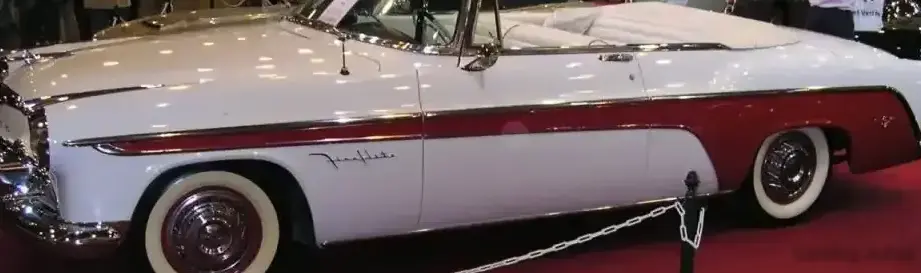
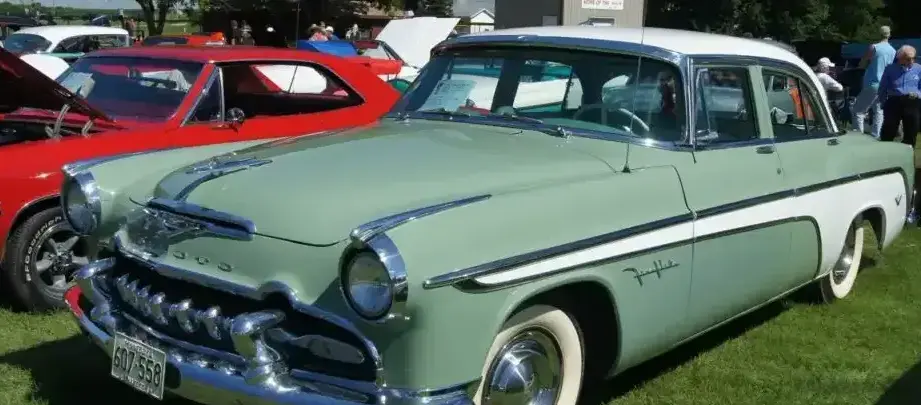
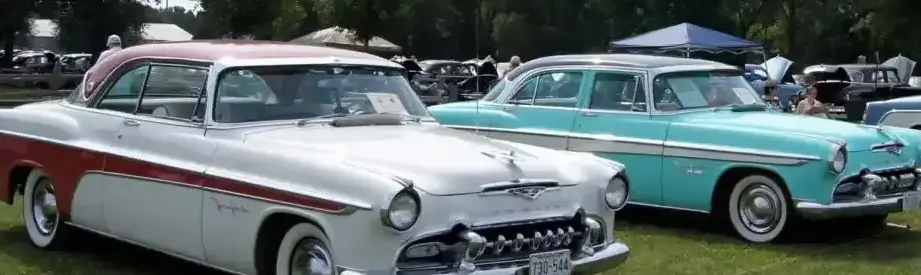
The DeSoto Fireflite I Station Wagon, specifically the 1959 facelift model equipped with the Explorer 6.3 V8 engine and TorqueFlite automatic transmission, represents a significant offering from the now-defunct DeSoto division of Chrysler Corporation. Produced for the 1958 and 1959 model years, this variant occupied a position as a large, family-oriented vehicle within the DeSoto lineup, aiming to provide both comfort and substantial performance for the American driver. It was part of the first generation of the Fireflite, built on the Chrysler A-body platform, and represented a peak in DeSoto’s styling and engineering before the brand’s eventual demise in 1961.
Technical Specifications
| Brand | DeSoto |
| Model | Fireflite |
| Generation | Fireflite I Station Wagon (facelift 1959) |
| Type (Engine) | Explorer 6.3 V8 (325 Hp) TorqueFlite |
| Start of production | 1958 |
| End of production | 1959 |
| Powertrain Architecture | Internal Combustion engine |
| Body type | Station wagon (estate) |
| Seats | 9 |
| Doors | 5 |
| Fuel Type | Petrol (Gasoline) |
| Weight-to-power ratio | 6.2 kg/Hp, 161.5 Hp/tonne |
| Weight-to-torque ratio | 3.5 kg/Nm, 286.3 Nm/tonne |
| Power | 325 Hp @ 4600 rpm |
| Power per litre | 51.8 Hp/l |
| Torque | 576 Nm @ 2800 rpm, 424.84 lb.-ft. @ 2800 rpm |
| Engine displacement | 6276 cm3, 382.99 cu. in. |
| Number of cylinders | 8 |
| Engine configuration | V-engine |
| Cylinder Bore | 107.95 mm, 4.25 in. |
| Piston Stroke | 85.85 mm, 3.38 in. |
| Compression ratio | 10.1:1 |
| Number of valves per cylinder | 2 |
| Fuel injection system | Carburettor |
| Engine aspiration | Naturally aspirated engine |
| Valvetrain | OHV |
| Engine oil capacity | 4.7 l, 4.97 US qt | 4.14 UK qt |
| Coolant | 15.1 l, 15.96 US qt | 13.29 UK qt |
| Kerb Weight | 2012 kg, 4435.7 lbs |
| Fuel tank capacity | 83 l, 21.93 US gal | 18.26 UK gal |
| Length | 5591 mm, 220.12 in |
| Width | 1999 mm, 78.7 in |
| Height | 1458 mm, 57.4 in |
| Wheelbase | 3200 mm, 125.98 in |
| Front track | 1549 mm, 60.98 in |
| Rear (Back) track | 1516 mm, 59.69 in |
| Minimum turning circle (turning diameter) | 15.2 m, 49.87 ft |
| Drivetrain Architecture | The Internal combustion engine (ICE) drives the rear wheels of the vehicle. |
| Drive wheel | Rear wheel drive |
| Number of gears and type of gearbox | 3 gears, automatic transmission TorqueFlite |
| Front suspension | Independent torsion bar, double wishbone |
| Rear suspension | Leaf spring |
| Front brakes | Drum, 305 mm |
| Rear brakes | Drum, 305 mm |
| Steering type | Worm-reduction unit |
Powertrain & Engine Architecture
The heart of the 1959 Fireflite Station Wagon was the Explorer 6.3 V8 engine. This engine, displacing 6276 cubic centimeters (382.99 cubic inches), was a robust, naturally aspirated powerplant featuring a cast iron block and aluminum cylinder heads. It utilized a conventional overhead valve (OHV) valvetrain with two valves per cylinder. Fuel delivery was managed by a carburetor, typical for the era. The engine produced 325 horsepower at 4600 rpm and a substantial 576 Nm (424.84 lb-ft) of torque at 2800 rpm. This output was considerable for the time, providing ample power for a full-sized station wagon. The TorqueFlite automatic transmission, a three-speed unit, was the sole transmission option. This transmission was known for its durability and smooth operation, though it lacked the efficiency of modern automatics.
Driving Characteristics
The combination of the 6.3-liter V8 and the TorqueFlite automatic resulted in a driving experience focused on effortless cruising and strong acceleration. While not a sports car, the Fireflite offered brisk performance for its size and weight. The automatic transmission, while smooth, did result in some power loss compared to a manual transmission. The gear ratios were optimized for highway driving, providing relaxed cruising at typical interstate speeds. However, acceleration from a standstill was respectable, thanks to the engine’s substantial torque. Compared to potential manual transmission versions (which were not commonly offered in this configuration), the automatic traded some responsiveness for convenience.
Equipment & Trim Levels
The Fireflite Station Wagon was positioned as a relatively well-equipped vehicle within the DeSoto range. Standard features included a spacious interior with seating for up to nine passengers, ample cargo space, and a comfortable ride. Interior upholstery typically consisted of cloth and vinyl, with options for upgraded materials. The dashboard featured a straightforward layout with analog gauges. Available options included power steering, power brakes, a radio, and various trim enhancements. The 1959 facelift brought revised exterior styling, including a more prominent grille and updated taillights. The station wagon body style itself was a popular choice for families needing both passenger and cargo capacity.
Chassis & Braking
The Fireflite utilized a body-on-frame construction, common for American cars of the era. The front suspension employed an independent torsion bar and double wishbone setup, providing a relatively comfortable ride. The rear suspension featured a traditional leaf spring design. Braking was accomplished via drum brakes on all four wheels, measuring 305 mm in diameter. While adequate for the time, the drum brakes lacked the stopping power and fade resistance of modern disc brakes. Steering was handled by a worm-reduction unit, which provided a somewhat indirect feel.
Market Reception & Comparison
The 1959 DeSoto Fireflite Station Wagon received generally positive reviews for its spaciousness, comfortable ride, and powerful engine. However, it faced competition from other large station wagons offered by Ford, Chevrolet, and Plymouth. Critics noted that the Fireflite’s styling, while attractive, was not as dramatically different from its competitors as DeSoto had hoped. Fuel economy was typical for a large American car of the era – relatively poor by modern standards. Reliability was generally good, though the carburetor could require occasional adjustment. Compared to the higher-performance DeSoto Adventurer, the Fireflite prioritized comfort and practicality over outright speed. Compared to smaller DeSoto models, the Fireflite offered significantly more space and power.
Legacy
The DeSoto Fireflite I Station Wagon, particularly the 1959 model, represents a final flourish for the DeSoto brand. The Explorer 6.3 V8 engine proved to be a durable and reliable powerplant, and examples of these cars continue to be found today. While not as highly sought after as some other classic American cars, the Fireflite offers a unique blend of style, comfort, and performance. In the used car market, these station wagons are appreciated by collectors and enthusiasts for their rarity and distinctive design. The TorqueFlite transmission, while aging, remains a relatively dependable unit with proper maintenance. The Fireflite serves as a reminder of a bygone era of American automotive design and engineering.