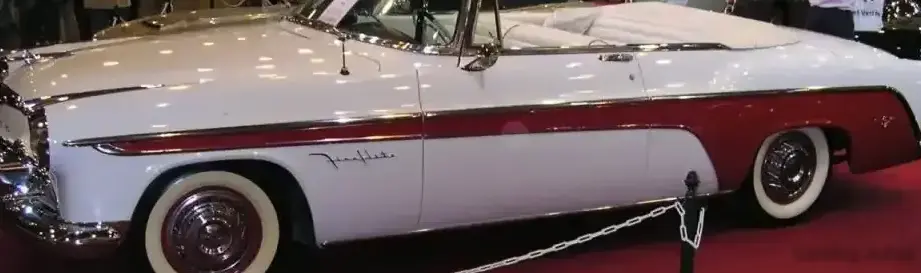
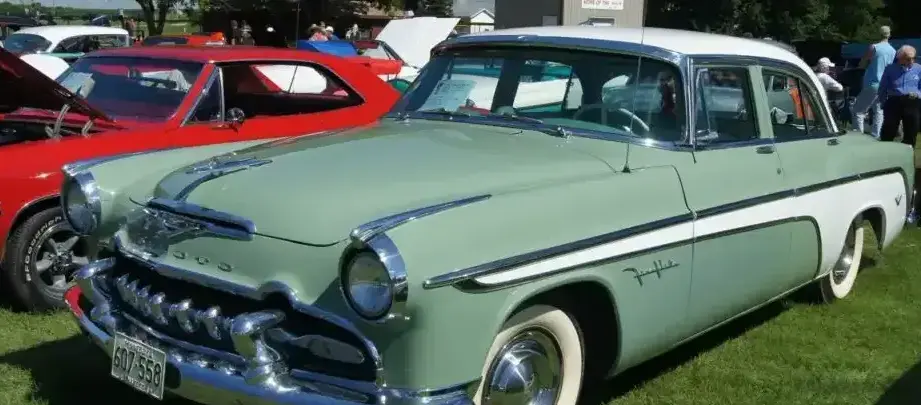
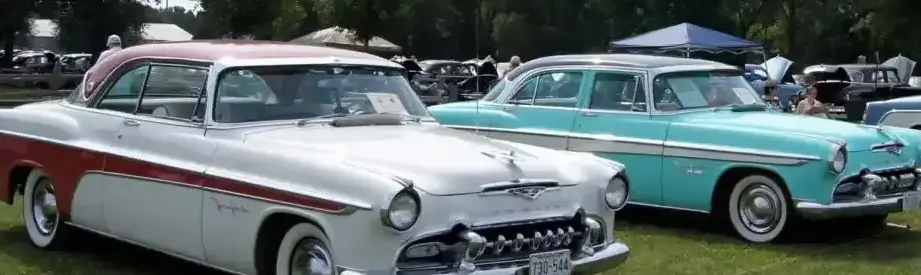
The DeSoto Fireflite I Station Wagon, specifically the 1958 facelift model equipped with the 5.9-liter V8 (305 hp) and TorqueFlite automatic transmission, represents a significant iteration of the Fireflite line. Produced for the 1957 and 1958 model years, this variant occupied a middle ground within the DeSoto range, offering a blend of family practicality and the performance expected of a full-size American automobile. It was part of the first generation of the Fireflite, a model intended to revitalize the DeSoto brand and compete with offerings from Buick, Oldsmobile, and Mercury. The station wagon body style, a popular choice for American families, added to the Fireflite’s appeal.
Technical Specifications
| Brand | DeSoto |
| Model | Fireflite |
| Generation | Fireflite I Station Wagon (facelift 1958) |
| Type (Engine) | Shopper 5.9 V8 (305 Hp) TorqueFlite |
| Start of production | 1957 |
| End of production | 1958 |
| Powertrain Architecture | Internal Combustion engine |
| Body type | Station wagon (estate) |
| Seats | 6 |
| Doors | 5 |
| Fuel Type | Petrol (Gasoline) |
| Power | 305 Hp @ 4600 rpm |
| Power per litre | 51.6 Hp/l |
| Torque | 542 Nm @ 2800 rpm / 399.76 lb.-ft. @ 2800 rpm |
| Engine displacement | 5916 cm3 / 361.02 cu. in. |
| Number of cylinders | 8 |
| Engine configuration | V-engine |
| Cylinder Bore | 104.65 mm / 4.12 in. |
| Piston Stroke | 85.85 mm / 3.38 in. |
| Compression ratio | 10:1 |
| Number of valves per cylinder | 2 |
| Fuel injection system | Carburettor |
| Engine aspiration | Naturally aspirated engine |
| Valvetrain | OHV |
| Engine oil capacity | 3.8 l / 4.02 US qt | 3.34 UK qt |
| Coolant | 16.1 l / 17.01 US qt | 14.17 UK qt |
| Fuel tank capacity | 87 l / 22.98 US gal | 19.14 UK gal |
| Length | 5593 mm / 220.2 in. |
| Width | 1989 mm / 78.31 in. |
| Height | 1450 mm / 57.09 in. |
| Wheelbase | 3200 mm / 125.98 in. |
| Front track | 1549 mm / 60.98 in. |
| Rear (Back) track | 1516 mm / 59.69 in. |
| Minimum turning circle (turning diameter) | 15.1 m / 49.54 ft. |
| Drivetrain Architecture | The Internal combustion engine (ICE) drives the rear wheels of the vehicle. |
| Drive wheel | Rear wheel drive |
| Number of gears and type of gearbox | 3 gears, automatic transmission TorqueFlite |
| Front suspension | Independent coil spring |
| Rear suspension | Leaf spring |
| Front brakes | Drum, 305 mm |
| Rear brakes | Drum, 305 mm |
| Steering type | Worm-reduction unit |
Powertrain & Engine Architecture
The heart of the 1958 Fireflite Station Wagon was the DeSoto “Shopper” 5.9-liter (361 cubic inch) V8 engine. This engine, a member of the Chrysler B-series engine family, featured a cast iron block and cylinder heads, with a 10:1 compression ratio. It utilized a single Carter carburetor for fuel delivery and an overhead valve (OHV) valvetrain. The engine produced 305 horsepower at 4,600 rpm and 542 Nm (399.76 lb-ft) of torque at 2,800 rpm. This output was considered substantial for the time, providing ample power for both cruising and hauling. The engine was paired with Chrysler’s TorqueFlite three-speed automatic transmission, a robust and reliable unit known for its smooth shifting. This combination provided a comfortable and effortless driving experience, particularly well-suited for the station wagon’s intended purpose.
Driving Characteristics
The 1958 Fireflite Station Wagon with the 5.9L V8 and TorqueFlite transmission offered a driving experience typical of large American cars of the era. Acceleration was brisk, though not particularly sporty, with the focus being on smooth, relaxed cruising. The TorqueFlite transmission provided seamless gear changes, contributing to a comfortable ride. Compared to the Fireflite models equipped with smaller engines, this variant offered significantly more power and torque, making it better suited for towing or carrying a full load of passengers and luggage. However, it wasn’t as nimble or fuel-efficient as some of its competitors. The rear-wheel-drive layout and leaf spring rear suspension provided a stable platform, but the ride could be somewhat firm, especially on rough roads.
Equipment & Trim Levels
The Fireflite Station Wagon was generally well-equipped for its time, though options allowed for further customization. Standard features typically included a spacious interior with seating for six passengers, a full-length bench seat in the front and rear, and a generous cargo area. Interior trim consisted of durable cloth and vinyl upholstery. The dashboard featured a combination of analog gauges, including a speedometer, fuel gauge, and temperature gauge. Power steering and power brakes were often included as standard equipment, enhancing the driving experience. Optional extras included air conditioning, a radio, whitewall tires, and various trim packages that added chrome accents and upgraded interior materials.
Chassis & Braking
The Fireflite Station Wagon utilized a body-on-frame construction, typical of American cars of the 1950s. The chassis featured an independent coil spring suspension in the front, providing a relatively comfortable ride. The rear suspension employed a traditional leaf spring setup, which was robust but less refined than the front suspension. Braking duties were handled by drum brakes on all four wheels, measuring 305mm in diameter. While adequate for the time, the drum brakes lacked the stopping power and fade resistance of modern disc brakes. Steering was accomplished via a worm-reduction unit, which provided relatively heavy but precise steering feel.
Market Reception & Comparison
The 1958 DeSoto Fireflite Station Wagon was generally well-received by critics and consumers. It was praised for its spacious interior, comfortable ride, and powerful V8 engine. However, it faced stiff competition from other full-size station wagons offered by Buick, Oldsmobile, and Mercury. Compared to these rivals, the Fireflite offered a similar level of luxury and performance, but it often lacked the brand prestige of some of its competitors. Fuel economy was typical for the era – relatively poor by modern standards – and reliability was generally good, though maintenance costs could be high due to the complexity of the V8 engine and automatic transmission.
Legacy
The 1958 DeSoto Fireflite Station Wagon, while not a massive sales success, remains a desirable classic car today. The 5.9L V8 and TorqueFlite transmission combination is known for its durability and relative simplicity, making it a relatively easy engine to maintain and repair. Parts availability can be a challenge, but a dedicated community of DeSoto enthusiasts has helped to keep these vehicles on the road. The Fireflite Station Wagon represents a bygone era of American automotive design, characterized by its bold styling, spacious interiors, and powerful engines. Today, it is valued by collectors and enthusiasts as a symbol of 1950s Americana.