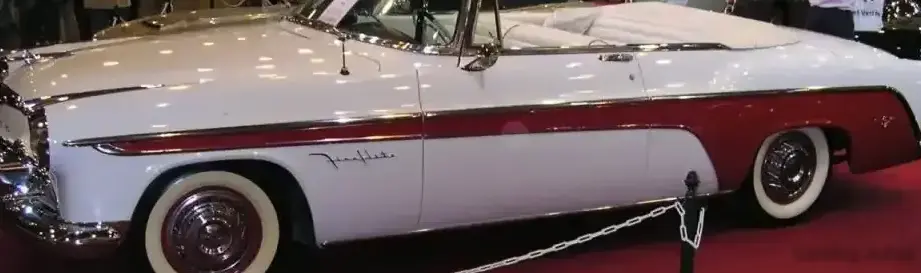
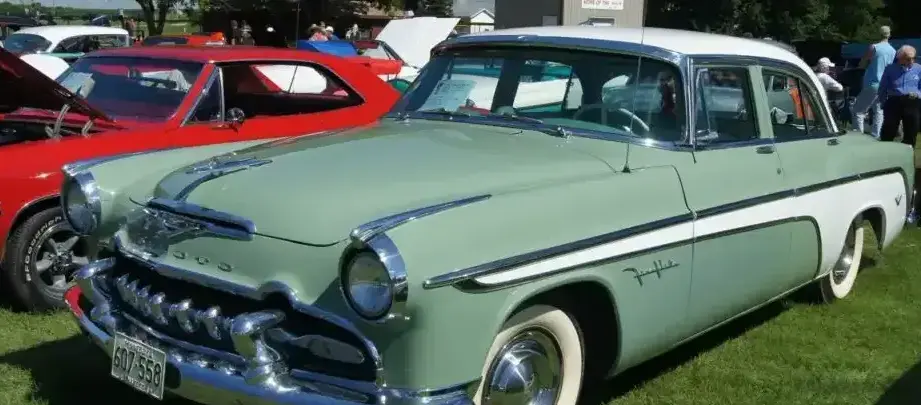
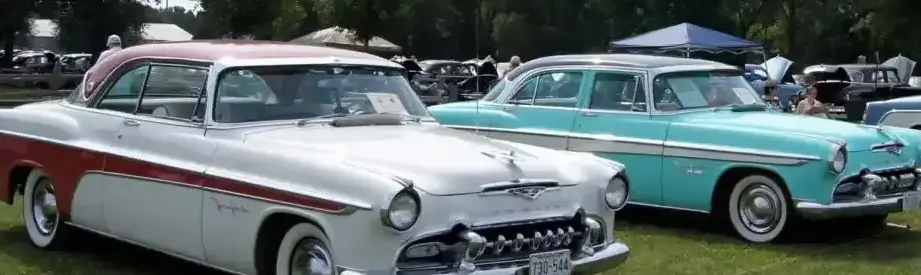
The DeSoto Fireflite III Four-Door Sedan, powered by a 5.6-liter V8 engine producing 295 horsepower and coupled with a TorqueFlite automatic transmission, represented a significant offering from the Chrysler Corporation’s DeSoto division during the 1956 and 1957 model years. Positioned as a mid-range to upper-mid-range vehicle within the DeSoto lineup, it aimed to provide a blend of style, comfort, and performance for American families. The Fireflite III was part of the broader third generation of the Fireflite, building upon the design and engineering advancements of its predecessors while incorporating the styling trends of the mid-1950s. It competed directly with other full-size American sedans from Ford, Chevrolet, and Plymouth.
Technical Specifications
| Brand | DeSoto |
| Model | Fireflite |
| Generation | Fireflite III Four-Door Sedan |
| Type (Engine) | 5.6 V8 (295 Hp) TorqueFlite |
| Start of production | 1956 |
| End of production | 1957 |
| Powertrain Architecture | Internal Combustion engine |
| Body type | Sedan |
| Seats | 6 |
| Doors | 4 |
| Fuel Type | Petrol (Gasoline) |
| Weight-to-power ratio | 6.2 kg/Hp, 161.6 Hp/tonne |
| Weight-to-torque ratio | 3.6 kg/Nm, 278.2 Nm/tonne |
| Power | 295 Hp @ 4600 rpm |
| Power per litre | 52.8 Hp/l |
| Torque | 508 Nm @ 2800 rpm, 374.68 lb.-ft. @ 2800 rpm |
| Engine Model/Code | S26 |
| Engine displacement | 5588 cm3, 341 cu. in. |
| Number of cylinders | 8 |
| Engine configuration | V-engine |
| Cylinder Bore | 96.01 mm, 3.78 in. |
| Piston Stroke | 96.52 mm, 3.8 in. |
| Compression ratio | 9.25:1 |
| Number of valves per cylinder | 2 |
| Fuel injection system | Carburettor |
| Engine aspiration | Naturally aspirated engine |
| Valvetrain | OHV |
| Engine oil capacity | 4.7 l, 4.97 US qt | 4.14 UK qt |
| Coolant | 19.9 l, 21.03 US qt | 17.51 UK qt |
| Kerb Weight | 1826 kg, 4025.64 lbs |
| Fuel tank capacity | 87 l, 22.98 US gal | 19.14 UK gal |
| Length | 5537 mm, 217.99 in |
| Width | 1986 mm, 78.19 in |
| Height | 1448 mm, 57.01 in |
| Wheelbase | 3200 mm, 125.98 in |
| Front track | 1549 mm, 60.98 in |
| Rear (Back) track | 1516 mm, 59.69 in |
| Front overhang | 879 mm, 34.61 in |
| Rear overhang | 1458 mm, 57.4 in |
| Ride height (ground clearance) | 137 mm, 5.39 in |
| Minimum turning circle (turning diameter) | 13.1 m, 42.98 ft |
| Approach angle | 17.7° |
| Departure angle | 13.3° |
| Ramp-over (brakeover) angle | 9.8° |
| Drivetrain Architecture | The Internal combustion engine (ICE) drives the rear wheels of the vehicle. |
| Drive wheel | Rear wheel drive |
| Number of gears and type of gearbox | 3 gears, automatic transmission TorqueFlite |
| Front suspension | Independent coil spring |
| Rear suspension | Leaf spring |
| Steering type | Worm-reduction unit |
Powertrain & Engine Architecture
The heart of the Fireflite III was the DeSoto S26 5.6-liter (341 cubic inch) V8 engine. This engine featured a cast iron block and cylinder heads, with a 9.25:1 compression ratio. It utilized a single Carter carburetor for fuel delivery and an overhead valve (OHV) valvetrain. The engine was known for its robust construction and relatively smooth operation for the era. The TorqueFlite automatic transmission, a three-speed unit, was a key component of the Fireflite’s appeal. Introduced by Chrysler in 1956, the TorqueFlite was a modern automatic transmission featuring a compact design and improved smoothness compared to earlier offerings. It utilized a torque converter to provide smooth launches and gear changes.
Driving Characteristics
The 295 horsepower and 375 lb-ft of torque provided by the S26 V8 and TorqueFlite combination delivered respectable performance for a full-size sedan of the 1950s. While not a sports car, the Fireflite III offered brisk acceleration and comfortable cruising speeds. The TorqueFlite transmission, while smooth, wasn’t particularly quick-shifting by modern standards. The gear ratios were optimized for relaxed highway driving rather than aggressive acceleration. Compared to the higher-output DeSoto Adventurer, which featured a dual-quad carburetor setup and more aggressive tuning, the Fireflite offered a more balanced driving experience, prioritizing comfort and fuel economy over outright performance. Manual transmission options were available on other DeSoto models, but the TorqueFlite automatic was the predominant choice for Fireflite buyers.
Equipment & Trim Levels
The Fireflite III Four-Door Sedan came standard with a generous array of features for the time, including a spacious interior upholstered in cloth and vinyl, a full-width bench seat, and a steering wheel. Power steering and power brakes were often included as standard equipment or available as options. Exterior styling featured generous chrome trim, two-tone paint options, and distinctive tailfin designs that were characteristic of the 1950s. Optional extras included a radio, heater, air conditioning (a relatively rare option), and whitewall tires. The interior trim levels varied depending on the specific package chosen, with higher-end options offering more luxurious materials and finishes.
Chassis & Braking
The Fireflite III utilized a body-on-frame construction, typical of American cars of the era. The front suspension featured independent coil springs, providing a comfortable ride. The rear suspension employed leaf springs, which were robust and capable of handling the car’s weight. Braking was accomplished via drum brakes on all four wheels, although some later models may have featured front disc brakes as an option. Steering was handled by a worm-reduction unit, which provided relatively heavy but precise steering feel. The chassis was designed to provide a stable and comfortable ride, prioritizing passenger comfort over sporty handling.
Market Reception & Comparison
The DeSoto Fireflite III was generally well-received by automotive critics and consumers. It was praised for its stylish design, comfortable ride, and powerful engine. However, it faced stiff competition from established rivals like Ford, Chevrolet, and Plymouth. Compared to the Chevrolet Bel Air, the Fireflite offered a more luxurious interior and a more powerful engine, but at a higher price point. The Ford Fairlane offered a similar level of value and performance at a more competitive price. Fuel economy, while not a primary concern for buyers in the 1950s, was relatively poor compared to more modern vehicles. Reliability was generally good, but maintenance costs could be high due to the car’s complex mechanical systems.
Legacy
The DeSoto Fireflite III, while not a long-lived model, remains a popular classic car among collectors and enthusiasts. The 5.6-liter V8 engine and TorqueFlite transmission are known for their durability and relative ease of maintenance. Parts availability can be a challenge, but a dedicated network of suppliers caters to the classic DeSoto market. Today, well-preserved examples of the Fireflite III command respectable prices, reflecting their historical significance and enduring appeal. The Fireflite III represents a quintessential example of 1950s American automotive design and engineering, embodying the optimism and prosperity of the era.