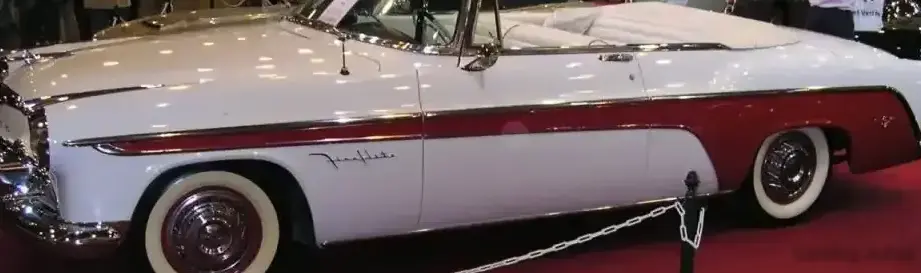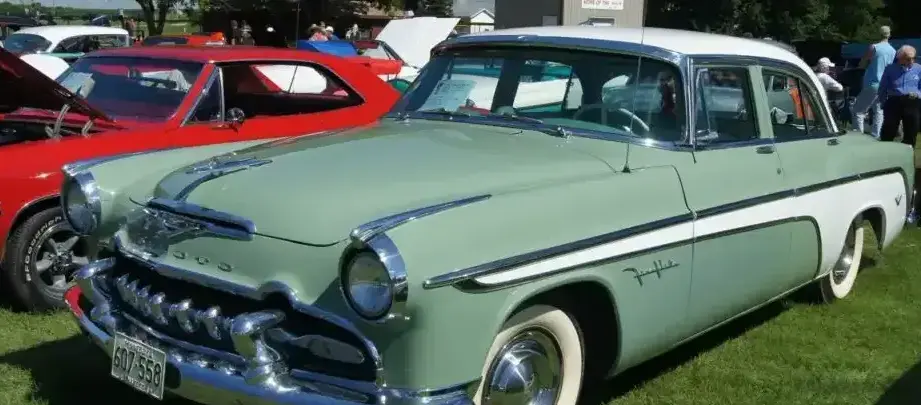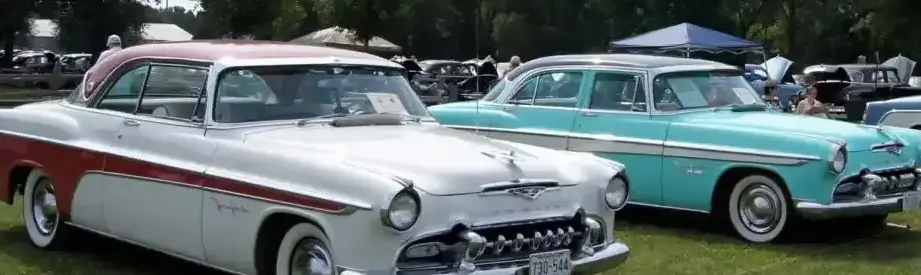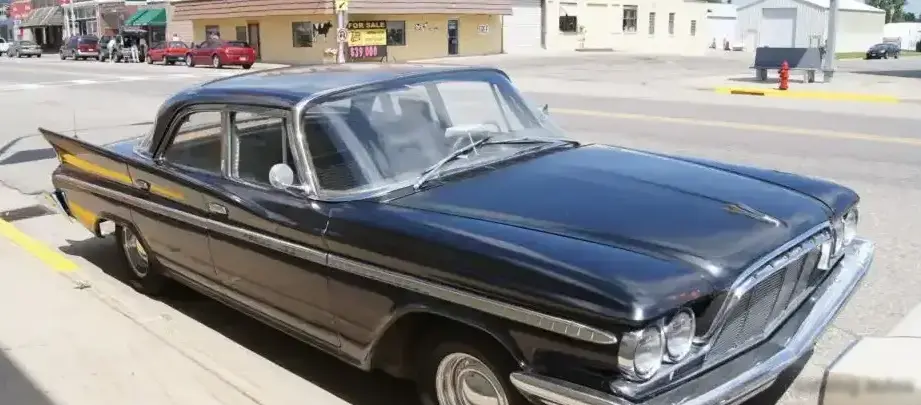
The DeSoto Fireflite IV Four-Door Sedan, powered by a 5.9-liter V8 engine and equipped with a PowerFlite automatic transmission, represented a significant offering from the Chrysler Corporation’s DeSoto division during the 1959 and 1960 model years. Positioned as a mid-range offering within the Fireflite lineup, it aimed to balance performance, comfort, and style for the American family. This generation, the fourth iteration of the Fireflite, was part of a broader effort by DeSoto to establish a distinct identity within the competitive American automotive market. The Fireflite IV was built on the Chrysler B-body platform, shared with other Chrysler-branded vehicles, and was intended to appeal to buyers seeking a step up from more basic models while remaining below the luxury offerings of the Chrysler New Yorker and Imperial.
Technical Specifications
| Brand | DeSoto |
| Model | Fireflite |
| Generation | Fireflite IV Four-Door Sedan |
| Type (Engine) | 5.9 V8 (295 Hp) PowerFlite |
| Start of production | 1959 |
| End of production | 1960 |
| Powertrain Architecture | Internal Combustion engine |
| Body type | Sedan |
| Seats | 6 |
| Doors | 4 |
| Fuel Type | Petrol (Gasoline) |
| Power | 295 Hp @ 4600 rpm |
| Power per litre | 49.9 Hp/l |
| Torque | 529 Nm @ 2400 rpm / 390.17 lb.-ft. @ 2400 rpm |
| Engine displacement | 5916 cm3 / 361.02 cu. in. |
| Number of cylinders | 8 |
| Engine configuration | V-engine |
| Cylinder Bore | 104.65 mm / 4.12 in. |
| Piston Stroke | 85.85 mm / 3.38 in. |
| Compression ratio | 10:1 |
| Number of valves per cylinder | 2 |
| Fuel injection system | Carburettor |
| Engine aspiration | Naturally aspirated engine |
| Valvetrain | OHV |
| Engine oil capacity | 4.7 l / 4.97 US qt | 4.14 UK qt |
| Coolant | 16.1 l / 17.01 US qt | 14.17 UK qt |
| Trunk (boot) space – maximum | 929 l / 32.81 cu. ft. |
| Fuel tank capacity | 87 l / 22.98 US gal | 19.14 UK gal |
| Length | 5471 mm / 215.39 in. |
| Width | 2017 mm / 79.41 in. |
| Height | 1397 mm / 55 in. |
| Wheelbase | 3099 mm / 122.01 in. |
| Front track | 1549 mm / 60.98 in. |
| Rear (Back) track | 1516 mm / 59.69 in. |
| Front overhang | 881 mm / 34.69 in. |
| Rear overhang | 1491 mm / 58.7 in. |
| Ride height (ground clearance) | 132 mm / 5.2 in. |
| Minimum turning circle (turning diameter) | 14.3 m / 46.92 ft. |
| Approach angle | 15.6° |
| Departure angle | 10.4° |
| Ramp-over (brakeover) angle | 12.4° |
| Drivetrain Architecture | The Internal combustion engine (ICE) drives the rear wheels of the vehicle. |
| Drive wheel | Rear wheel drive |
| Number of gears and type of gearbox | 2 gears, automatic transmission PowerFlite |
| Front suspension | Independent torsion bar, double wishbone |
| Rear suspension | Leaf spring |
| Front brakes | Drum, 279 mm |
| Rear brakes | Drum, 279 mm |
| Steering type | Worm-reduction unit |
Powertrain & Engine Architecture
The heart of the Fireflite IV was DeSoto’s 5.9-liter (361 cubic inch) V8 engine. This engine, designated as a “wedge” head design, featured overhead valves (OHV) and a cast iron block. The 295 horsepower output was achieved through a four-barrel carburetor, providing a balance between performance and fuel economy for the era. The engine’s 10:1 compression ratio contributed to its power delivery. The PowerFlite automatic transmission, a three-speed unit, was standard equipment. This transmission, while providing smooth shifting, was not known for its particularly quick acceleration compared to manual transmissions available in other Chrysler products. The PowerFlite utilized a torque converter to multiply engine torque, aiding in off-the-line acceleration, but it also introduced some inherent power loss.
Driving Characteristics
The 1959-1960 Fireflite IV with the 5.9L V8 and PowerFlite automatic offered a comfortable and relatively powerful driving experience for its time. However, the combination wasn’t geared towards sporty handling. The automatic transmission, while convenient, resulted in slower acceleration compared to the manual transmission options available on some Chrysler models. The PowerFlite’s gear ratios were optimized for cruising, making it well-suited for highway driving, but less responsive in city traffic or when needing quick bursts of speed. The car’s substantial weight (approximately 3,800 lbs) further impacted its acceleration and handling. The torsion bar front suspension provided a reasonably comfortable ride, but the leaf spring rear suspension could be somewhat firm, especially over rough roads.
Equipment & Trim Levels
The Fireflite IV Four-Door Sedan came standard with a respectable array of features for the late 1950s. These included full wheel covers, a two-tone paint scheme, a spacious interior upholstered in cloth and vinyl, and a heater. Power steering and power brakes were often included as standard equipment, or available as options. Optional extras included air conditioning, a radio, and whitewall tires. Interior trim levels varied, with higher-end models offering more luxurious upholstery and additional chrome accents. The dashboard featured a prominent instrument cluster with gauges for speed, fuel level, temperature, and oil pressure.
Chassis & Braking
The Fireflite IV utilized a body-on-frame construction, typical of American cars of the era. The front suspension employed an independent torsion bar setup with double wishbones, providing a degree of ride comfort. The rear suspension relied on a traditional leaf spring design. Braking duties were handled by drum brakes on all four wheels, measuring 279mm in diameter. While adequate for the time, the drum brakes lacked the stopping power and fade resistance of disc brakes, which were still relatively uncommon on American cars in the late 1950s. Steering was accomplished through a worm-reduction unit, which provided relatively heavy but precise steering feel.
Market Reception & Comparison
The 1959-1960 DeSoto Fireflite IV received mixed reviews from automotive critics. While the styling was generally well-received, the car was often criticized for its lack of significant differentiation from other Chrysler products. The 5.9L V8 and PowerFlite combination was considered adequate, but not particularly exciting, compared to the more powerful engines offered in some competing models. Fuel economy was also a concern, typical of large American cars of the period. Compared to the higher-end DeSoto Adventurer, the Fireflite offered less luxury and performance. Compared to more basic DeSoto models, the Fireflite provided a step up in terms of features and engine power.
Legacy
The DeSoto Fireflite IV, while not a resounding commercial success, remains a significant example of late 1950s American automotive design. The 5.9L V8 engine, while not known for exceptional longevity, proved to be reasonably durable with proper maintenance. Today, the Fireflite IV is a popular choice among classic car enthusiasts, particularly those seeking a stylish and comfortable cruiser. Parts availability can be a challenge, as DeSoto ceased production in 1961, but a dedicated network of suppliers and enthusiasts helps to keep these cars on the road. The PowerFlite transmission, while not the most modern design, is generally reliable if properly maintained. The Fireflite IV represents a unique chapter in DeSoto’s history, showcasing the brand’s attempt to carve out a niche in the crowded American automotive landscape.