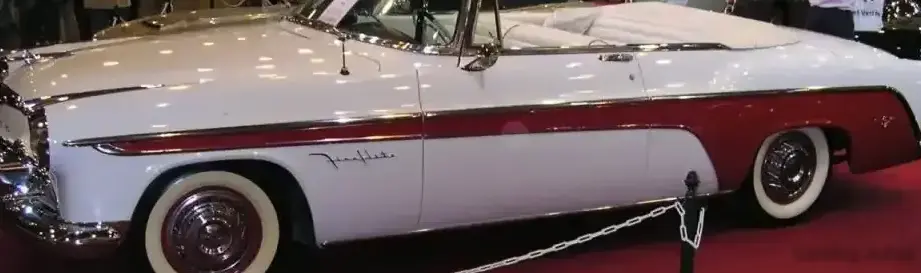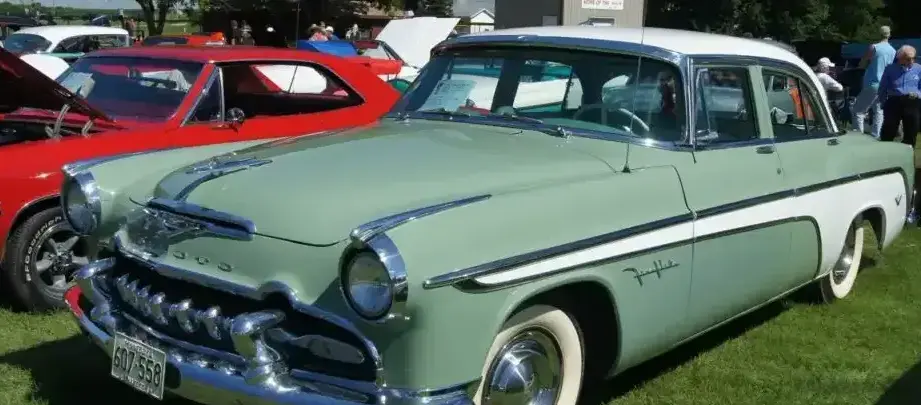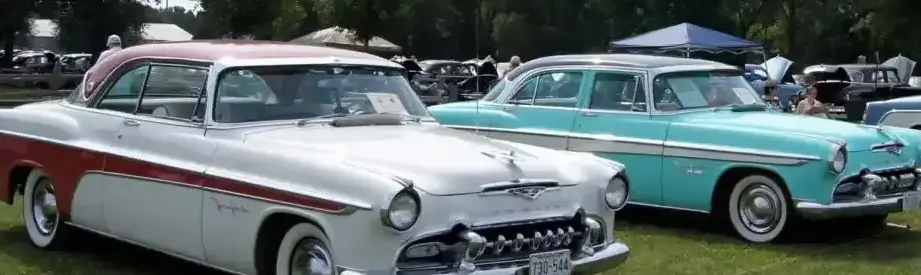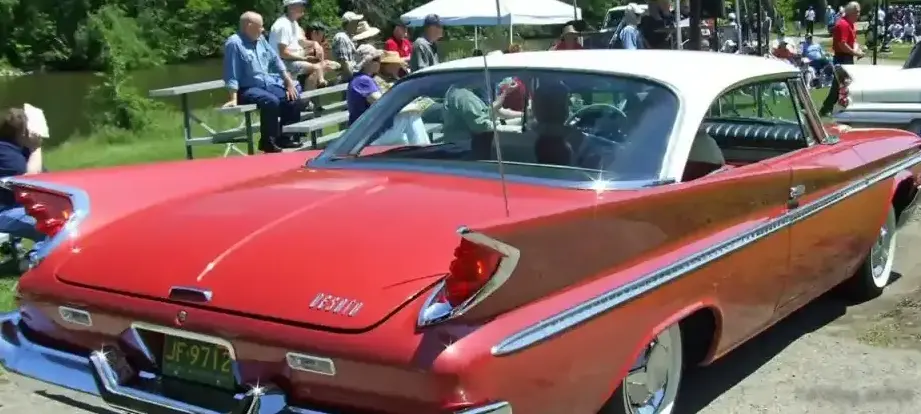
The DeSoto Fireflite Two-Door Hardtop, powered by a 5.9-liter V8 engine producing 295 horsepower, represented a significant offering in the American automotive landscape of 1959 and 1960. Positioned as a premium offering within the DeSoto lineup, the Fireflite aimed to blend style, performance, and comfort. It was a product of a period of bold design and powerful engines, reflecting the optimism and prosperity of post-war America. The Fireflite competed directly with other full-size American automobiles from brands like Chevrolet, Ford, and Plymouth, appealing to buyers seeking a luxurious and capable vehicle.
Technical Specifications
| Brand | DeSoto |
| Model | Fireflite |
| Generation | Fireflite Two-Door Hardtop |
| Type (Engine) | 5.9 V8 (295 Hp) |
| Start of production | 1959 |
| End of production | 1960 |
| Powertrain Architecture | Internal Combustion engine |
| Body type | Coupe |
| Seats | 6 |
| Doors | 2 |
| Fuel Type | Petrol (Gasoline) |
| Weight-to-power ratio | 6 kg/Hp, 165.5 Hp/tonne |
| Weight-to-torque ratio | 3.4 kg/Nm, 296.7 Nm/tonne |
| Power | 295 Hp @ 4600 rpm |
| Power per litre | 49.9 Hp/l |
| Torque | 529 Nm @ 2400 rpm, 390.17 lb.-ft. @ 2400 rpm |
| Engine displacement | 5916 cm3, 361.02 cu. in. |
| Number of cylinders | 8 |
| Engine configuration | V-engine |
| Cylinder Bore | 104.65 mm, 4.12 in. |
| Piston Stroke | 85.85 mm, 3.38 in. |
| Compression ratio | 10:1 |
| Number of valves per cylinder | 2 |
| Fuel injection system | Carburettor |
| Engine aspiration | Naturally aspirated engine |
| Valvetrain | OHV |
| Engine oil capacity | 4.7 l, 4.97 US qt | 4.14 UK qt |
| Coolant | 16.1 l, 17.01 US qt | 14.17 UK qt |
| Kerb Weight | 1783 kg, 3930.84 lbs |
| Trunk (boot) space – maximum | 966 l, 34.11 cu. ft |
| Fuel tank capacity | 87 l, 22.98 US gal | 19.14 UK gal |
| Length | 5471 mm, 215.39 in |
| Width | 2017 mm, 79.41 in |
| Height | 1392 mm, 54.8 in |
| Wheelbase | 3099 mm, 122.01 in |
| Front track | 1549 mm, 60.98 in |
| Rear (Back) track | 1516 mm, 59.69 in |
| Front overhang | 881 mm, 34.69 in |
| Rear overhang | 1491 mm, 58.7 in |
| Ride height (ground clearance) | 132 mm, 5.2 in |
| Minimum turning circle (turning diameter) | 14.3 m, 46.92 ft |
| Approach angle | 15.6° |
| Departure angle | 10.4° |
| Ramp-over (brakeover) angle | 12.4° |
| Drivetrain Architecture | The Internal combustion engine (ICE) drives the rear wheels of the vehicle. |
| Drive wheel | Rear wheel drive |
| Number of gears and type of gearbox | 3 gears, manual transmission |
| Front suspension | Independent torsion bar, double wishbone |
| Rear suspension | Leaf spring |
| Front brakes | Drum, 279 mm |
| Rear brakes | Drum, 279 mm |
| Steering type | Worm-reduction unit |
Powertrain & Engine Architecture
The heart of the 1959-1960 DeSoto Fireflite was its 5.9-liter (361 cubic inch) V8 engine. This engine, a cornerstone of DeSoto’s performance image, featured a cast iron block and cylinder heads. It utilized a conventional overhead valve (OHV) valvetrain with two valves per cylinder. Fuel delivery was managed by a carburetor, a common practice for the era. The engine’s 10:1 compression ratio contributed to its respectable power output. The Fireflite was equipped with a three-speed manual transmission as standard, sending power to the rear wheels. This configuration was typical for American cars of the time, prioritizing simplicity and durability over outright efficiency.
Driving Characteristics
The Fireflite, with its 295 horsepower and 390 lb-ft of torque, offered brisk acceleration for its time. While not a sports car, it provided ample power for highway cruising and passing maneuvers. The three-speed manual transmission required deliberate shifting, and the gear ratios were optimized for mid-range torque rather than high-revving performance. Compared to other DeSoto models, like those equipped with the smaller engines, the Fireflite delivered a noticeably more engaging driving experience. However, it wasn’t as refined or fuel-efficient as some of its competitors.
Equipment & Trim Levels
The Fireflite Two-Door Hardtop was positioned as a relatively well-equipped vehicle. Standard features included a spacious interior with comfortable bench seating, a full-width dashboard with prominent instrumentation, and a generous amount of chrome trim both inside and out. The hardtop body style offered a sleek and modern appearance. Optional extras included power steering, power brakes, a radio, and various upholstery upgrades. The interior typically featured cloth and vinyl upholstery, with the option for leather in some cases. The overall aesthetic was one of mid-century American luxury.
Chassis & Braking
The Fireflite rode on a robust chassis featuring independent torsion bar suspension in the front and a leaf spring suspension in the rear. This setup provided a comfortable ride, although it wasn’t particularly sporty. Braking duties were handled by drum brakes on all four wheels. While adequate for the time, the drum brakes lacked the stopping power and fade resistance of modern disc brake systems. Steering was accomplished via a worm-reduction unit, which provided a somewhat indirect feel.
Market Reception & Comparison
The 1959-1960 DeSoto Fireflite received generally positive reviews from automotive journalists. Critics praised its powerful engine, spacious interior, and stylish design. However, some noted its relatively high price compared to competitors and its somewhat dated technology. Compared to other DeSoto models, the Fireflite offered a significant performance upgrade, but it also came with a higher price tag. Fuel economy was typical for a full-size American car of the era – relatively poor by modern standards. Reliability was generally good, but maintenance costs could be substantial due to the engine’s size and complexity.
Legacy
The DeSoto Fireflite, while not a long-lived model, holds a significant place in automotive history. It represents a high point in American automotive design and engineering, embodying the optimism and excess of the late 1950s. Today, the Fireflite is a sought-after classic car, particularly among collectors and enthusiasts. The 5.9-liter V8 engine is known for its durability and potential for modification. While parts availability can be a challenge, the Fireflite remains a rewarding vehicle to own and restore. Its enduring appeal lies in its combination of style, power, and a nostalgic connection to a bygone era of American motoring.