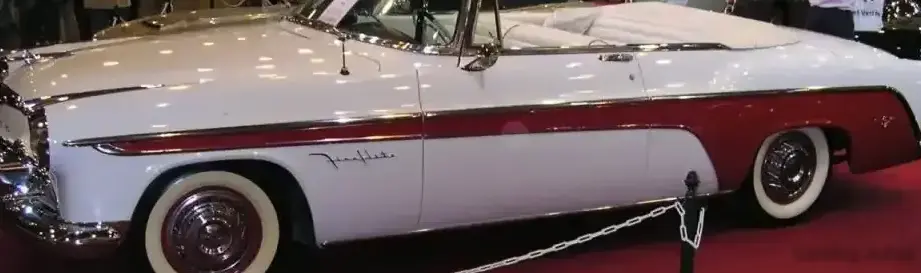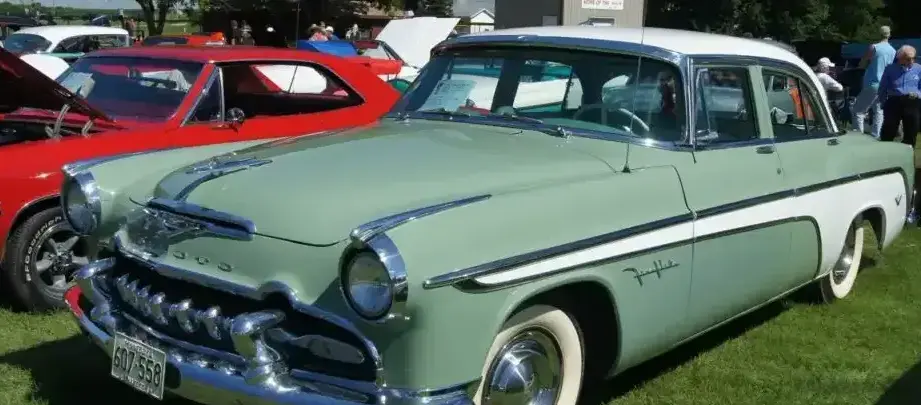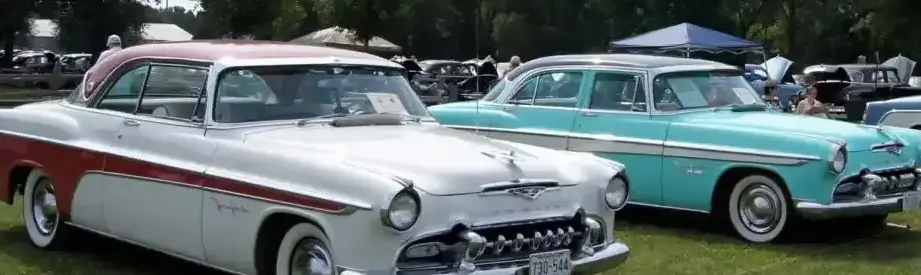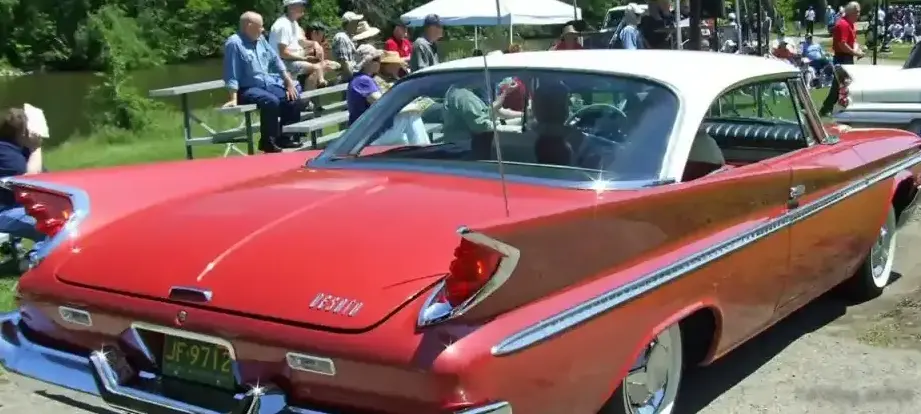
The DeSoto Fireflite Two-Door Hardtop, powered by a 5.9-liter V8 engine and TorqueFlite automatic transmission, represented a significant offering in the American automotive landscape of 1959 and 1960. Positioned as a mid-range to premium offering within the DeSoto lineup, it aimed to blend performance with the style and comfort expected of a full-size American car. The Fireflite name had been associated with DeSoto’s performance models since the 1950s, and this iteration continued that tradition, though increasingly within the context of larger, heavier vehicles. Production spanned only two model years, reflecting the challenges faced by DeSoto as a brand during this period.
Technical Specifications
| Brand | DeSoto |
| Model | Fireflite |
| Generation | Fireflite Two-Door HardTop |
| Type (Engine) | 5.9 V8 (295 Hp) TorqueFlite |
| Start of production | 1959 |
| End of production | 1960 |
| Powertrain Architecture | Internal Combustion engine |
| Body type | Coupe |
| Seats | 6 |
| Doors | 2 |
| Fuel Type | Petrol (Gasoline) |
| Power | 295 Hp @ 4600 rpm |
| Power per litre | 49.9 Hp/l |
| Torque | 529 Nm @ 2400 rpm / 390.17 lb.-ft. @ 2400 rpm |
| Engine displacement | 5916 cm3 / 361.02 cu. in. |
| Number of cylinders | 8 |
| Engine configuration | V-engine |
| Cylinder Bore | 104.65 mm / 4.12 in. |
| Piston Stroke | 85.85 mm / 3.38 in. |
| Compression ratio | 10:1 |
| Number of valves per cylinder | 2 |
| Fuel injection system | Carburettor |
| Engine aspiration | Naturally aspirated engine |
| Valvetrain | OHV |
| Engine oil capacity | 4.7 l / 4.97 US qt | 4.14 UK qt |
| Coolant | 16.1 l / 17.01 US qt | 14.17 UK qt |
| Trunk (boot) space – maximum | 966 l / 34.11 cu. ft. |
| Fuel tank capacity | 87 l / 22.98 US gal | 19.14 UK gal |
| Length | 5471 mm / 215.39 in. |
| Width | 2017 mm / 79.41 in. |
| Height | 1392 mm / 54.8 in. |
| Wheelbase | 3099 mm / 122.01 in. |
| Front track | 1549 mm / 60.98 in. |
| Rear (Back) track | 1516 mm / 59.69 in. |
| Front overhang | 881 mm / 34.69 in. |
| Rear overhang | 1491 mm / 58.7 in. |
| Ride height (ground clearance) | 132 mm / 5.2 in. |
| Minimum turning circle (turning diameter) | 14.3 m / 46.92 ft. |
| Approach angle | 15.6° |
| Departure angle | 10.4° |
| Ramp-over (brakeover) angle | 12.4° |
| Drivetrain Architecture | The Internal combustion engine (ICE) drives the rear wheels of the vehicle. |
| Drive wheel | Rear wheel drive |
| Number of gears and type of gearbox | 3 gears, automatic transmission TorqueFlite |
| Front suspension | Independent torsion bar, double wishbone |
| Rear suspension | Leaf spring |
| Front brakes | Drum, 279 mm |
| Rear brakes | Drum, 279 mm |
| Steering type | Worm-reduction unit |
Powertrain & Engine Architecture
The heart of the 1959-1960 Fireflite was DeSoto’s 5.9-liter (361 cubic inch) V8 engine. This engine, utilizing a cast iron block and aluminum cylinder heads, was a descendant of the earlier DeSoto V8s, but significantly updated for the late 1950s. It featured a 10:1 compression ratio and employed a single Carter carburetor, delivering 295 horsepower at 4,600 rpm and 529 Nm (390 lb-ft) of torque at 2,400 rpm. The engine utilized an overhead valve (OHV) configuration with two valves per cylinder. The TorqueFlite automatic transmission, a three-speed unit, was the standard and only transmission option. This transmission was known for its smoothness and durability, though it wasn’t particularly fuel-efficient by modern standards. The TorqueFlite was a push-button operated transmission, a common feature on Chrysler Corporation vehicles of the era.
Driving Characteristics
The Fireflite Two-Door Hardtop, with its substantial weight and the TorqueFlite automatic, offered a comfortable but not particularly sporty driving experience. Acceleration was adequate for the time, but the car wasn’t designed for quick sprints. The TorqueFlite transmission, while smooth, lacked the responsiveness of a manual gearbox. The gear ratios were optimized for cruising, making it well-suited for highway driving. Compared to other DeSoto models, such as those equipped with the optional higher-output engines, the 295 hp version felt less energetic. However, it provided a good balance between performance and fuel economy, which was a consideration for many buyers.
Equipment & Trim Levels
The Fireflite Two-Door Hardtop came standard with a generous amount of equipment for the late 1950s. This included full wheel covers, whitewall tires, a deluxe steering wheel, and a padded dashboard. Interior upholstery was typically cloth and vinyl, available in a variety of colors. Optional extras included power steering, power brakes, air conditioning, a radio, and a continental kit. The “Hardtop” designation indicated a pillarless design, offering a more open and stylish appearance than the traditional post sedan. The trim level was generally considered mid-range within the DeSoto lineup, offering a step up from the base models but falling short of the fully-loaded Adventurer series.
Chassis & Braking
The Fireflite rode on a traditional body-on-frame chassis. Front suspension utilized an independent torsion bar and double wishbone setup, providing a relatively comfortable ride. The rear suspension employed leaf springs, a common design for full-size American cars of the era. Braking was accomplished via drum brakes on all four wheels, measuring 279mm in diameter. Steering was handled by a worm-reduction unit, which provided a somewhat indirect feel. The car’s substantial weight (approximately 1,880 kg or 4,145 lbs) contributed to its stable handling but also limited its agility.
Market Reception & Comparison
The 1959-1960 DeSoto Fireflite received mixed reviews from automotive critics. While the styling was generally praised, the car was often criticized for its size, weight, and relatively modest performance compared to some of its competitors. Fuel economy was also a concern, as with most large American cars of the period. Compared to other DeSoto models, the 295 hp Fireflite offered a good value proposition, providing a comfortable and well-equipped vehicle at a more affordable price point than the higher-performance variants. However, it lacked the prestige and exclusivity of the Adventurer models.
Legacy
The DeSoto Fireflite, particularly the 5.9 V8/TorqueFlite combination, has become a popular choice among classic car enthusiasts. The TorqueFlite transmission is known for its reliability, and the 361 cubic inch V8 is relatively easy to maintain. However, parts availability can be a challenge, as DeSoto ceased production in 1961. The car’s large size and relatively low fuel economy mean it’s best suited for occasional use and car shows. Today, well-preserved examples of the Fireflite Two-Door Hardtop command respectable prices in the collector car market, representing a nostalgic reminder of the American automotive styling and engineering of the late 1950s.