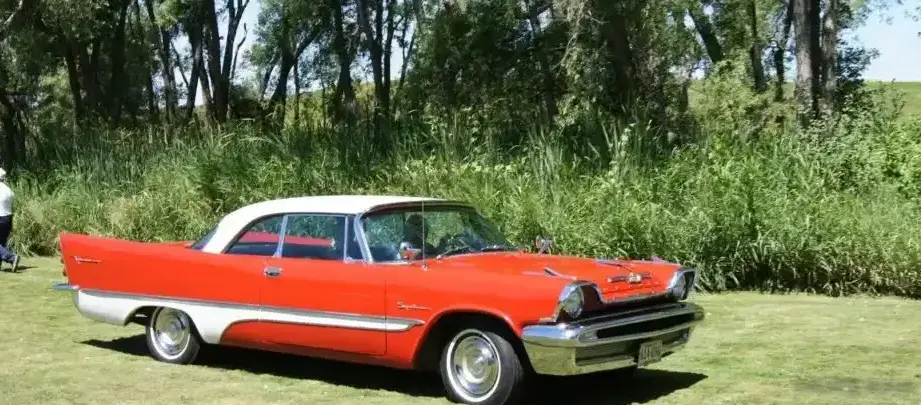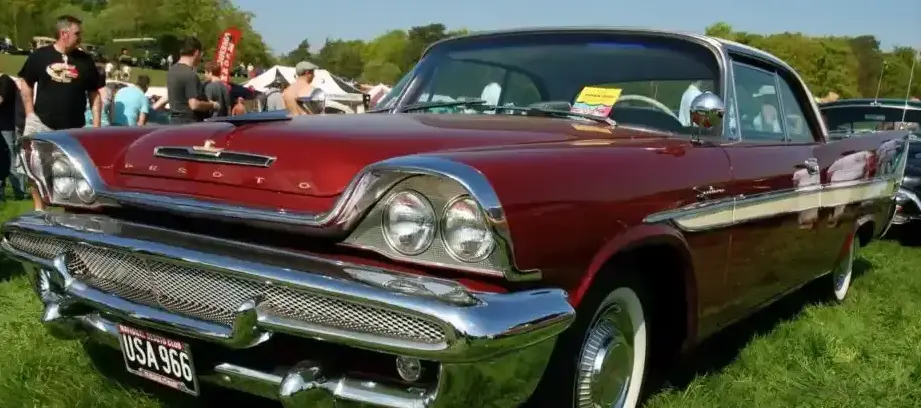
The DeSoto Firesweep I 2-Door Sportsman, particularly the 1958 facelifted model, represented a significant effort by the DeSoto division of Chrysler Corporation to compete in the mid-range American automotive market. Produced from 1957 to 1958, the Firesweep was positioned as a stylish and relatively affordable full-size car, aiming to attract buyers seeking a blend of comfort, performance, and distinctive design. This specific variant, equipped with the 5.7-liter V8 engine producing 280 horsepower and paired with the PowerFlite automatic transmission, occupied a sweet spot in the Firesweep lineup, offering a balance between power and ease of driving. The Firesweep was a short-lived model, discontinued after only two years due to declining sales and Chrysler’s streamlining of its brands.
Technical Specifications
| Brand | DeSoto |
| Model | Firesweep |
| Generation | Firesweep I 2-Door Sportsman (facelift 1958) |
| Type (Engine) | 5.7 V8 (280 Hp) PowerFlite |
| Start of production | 1957 |
| End of production | 1958 |
| Powertrain Architecture | Internal Combustion engine |
| Body type | Coupe |
| Seats | 6 |
| Doors | 2 |
| Fuel Type | Petrol (Gasoline) |
| Power | 280 Hp @ 4600 rpm |
| Power per litre | 48.8 Hp/l |
| Torque | 515 Nm @ 2400 rpm / 379.84 lb.-ft. @ 2400 rpm |
| Engine displacement | 5735 cm3 / 349.97 cu. in. |
| Number of cylinders | 8 |
| Engine configuration | V-engine |
| Cylinder Bore | 103.12 mm / 4.06 in. |
| Piston Stroke | 85.85 mm / 3.38 in. |
| Compression ratio | 10:1 |
| Number of valves per cylinder | 2 |
| Fuel injection system | Carburettor |
| Engine aspiration | Naturally aspirated engine |
| Valvetrain | OHV |
| Engine oil capacity | 3.8 l / 4.02 US qt | 3.34 UK qt |
| Coolant | 16.1 l / 17.01 US qt | 14.17 UK qt |
| Fuel tank capacity | 76 l / 20.08 US gal | 16.72 UK gal |
| Length | 5499 mm / 216.5 in. |
| Width | 1989 mm / 78.31 in. |
| Height | 1443 mm / 56.81 in. |
| Wheelbase | 3099 mm / 122.01 in. |
| Front track | 1547 mm / 60.91 in. |
| Rear track | 1516 mm / 59.69 in. |
| Front overhang | 940 mm / 37.01 in. |
| Rear overhang | 1461 mm / 57.52 in. |
| Ride height (ground clearance) | 142 mm / 5.59 in. |
| Minimum turning circle | 14.2 m / 46.59 ft. |
| Approach angle | 16.5° |
| Departure angle | 11.4° |
| Ramp-over angle | 10.5° |
| Drivetrain Architecture | Rear wheel drive |
| Drive wheel | Rear wheel drive |
| Number of gears and type of gearbox | 2 gears, automatic transmission PowerFlite |
| Front suspension | Independent coil spring |
| Rear suspension | Leaf spring |
| Front brakes | Drum, 279 mm |
| Rear brakes | Drum, 279 mm |
| Steering type | Worm-reduction unit |
Powertrain & Engine Architecture
The heart of this Firesweep variant was the Chrysler-built 5.7-liter (349.97 cubic inch) V8 engine. This engine, designated with various codes depending on specific calibration, produced 280 horsepower at 4600 rpm and 515 Nm (379.84 lb-ft) of torque at 2400 rpm. It featured a cast iron block and cylinder heads, with a 10:1 compression ratio. The engine utilized a single carburetor for fuel delivery and an overhead valve (OHV) valvetrain with two valves per cylinder. The PowerFlite automatic transmission, a two-speed unit, was specifically designed to handle the V8’s torque output. While not as sophisticated as some contemporary automatic transmissions, the PowerFlite was known for its durability and smooth operation. The transmission’s relatively simple design contributed to its reliability, but also limited its efficiency compared to more modern automatics.
Driving Characteristics
The 1958 Firesweep with the 5.7L V8 and PowerFlite offered a comfortable and capable driving experience for its time. The 280 horsepower provided adequate acceleration, although it wasn’t a particularly sporty car. The PowerFlite transmission, with its two forward speeds, prioritized smooth cruising over rapid acceleration. The gear ratios were optimized for highway driving, making it a pleasant vehicle for long trips. Compared to the base engine options available in the Firesweep, this V8 provided a noticeable performance boost. However, it didn’t match the performance of the larger displacement engines offered in other Chrysler models. The leaf spring rear suspension provided a comfortable ride, but it wasn’t as refined as the independent suspension found on some competing vehicles.
Equipment & Trim Levels
The Firesweep 2-Door Sportsman, in this configuration, was generally considered a mid-range trim level. Standard features included a spacious interior with seating for six, full wheel covers, a deluxe steering wheel, and a generously sized trunk. Interior upholstery typically consisted of cloth and vinyl, with a variety of color combinations available. Optional extras included power steering, power brakes, a radio, and air conditioning. The dashboard featured a straightforward layout with clearly marked gauges. The overall interior design emphasized comfort and practicality rather than luxury.
Chassis & Braking
The Firesweep utilized a body-on-frame construction, typical of American cars of the era. The front suspension was independent, employing coil springs, while the rear suspension relied on a traditional leaf spring setup. This combination provided a comfortable ride, but handling was not particularly sharp. The braking system consisted of drum brakes on all four wheels, measuring 279mm in diameter. While adequate for the car’s weight and performance, the drum brakes lacked the stopping power and fade resistance of disc brakes. Steering was accomplished via a worm-reduction unit, which provided relatively heavy but precise steering feel.
Market Reception & Comparison
The 1958 Firesweep received mixed reviews from automotive critics. While praised for its styling and comfortable ride, it was often criticized for its lack of performance compared to some competitors. The PowerFlite transmission, while smooth, was seen as outdated by some reviewers. Compared to other DeSoto models, the Firesweep offered a more affordable entry point into the brand. It competed with other mid-size cars from Ford, Chevrolet, and Plymouth. Fuel economy was typical for the era, averaging around 15-18 miles per gallon. Reliability was generally good, although the carburetor required periodic adjustment and maintenance.
Legacy
The DeSoto Firesweep, and the DeSoto brand as a whole, ultimately proved to be short-lived. Production ceased in 1961 as Chrysler consolidated its offerings. Today, the 1958 Firesweep is a sought-after classic car, particularly among enthusiasts of 1950s American automobiles. The 5.7L V8 and PowerFlite combination is generally considered a reliable powertrain, although parts availability can be a challenge. Well-maintained examples command reasonable prices in the collector car market, appealing to those seeking a stylish and nostalgic piece of automotive history. The Firesweep represents a unique chapter in DeSoto’s history, showcasing the brand’s attempt to blend style, comfort, and performance in a competitive market.