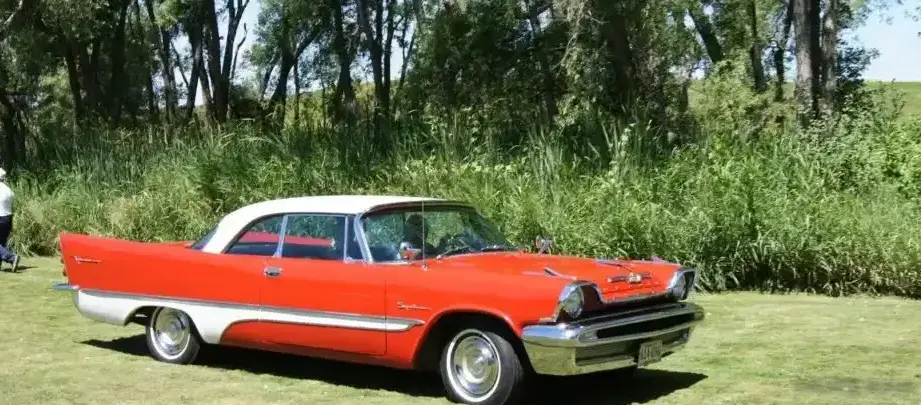
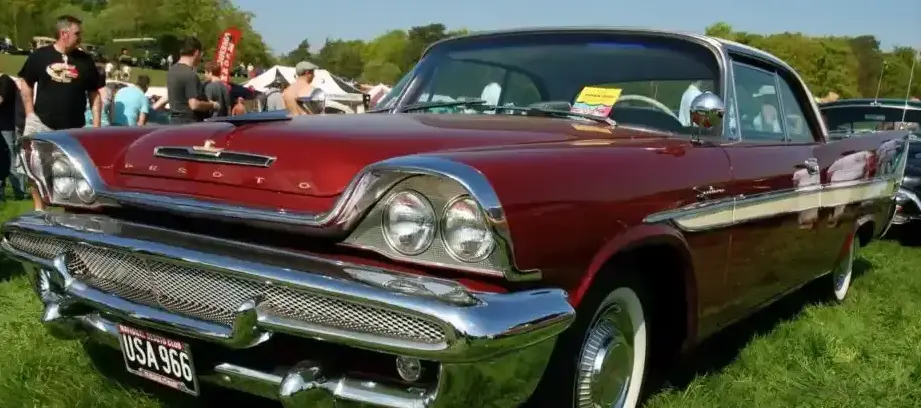
The DeSoto Firesweep I 2-Door Sportsman, specifically the 1959 facelifted model with the 5.9-liter V8 engine producing 295 horsepower, represents a pivotal moment in the final years of the DeSoto marque. Produced from 1958 to 1959, this iteration of the Firesweep occupied a unique position within the Chrysler Corporation lineup, aiming to blend sporty styling with comfortable, family-oriented features. It was built on the shared Chrysler/DeSoto A-body platform, and the ’59 facelift brought significant aesthetic changes, attempting to revitalize sales in a competitive market. This particular configuration, with its substantial V8, was positioned as a performance-oriented offering within the Firesweep range, though still maintaining a focus on cruising comfort.
Technical Specifications
| Brand | DeSoto |
| Model | Firesweep |
| Generation | Firesweep I 2-Door Sportsman (facelift 1959) |
| Type (Engine) | 5.9 V8 (295 Hp) |
| Start of production | 1958 |
| End of production | 1959 |
| Powertrain Architecture | Internal Combustion engine |
| Body type | Coupe |
| Seats | 6 |
| Doors | 2 |
| Fuel Type | Petrol (Gasoline) |
| Weight-to-power ratio | 5.9 kg/Hp, 170.7 Hp/tonne |
| Weight-to-torque ratio | 3.3 kg/Nm, 306.1 Nm/tonne |
| Power | 295 Hp @ 4600 rpm |
| Power per litre | 49.9 Hp/l |
| Torque | 529 Nm @ 2400 rpm, 390.17 lb.-ft. @ 2400 rpm |
| Engine displacement | 5916 cm3, 361.02 cu. in. |
| Number of cylinders | 8 |
| Engine configuration | V-engine |
| Cylinder Bore | 104.65 mm, 4.12 in. |
| Piston Stroke | 85.85 mm, 3.38 in. |
| Compression ratio | 10:1 |
| Number of valves per cylinder | 2 |
| Fuel injection system | Carburettor |
| Engine aspiration | Naturally aspirated engine |
| Valvetrain | OHV |
| Engine oil capacity | 4.7 l, 4.97 US qt | 4.14 UK qt |
| Coolant | 16.1 l, 17.01 US qt | 14.17 UK qt |
| Kerb Weight | 1728 kg, 3809.59 lbs |
| Fuel tank capacity | 76 l, 20.08 US gal | 16.72 UK gal |
| Length | 5514 mm, 217.09 in |
| Width | 1999 mm, 78.7 in |
| Height | 1438 mm, 56.61 in |
| Wheelbase | 3099 mm, 122.01 in |
| Front track | 1547 mm, 60.91 in |
| Rear (Back) track | 1516 mm, 59.69 in |
| Ride height (ground clearance) | 140 mm, 5.51 in |
| Minimum turning circle (turning diameter) | 14.2 m, 46.59 ft |
| Approach angle | 15° |
| Departure angle | 10° |
| Ramp-over (brakeover) angle | 10.4° |
| Drivetrain Architecture | The Internal combustion engine (ICE) drives the rear wheels of the vehicle. |
| Drive wheel | Rear wheel drive |
| Number of gears and type of gearbox | 3 gears, manual transmission |
| Front suspension | Independent torsion bar, double wishbone |
| Rear suspension | Leaf spring |
| Front brakes | Drum, 279 mm |
| Rear brakes | Drum, 279 mm |
| Steering type | Worm-reduction unit |
Powertrain & Engine Architecture
The heart of the 1959 Firesweep Sportsman was the DeSoto 5.9-liter (361 cubic inch) V8 engine. This engine, designated within Chrysler as the “B” engine family, was a robust and relatively simple design. It featured a cast iron block and cylinder heads, with an overhead valve (OHV) configuration. The engine utilized a single Carter carburetor, providing fuel delivery. The 10:1 compression ratio contributed to the engine’s respectable power output for the era. The three-speed manual transmission was the standard offering, providing a direct connection to the rear wheels. While an automatic transmission was available as an option, the manual was favored by those seeking a more engaging driving experience. The engine’s design prioritized low-end torque, making it well-suited for relaxed cruising and occasional bursts of acceleration.
Driving Characteristics
The 1959 Firesweep Sportsman, equipped with the 5.9-liter V8 and manual transmission, offered a driving experience that was characteristic of American cars of the late 1950s. The engine delivered strong acceleration, particularly from a standstill, thanks to its substantial torque. The three-speed manual gearbox, while not particularly sophisticated by modern standards, provided a direct and engaging feel. Compared to the automatic transmission equipped models, the manual offered more control and a slightly improved fuel economy. However, the car’s considerable weight (approximately 3800 pounds) meant that it wasn’t a particularly nimble handler. The torsion bar front suspension and leaf spring rear suspension provided a comfortable ride, but body roll was noticeable in corners. The steering, utilizing a worm-reduction unit, was somewhat vague and required considerable effort at low speeds.
Equipment & Trim Levels
The Firesweep Sportsman, even in its base form, offered a reasonable level of standard equipment for the time. The interior typically featured cloth and vinyl upholstery, with a simple but functional dashboard layout. Standard features included a heater, a basic AM radio, and full wheel covers. Optional extras included power steering, power brakes, a continental kit, and upgraded interior trim. The Sportsman trim level generally included more exterior brightwork and a slightly more luxurious interior compared to the base Firesweep models. The two-tone paint schemes were popular, adding to the car’s visual appeal.
Chassis & Braking
The Firesweep’s chassis was a traditional body-on-frame construction, providing a robust and durable platform. The front suspension utilized independent torsion bars and double wishbones, offering a relatively comfortable ride. The rear suspension employed leaf springs, a common design for American cars of the era. Braking was accomplished via drum brakes on all four wheels. While adequate for the time, the drum brakes lacked the stopping power and fade resistance of modern disc brakes. The steering system, as mentioned previously, was a worm-reduction unit, providing a somewhat indirect steering feel.
Market Reception & Comparison
The 1959 Firesweep, despite its attractive styling and powerful engine, faced stiff competition from other American manufacturers. Critics generally praised the car’s performance and comfortable ride, but some noted its somewhat dated design and lack of modern features. Compared to other DeSoto models, such as the Adventurer, the Firesweep Sportsman offered a more affordable entry point into the DeSoto lineup. It also differed from the more luxurious Chrysler New Yorker and Imperial models, offering a more sporty and youthful appeal. Fuel economy, while not a primary concern for buyers in the late 1950s, was relatively poor compared to more modern vehicles.
Legacy
The 1959 DeSoto Firesweep Sportsman, along with the entire DeSoto brand, ultimately proved to be short-lived. DeSoto production ceased in 1961 due to declining sales and internal competition within the Chrysler Corporation. Today, the Firesweep is a relatively rare and collectible classic car. The 5.9-liter V8 engine is known for its durability and relative simplicity, making it a popular choice for restoration projects. While parts availability can be challenging, a dedicated community of DeSoto enthusiasts continues to support the preservation of these iconic vehicles. The 1959 Firesweep Sportsman represents a fascinating chapter in American automotive history, embodying the style and performance of a bygone era.