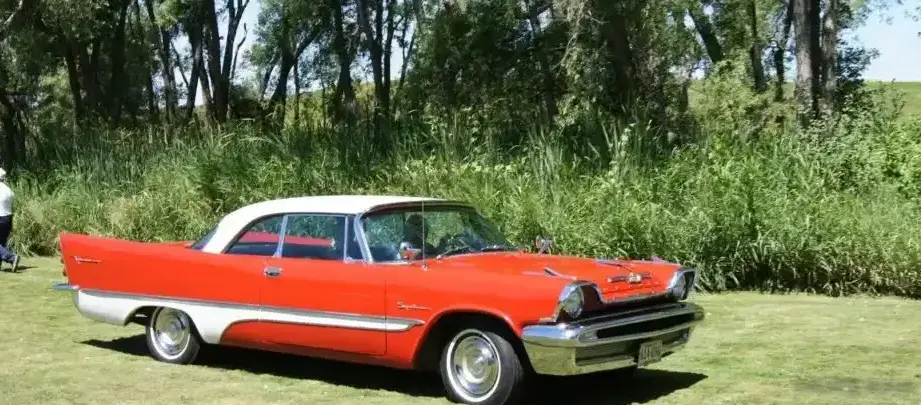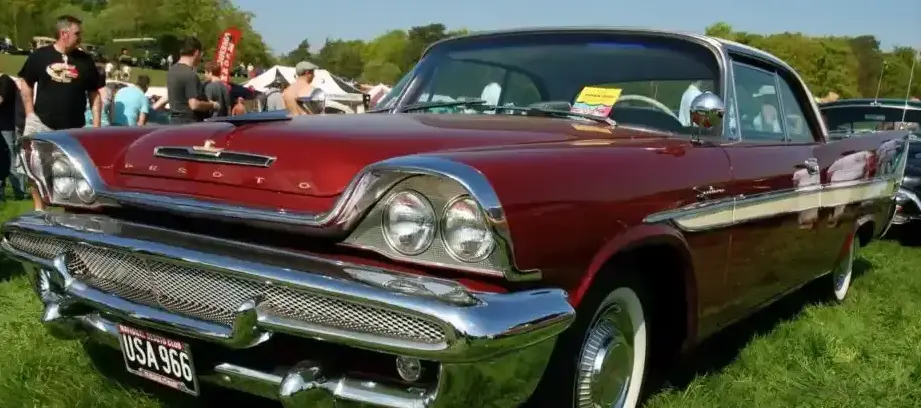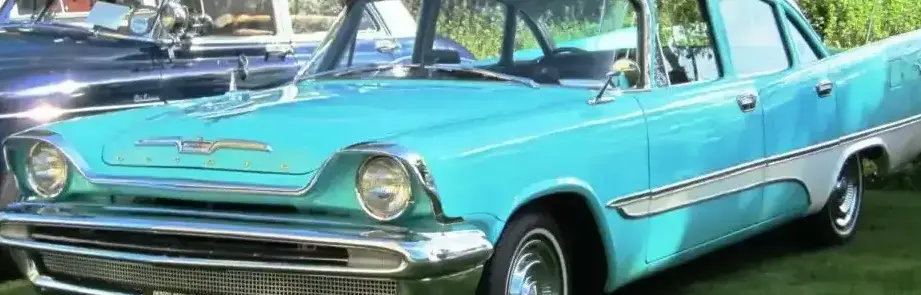
The DeSoto Firesweep I 4-Door Sedan with the 5.3-liter V8 engine, producing 245 horsepower, was a cornerstone of the DeSoto lineup during its brief production run from 1956 to 1957. Representing the first generation of the Firesweep model, it aimed to offer a blend of style, performance, and comfort within the mid-range of the DeSoto brand. The Firesweep was positioned as a more accessible alternative to the flagship DeSoto Adventurer, targeting buyers seeking a full-size American sedan with a powerful V8 engine. It was part of a broader effort by DeSoto to revitalize its image and compete more effectively in the burgeoning post-war automotive market.
Technical Specifications
| Brand | DeSoto |
| Model | Firesweep |
| Generation | Firesweep I 4-Door Sedan |
| Type (Engine) | 5.3 V8 (245 Hp) |
| Start of production | 1956 |
| End of production | 1957 |
| Powertrain Architecture | Internal Combustion engine |
| Body type | Sedan |
| Seats | 6 |
| Doors | 4 |
| Fuel Type | Petrol (Gasoline) |
| Weight-to-power ratio | 6.8 kg/Hp, 147 Hp/tonne |
| Weight-to-torque ratio | 3.8 kg/Nm, 260.3 Nm/tonne |
| Power | 245 Hp @ 4400 rpm |
| Power per litre | 46 Hp/l |
| Torque | 434 Nm @ 2400 rpm, 320.1 lb.-ft. @ 2400 rpm |
| Engine Model/Code | S27 |
| Engine displacement | 5326 cm3, 325.01 cu. in. |
| Number of cylinders | 8 |
| Engine configuration | V-engine |
| Cylinder Bore | 93.73 mm, 3.69 in. |
| Piston Stroke | 96.52 mm, 3.8 in. |
| Compression ratio | 8.5:1 |
| Number of valves per cylinder | 2 |
| Fuel injection system | Carburettor |
| Engine aspiration | Naturally aspirated engine |
| Valvetrain | OHV |
| Engine oil capacity | 4.7 l, 4.97 US qt | 4.14 UK qt |
| Coolant | 19.9 l, 21.03 US qt | 17.51 UK qt |
| Kerb Weight | 1667 kg, 3675.11 lbs |
| Fuel tank capacity | 76 l, 20.08 US gal | 16.72 UK gal |
| Length | 5481 mm, 215.79 in |
| Width | 1986 mm, 78.19 in |
| Height | 1440 mm, 56.69 in |
| Wheelbase | 3099 mm, 122.01 in |
| Front track | 1547 mm, 60.91 in |
| Rear (Back) track | 1516 mm, 59.69 in |
| Front overhang | 925 mm, 36.42 in |
| Rear overhang | 1458 mm, 57.4 in |
| Ride height (ground clearance) | 137 mm, 5.39 in |
| Minimum turning circle (turning diameter) | 13.1 m, 42.98 ft |
| Approach angle | 18.9° |
| Departure angle | 12.9° |
| Ramp-over (brakeover) angle | 10.2° |
| Drivetrain Architecture | The Internal combustion engine (ICE) drives the rear wheels of the vehicle. |
| Drive wheel | Rear wheel drive |
| Number of gears and type of gearbox | 3 gears, manual transmission |
| Front suspension | Independent coil spring |
| Rear suspension | Leaf spring |
| Steering type | Worm-reduction unit |
Powertrain & Engine Architecture
The heart of the 1956-1957 Firesweep was the DeSoto S27 5.3-liter (325 cubic inch) V8 engine. This engine featured a cast iron block and cylinder heads, with a 8.5:1 compression ratio. It utilized a conventional overhead valve (OHV) valvetrain with two valves per cylinder. Fuel delivery was managed by a Carter carburetor, a common setup for the era. The S27 engine was known for its robust construction and relatively simple design, making it reasonably reliable for the time. The engine produced 245 horsepower at 4400 rpm and 434 Nm (320.1 lb-ft) of torque at 2400 rpm. The standard transmission was a three-speed manual, although a PowerFlite two-speed automatic transmission was offered as an option. The automatic transmission, while providing convenience, did slightly diminish the car’s acceleration performance.
Driving Characteristics
The Firesweep I with the 5.3L V8 and manual transmission offered brisk acceleration for its time. While not a sports car, the engine provided ample power for highway cruising and passing maneuvers. The three-speed manual transmission allowed for a reasonable degree of driver control, but the gear ratios were spaced to prioritize comfortable cruising rather than outright performance. The automatic transmission, while smoother, resulted in a noticeable reduction in responsiveness. The car’s substantial weight (approximately 3675 lbs) meant that handling was best described as comfortable and stable, rather than agile. The independent coil spring front suspension provided a reasonably comfortable ride, while the leaf spring rear suspension was more prone to bouncing over rough surfaces.
Equipment & Trim Levels
The Firesweep I 4-Door Sedan was generally well-equipped for a mid-range American car of the 1950s. Standard features included a spacious interior with seating for six passengers, a full-width bench seat, and a basic instrument panel. Interior upholstery was typically cloth and vinyl, with a range of color options available. Optional extras included power steering, power brakes, a radio, a heater, and whitewall tires. Higher trim levels offered more luxurious interior appointments, such as upgraded upholstery and additional chrome trim. The Firesweep was available in a variety of two-tone paint schemes, adding to its visual appeal.
Chassis & Braking
The Firesweep I rode on a traditional body-on-frame chassis. The front suspension utilized independent coil springs, while the rear suspension employed leaf springs. This configuration was typical for American cars of the era and prioritized ride comfort over handling precision. Braking was accomplished via drum brakes on all four wheels. Power brakes were available as an option, providing increased stopping power and reduced driver effort. Steering was handled by a worm-reduction unit, which offered relatively heavy but precise steering feel.
Market Reception & Comparison
The DeSoto Firesweep I was generally well-received by automotive critics, who praised its stylish design, powerful engine, and comfortable ride. However, it faced stiff competition from other mid-size American sedans, such as the Ford Fairlane, Chevrolet Bel Air, and Plymouth Belvedere. Compared to these rivals, the Firesweep offered a slightly more upscale image and a more powerful base engine. However, it was also generally more expensive. The Firesweep’s fuel economy was typical for a large American car of the 1950s, averaging around 15-18 miles per gallon. Reliability was generally good, although the carburetor could occasionally require adjustment.
Legacy
The DeSoto Firesweep I, while only produced for two model years, remains a popular classic car among collectors and enthusiasts. The 5.3-liter V8 engine is known for its durability and relative simplicity, making it a relatively easy engine to maintain and repair. Parts availability is generally good, although some components can be difficult to find. Today, well-preserved examples of the Firesweep I command respectable prices in the used car market, reflecting their historical significance and enduring appeal. The Firesweep represents a pivotal moment in DeSoto’s history, showcasing the brand’s attempt to modernize its image and compete in the rapidly evolving automotive landscape of the 1950s.