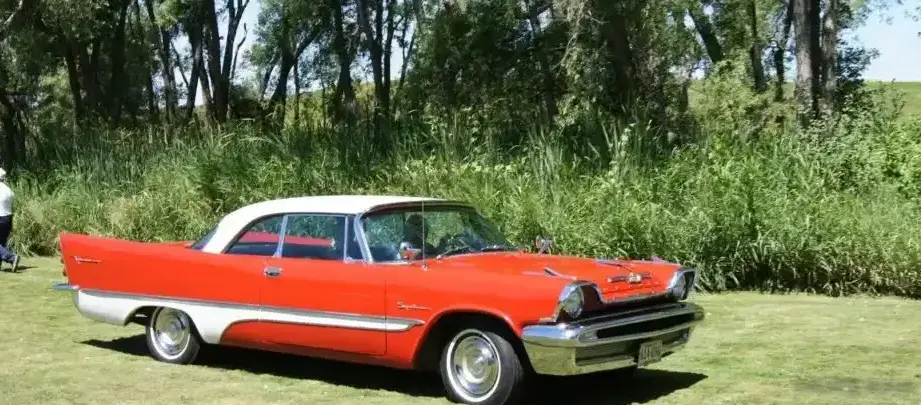
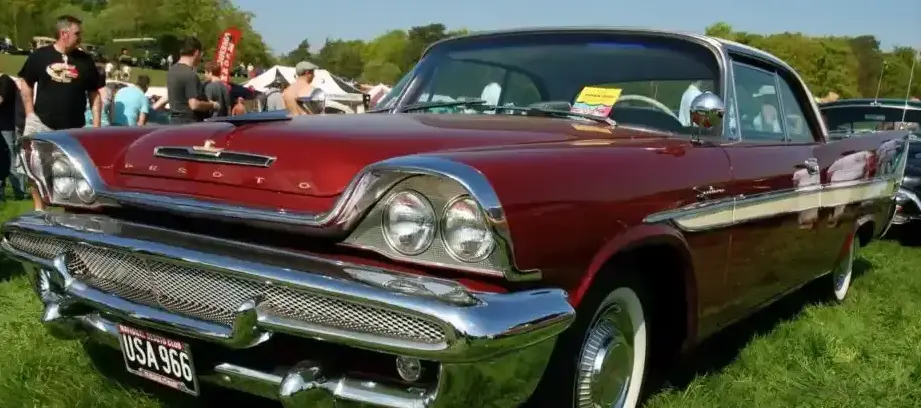
The DeSoto Firesweep, particularly the 4-Door Sedan facelifted for 1959, represented a significant, though ultimately short-lived, attempt by the Chrysler Corporation to reposition the DeSoto brand. Produced from 1958 to 1959, the Firesweep occupied a middle ground within the DeSoto lineup, aiming to offer a blend of style, performance, and comfort. This specific variant, equipped with the 5.9-liter V8 engine producing 295 horsepower and paired with the PowerFlite automatic transmission, was a popular choice for buyers seeking a full-size American sedan with a degree of refinement. The 1959 facelift brought revised styling cues, including more restrained tailfins and a generally cleaner appearance compared to the flamboyant designs of the mid-1950s.
Technical Specifications
| Brand | DeSoto |
| Model | Firesweep |
| Generation | Firesweep I 4-Door Sedan (facelift 1959) |
| Type (Engine) | 5.9 V8 (295 Hp) PowerFlite |
| Start of production | 1958 |
| End of production | 1959 |
| Powertrain Architecture | Internal Combustion engine |
| Body type | Sedan |
| Seats | 6 |
| Doors | 4 |
| Fuel Type | Petrol (Gasoline) |
| Power | 295 Hp @ 4600 rpm |
| Power per litre | 49.9 Hp/l |
| Torque | 529 Nm @ 2400 rpm / 390.17 lb.-ft. @ 2400 rpm |
| Engine displacement | 5916 cm3 / 361.02 cu. in. |
| Number of cylinders | 8 |
| Engine configuration | V-engine |
| Cylinder Bore | 104.65 mm / 4.12 in. |
| Piston Stroke | 85.85 mm / 3.38 in. |
| Compression ratio | 10:1 |
| Number of valves per cylinder | 2 |
| Fuel injection system | Carburettor |
| Engine aspiration | Naturally aspirated engine |
| Valvetrain | OHV |
| Engine oil capacity | 4.7 l / 4.97 US qt | 4.14 UK qt |
| Coolant | 16.1 l / 17.01 US qt | 14.17 UK qt |
| Fuel tank capacity | 76 l / 20.08 US gal | 16.72 UK gal |
| Length | 5514 mm / 217.09 in. |
| Width | 1999 mm / 78.7 in. |
| Height | 1443 mm / 56.81 in. |
| Wheelbase | 3099 mm / 122.01 in. |
| Front track | 1547 mm / 60.91 in. |
| Rear track | 1516 mm / 59.69 in. |
| Ride height (ground clearance) | 140 mm / 5.51 in. |
| Minimum turning circle | 14.2 m / 46.59 ft. |
| Approach angle | 15° |
| Departure angle | 10° |
| Ramp-over angle | 10.4° |
| Drivetrain Architecture | The Internal combustion engine (ICE) drives the rear wheels of the vehicle. |
| Drive wheel | Rear wheel drive |
| Number of gears and type of gearbox | 2 gears, automatic transmission PowerFlite |
| Front suspension | Independent torsion bar, double wishbone |
| Rear suspension | Leaf spring |
| Front brakes | Drum, 279 mm |
| Rear brakes | Drum, 279 mm |
| Steering type | Worm-reduction unit |
Powertrain & Engine Architecture
The heart of the 1959 Firesweep was the Chrysler-built 5.9-liter (361 cubic inch) V8 engine. This engine, designated with various codes depending on specific configurations, produced 295 horsepower at 4600 rpm and a substantial 529 Nm (390 lb-ft) of torque at 2400 rpm. The engine utilized a cast iron block and cylinder heads, with a two-barrel carburetor managing fuel delivery. The overhead valve (OHV) configuration employed a single camshaft located in the engine block, operating the valves via pushrods and rocker arms. The 10:1 compression ratio contributed to the engine’s respectable power output for the era. The PowerFlite automatic transmission, a three-speed unit, was the standard transmission offering for this variant. It was known for its smooth operation, though it wasn’t particularly sophisticated by modern standards. The PowerFlite featured a torque converter for smooth launches and a relatively simple planetary gearset for shifting.
Driving Characteristics
The combination of the 295 hp V8 and the PowerFlite automatic transmission delivered a comfortable and capable driving experience. While not a performance-oriented machine, the Firesweep offered ample power for highway cruising and passing maneuvers. The PowerFlite transmission, with its relatively wide gear ratios, prioritized smooth acceleration over outright speed. Compared to the available manual transmission options, the automatic version sacrificed some responsiveness and fuel efficiency. The rear-wheel-drive layout provided predictable handling, but the car’s substantial weight (approximately 1,864 kg or 4,112 lbs) and relatively soft suspension tuning meant it wasn’t a corner carver. The focus was on providing a comfortable and isolated ride for passengers.
Equipment & Trim Levels
The 1959 Firesweep 4-Door Sedan with the 5.9L V8 and PowerFlite transmission was positioned as a mid-range offering within the DeSoto lineup. Standard equipment included a spacious interior with comfortable bench seats, often upholstered in cloth or vinyl. Features like a heater and defroster were standard, while air conditioning, power steering, and power brakes were available as optional extras. The dashboard featured a straightforward layout with analog gauges for speed, fuel level, temperature, and amperage. Exterior trim included chrome accents, two-tone paint options, and full wheel covers. The Firesweep aimed to provide a balance of features and affordability, appealing to families and buyers seeking a stylish and comfortable full-size sedan.
Chassis & Braking
The Firesweep rode on a traditional body-on-frame chassis. The front suspension utilized an independent torsion bar setup with double wishbones, providing a relatively comfortable ride. The rear suspension employed a leaf spring design, which was common for full-size American cars of the era. Braking duties were handled by drum brakes on all four wheels, measuring 279 mm in diameter. While adequate for the time, the drum brakes lacked the stopping power and fade resistance of modern disc brake systems. Steering was accomplished via a worm-reduction unit, which provided a relatively indirect steering feel.
Market Reception & Comparison
The 1959 DeSoto Firesweep faced stiff competition from other full-size American sedans offered by Ford, Chevrolet, and Plymouth. Critics generally praised the Firesweep’s styling and comfortable ride, but noted that it lacked the performance of some of its rivals. The PowerFlite automatic transmission was considered smooth and reliable, but some reviewers preferred the responsiveness of a manual transmission. Fuel economy, typical for a large American car of the late 1950s, was relatively poor. Compared to other DeSoto models, such as the Adventurer, the Firesweep offered a more affordable entry point into the brand, but it lacked the Adventurer’s sporty pretensions. Compared to the lower-powered DeSoto models, the 5.9L V8 provided a significant performance boost.
Legacy
The DeSoto Firesweep, and the DeSoto brand as a whole, was discontinued after the 1961 model year. The 1959 Firesweep, while not a particularly rare car, is sought after by collectors and enthusiasts today. The 5.9-liter V8 engine, while not known for being particularly high-strung, proved to be relatively durable and reliable. Parts availability can be a challenge, but many components are interchangeable with other Chrysler products of the era. The Firesweep represents a fascinating chapter in American automotive history, embodying the styling and engineering trends of the late 1950s. A well-maintained example offers a glimpse into a bygone era of large, comfortable, and stylish automobiles.