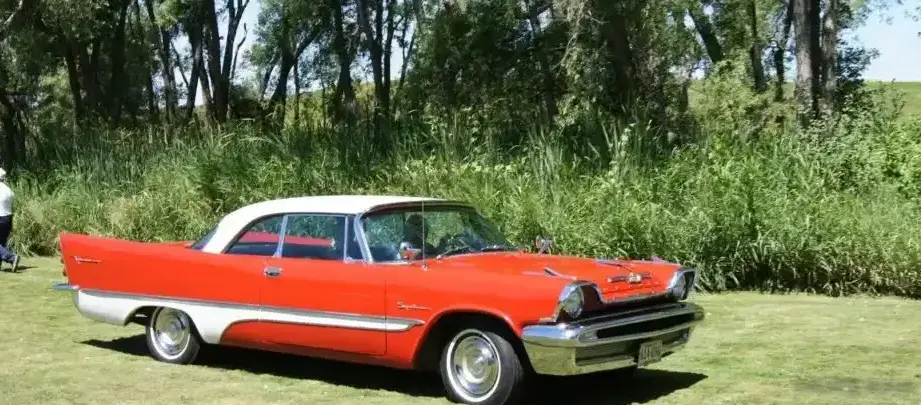
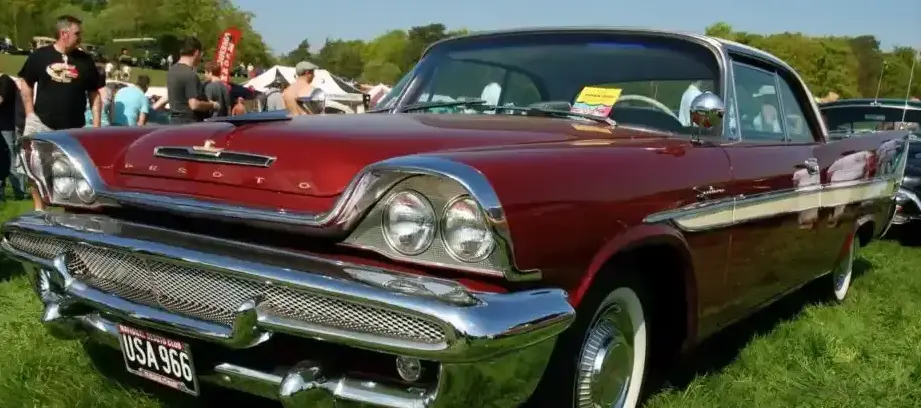
The DeSoto Firesweep I Convertible, powered by a 5.7-liter V8 engine and paired with a PowerFlite automatic transmission, represented a significant offering in the American luxury car market during its brief production run from 1957 to 1958. Positioned as a premium offering within the DeSoto lineup, the Firesweep aimed to capture buyers seeking a blend of style, performance, and comfort. It was part of the first generation of the Firesweep model, a name intended to evoke a sense of dynamic movement and modern design. The Firesweep, along with its corporate siblings from Chrysler and Imperial, was built on the Chrysler C-body platform, sharing a common chassis and many components.
Technical Specifications
| Brand | DeSoto |
| Model | Firesweep |
| Generation | Firesweep I Convertible |
| Type (Engine) | 5.7 V8 (280 Hp) PowerFlite |
| Start of production | 1957 |
| End of production | 1958 |
| Powertrain Architecture | Internal Combustion engine |
| Body type | Cabriolet |
| Seats | 6 |
| Doors | 2 |
| Fuel Type | Petrol (Gasoline) |
| Power | 280 Hp @ 4600 rpm |
| Power per litre | 48.8 Hp/l |
| Torque | 515 Nm @ 2400 rpm / 379.84 lb.-ft. @ 2400 rpm |
| Engine displacement | 5735 cm3 / 349.97 cu. in. |
| Number of cylinders | 8 |
| Engine configuration | V-engine |
| Cylinder Bore | 103.12 mm / 4.06 in. |
| Piston Stroke | 85.85 mm / 3.38 in. |
| Compression ratio | 10:1 |
| Number of valves per cylinder | 2 |
| Fuel injection system | Carburettor |
| Engine aspiration | Naturally aspirated engine |
| Valvetrain | OHV |
| Engine oil capacity | 3.8 l / 4.02 US qt | 3.34 UK qt |
| Coolant | 16.1 l / 17.01 US qt | 14.17 UK qt |
| Fuel tank capacity | 76 l / 20.08 US gal | 16.72 UK gal |
| Length | 5499 mm / 216.5 in. |
| Width | 1989 mm / 78.31 in. |
| Height | 1443 mm / 56.81 in. |
| Wheelbase | 3099 mm / 122.01 in. |
| Front track | 1547 mm / 60.91 in. |
| Rear track | 1516 mm / 59.69 in. |
| Front overhang | 940 mm / 37.01 in. |
| Rear overhang | 1461 mm / 57.52 in. |
| Ride height (ground clearance) | 142 mm / 5.59 in. |
| Minimum turning circle | 14.2 m / 46.59 ft. |
| Approach angle | 16.5° |
| Departure angle | 11.4° |
| Ramp-over angle | 10.5° |
| Drivetrain Architecture | Rear wheel drive |
| Number of gears and type of gearbox | 2 gears, automatic transmission PowerFlite |
| Front suspension | Independent coil spring |
| Rear suspension | Leaf spring |
| Front brakes | Drum, 279 mm |
| Rear brakes | Drum, 279 mm |
| Steering type | Worm-reduction unit |
Powertrain & Engine Architecture
The heart of the Firesweep I Convertible was DeSoto’s 5.7-liter (349.97 cubic inch) V8 engine. This engine, designated as the A57 series, featured a cast iron block and aluminum cylinder heads. It utilized a conventional overhead valve (OHV) valvetrain with two valves per cylinder. Fuel delivery was managed by a Carter carburetor, a common setup for the era. The 10:1 compression ratio contributed to the engine’s respectable 280 horsepower output at 4,600 rpm and 380 lb-ft of torque at 2,400 rpm. The PowerFlite automatic transmission, a two-speed unit, was the sole transmission option for this variant. The PowerFlite, while providing smooth shifting, was relatively simple in design compared to later automatic transmissions, prioritizing durability and ease of maintenance over a large number of gear ratios.
Driving Characteristics
The combination of the 5.7-liter V8 and the PowerFlite automatic transmission delivered a driving experience geared towards comfortable cruising rather than outright performance. While 280 horsepower was a substantial figure for the late 1950s, the Firesweep’s considerable weight (approximately 4,000 lbs) limited its acceleration. The two-speed PowerFlite transmission, while smooth, lacked the versatility of more modern automatics. First gear provided brisk acceleration from a standstill, but the quick upshift to second gear meant that the engine often operated at relatively high rpm during highway cruising. The rear-wheel drive configuration and leaf spring rear suspension provided a stable ride, but the handling was not particularly sporty by modern standards.
Equipment & Trim Levels
The Firesweep I Convertible was well-equipped for its time, reflecting its positioning as a premium vehicle. Standard features included power steering, power brakes, a heater, and a deluxe interior with cloth and vinyl upholstery. The dashboard featured a prominent instrument cluster with gauges for speed, fuel level, coolant temperature, and oil pressure. Optional extras included a radio, air conditioning, and whitewall tires. The exterior was typically finished in two-tone paint schemes, emphasizing the car’s long and flowing lines. The convertible top was power-operated, adding to the convenience and luxury of the vehicle.
Chassis & Braking
The Firesweep I Convertible utilized a body-on-frame construction, common for American cars of the era. The chassis featured an independent coil spring suspension at the front and a leaf spring suspension at the rear. This setup provided a comfortable ride, but the leaf spring rear suspension could sometimes exhibit a bouncy ride quality on uneven surfaces. Braking was accomplished by drum brakes on all four wheels, measuring 279mm in diameter. While adequate for the time, the drum brakes lacked the stopping power and fade resistance of later disc brake systems. Steering was handled by a worm-reduction unit, which provided relatively heavy but precise steering feel.
Market Reception & Comparison
The DeSoto Firesweep I Convertible received generally positive reviews from automotive critics. It was praised for its stylish design, comfortable ride, and powerful engine. However, some critics noted the car’s high price and relatively limited performance compared to some of its competitors. Compared to other DeSoto models, such as the Adventurer, the Firesweep Convertible offered a more luxurious and refined experience, but at a higher cost. Compared to the more performance-oriented Chrysler 300 series, the Firesweep prioritized comfort and style over outright speed. Fuel economy, typical for the era, was relatively poor, averaging around 12-15 miles per gallon.
Legacy
The DeSoto Firesweep I Convertible, despite its short production run, remains a desirable classic car today. The 5.7-liter V8 engine and PowerFlite transmission, while not known for exceptional reliability compared to some other engines of the period, are generally durable and relatively easy to maintain. Parts availability can be a challenge, but a dedicated network of DeSoto enthusiasts and parts suppliers exists. The Firesweep Convertible represents a significant example of 1950s American automotive design and engineering, embodying the optimism and extravagance of the era. Values for well-preserved examples have steadily increased in recent years, reflecting the growing interest in classic American automobiles.