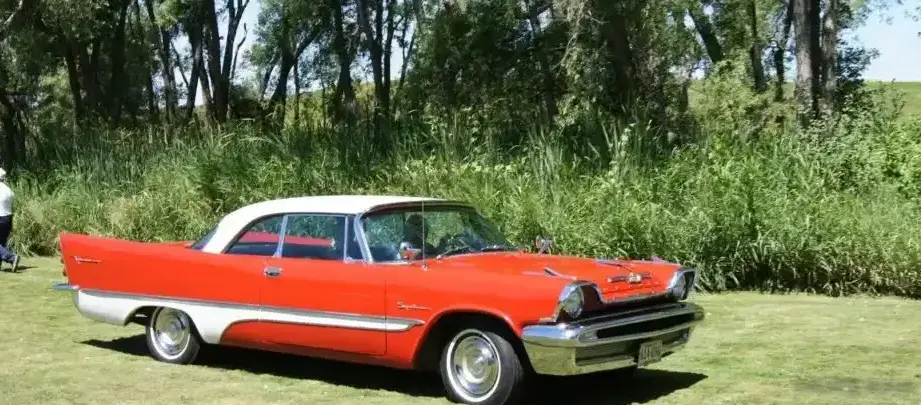
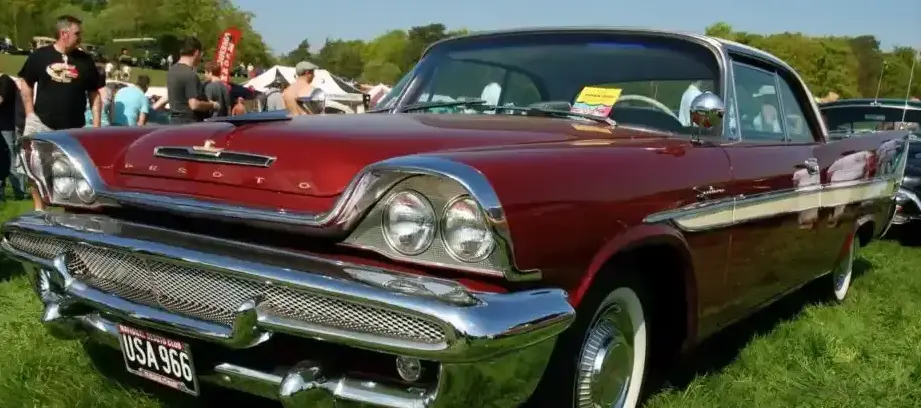
The DeSoto Firesweep I Convertible with the PowerPack 5.7 V8 (295 Hp) represents a pivotal moment in the final years of the DeSoto marque. Produced for the 1957 and 1958 model years, this variant embodied the late-1950s American obsession with powerful engines, flamboyant styling, and luxurious appointments. It was built upon the redesigned “Forward Look” platform, aiming to revitalize DeSoto’s image and compete with rivals like Buick and Oldsmobile. The Firesweep I Convertible, particularly with the PowerPack engine, was positioned as a premium offering within the DeSoto lineup, appealing to buyers seeking a blend of performance and open-air motoring.
Technical Specifications
| Brand | DeSoto |
| Model | Firesweep |
| Generation | Firesweep I Convertible |
| Type (Engine) | PowerPack 5.7 V8 (295 Hp) |
| Start of production | 1957 |
| End of production | 1958 |
| Powertrain Architecture | Internal Combustion engine |
| Body type | Cabriolet |
| Seats | 6 |
| Doors | 2 |
| Fuel Type | Petrol (Gasoline) |
| Power | 295 Hp @ 4600 rpm |
| Power per litre | 51.4 Hp/l |
| Torque | 522 Nm @ 2800 rpm / 385.01 lb.-ft. @ 2800 rpm |
| Engine displacement | 5735 cm3 / 349.97 cu. in. |
| Number of cylinders | 8 |
| Engine configuration | V-engine |
| Cylinder Bore | 103.12 mm / 4.06 in. |
| Piston Stroke | 85.85 mm / 3.38 in. |
| Compression ratio | 10:1 |
| Number of valves per cylinder | 2 |
| Fuel injection system | Carburettor |
| Engine aspiration | Naturally aspirated engine |
| Valvetrain | OHV |
| Engine oil capacity | 3.8 l / 4.02 US qt | 3.34 UK qt |
| Coolant | 16.1 l / 17.01 US qt | 14.17 UK qt |
| Fuel tank capacity | 87 l / 22.98 US gal | 19.14 UK gal |
| Length | 5499 mm / 216.5 in. |
| Width | 1989 mm / 78.31 in. |
| Height | 1443 mm / 56.81 in. |
| Wheelbase | 3099 mm / 122.01 in. |
| Front track | 1547 mm / 60.91 in. |
| Rear track | 1516 mm / 59.69 in. |
| Front overhang | 940 mm / 37.01 in. |
| Rear overhang | 1461 mm / 57.52 in. |
| Ride height (ground clearance) | 142 mm / 5.59 in. |
| Minimum turning circle | 14.2 m / 46.59 ft. |
| Approach angle | 16.5° |
| Departure angle | 11.4° |
| Ramp-over angle | 10.5° |
| Drivetrain Architecture | Rear wheel drive |
| Drive wheel | Rear wheel drive |
| Number of gears and type of gearbox | 3 gears, manual transmission |
| Front suspension | Independent coil spring |
| Rear suspension | Leaf spring |
| Front brakes | Drum, 279 mm |
| Rear brakes | Drum, 279 mm |
| Steering type | Worm-reduction unit |
Powertrain & Engine Architecture
The heart of the Firesweep I Convertible PowerPack was the 5.7-liter (349.97 cubic inch) V8 engine. This engine, designated as the “PowerPack,” was a significant upgrade over the standard DeSoto V8. It featured a higher compression ratio of 10:1, a more aggressive camshaft, and a larger carburetor, resulting in the impressive output of 295 horsepower at 4600 rpm and 385 lb-ft of torque at 2800 rpm. The engine utilized an overhead valve (OHV) configuration with two valves per cylinder. Fuel delivery was managed by a carburetor, a common practice for the era. The engine’s robust construction and relatively simple design contributed to its durability, though maintenance required regular attention. The standard transmission was a three-speed manual, designed to handle the engine’s substantial power. While an automatic transmission was offered on other Firesweep models, it wasn’t typically paired with the PowerPack engine, emphasizing the performance focus of this configuration.
Driving Characteristics
Behind the wheel, the Firesweep I Convertible PowerPack offered a distinctly American driving experience. The 5.7-liter V8 provided ample acceleration, making it a capable cruiser on the open road. While not a sports car, the Firesweep possessed enough power to deliver a spirited drive. The three-speed manual transmission required deliberate shifting, and the gear ratios were optimized for cruising rather than rapid acceleration. Compared to other DeSoto models with smaller engines, the PowerPack version offered a noticeable performance advantage. However, it wasn’t as nimble as some of its European competitors. The leaf spring rear suspension provided a comfortable ride but could exhibit some bounce over uneven surfaces. The large size and weight of the vehicle also contributed to a less responsive feel in corners.
Equipment & Trim Levels
The Firesweep I Convertible was well-equipped for its time, reflecting DeSoto’s positioning as a premium brand. Standard features included full wheel covers, whitewall tires, a deluxe steering wheel, and a generously sized interior. The convertible top was power-operated, adding to the convenience. Interior upholstery typically consisted of cloth and vinyl, with a wide range of color options available. Optional extras included power steering, power brakes, a radio, and air conditioning. The dashboard featured a prominent instrument cluster with clearly marked gauges. The overall interior design emphasized spaciousness and comfort, catering to the American preference for large, comfortable cars. The PowerPack variant often received additional chrome trim and badging to signify its higher performance status.
Chassis & Braking
The Firesweep I Convertible rode on a sturdy chassis featuring independent coil spring suspension in the front and a leaf spring setup in the rear. This combination aimed to provide a balance between ride comfort and handling. Braking duties were handled by drum brakes on all four wheels, measuring 279mm in diameter. While adequate for the time, the drum brakes lacked the stopping power of modern disc brakes. Steering was accomplished via a worm-reduction unit, which provided a relatively direct feel but required some effort at low speeds. The car’s substantial weight (approximately 3,800 lbs) contributed to its stable handling but also limited its agility. The chassis was designed to withstand the stresses of the powerful V8 engine and provide a comfortable ride for passengers.
Market Reception & Comparison
The DeSoto Firesweep I Convertible PowerPack was generally well-received by automotive critics. It was praised for its powerful engine, stylish design, and comfortable interior. However, some reviewers noted the car’s large size and relatively unsophisticated handling. Compared to other DeSoto models, the PowerPack version commanded a higher price but offered a significant performance upgrade. It competed directly with Buick and Oldsmobile convertibles, offering a similar level of luxury and performance. Fuel economy was typical for the era, averaging around 15-18 miles per gallon. Reliability was generally good, but the carburetor required periodic adjustment and maintenance. The PowerPack variant was seen as a more enthusiast-oriented choice compared to the more comfort-focused trims.
Legacy
The DeSoto Firesweep I Convertible PowerPack represents a fascinating chapter in American automotive history. While DeSoto ceased production in 1961, the Firesweep remains a sought-after classic car among collectors. The PowerPack engine, in particular, is highly regarded for its performance and durability. Today, well-maintained examples command significant prices in the used car market. The Firesweep’s legacy lies in its embodiment of the late-1950s American dream – a powerful, stylish, and comfortable automobile that symbolized freedom and prosperity. The relative simplicity of the engine and drivetrain means that parts availability, while not abundant, is reasonable, making it a viable restoration project for enthusiasts. It stands as a reminder of a time when American cars prioritized size, power, and bold styling.