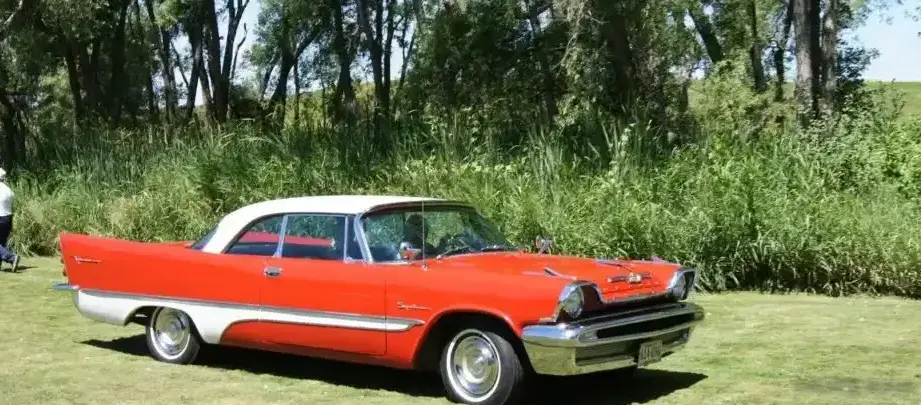
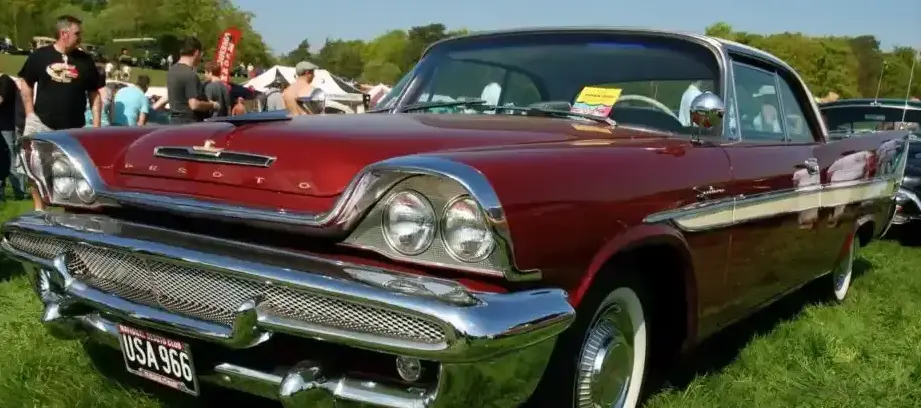
The DeSoto Firesweep I Station Wagon, particularly the 1958 facelifted model equipped with the PowerPack 5.7 V8 engine producing 295 horsepower, represents a significant, though ultimately short-lived, chapter in the American automotive landscape. Produced from 1957 to 1958, the Firesweep occupied a middle ground within the DeSoto lineup, positioned above the entry-level Fireside but below the more luxurious DeSoto Adventurer. This station wagon variant aimed to combine family practicality with the performance and styling cues characteristic of the mid-1950s. The 1958 facelift brought revised styling, including updated grille work and trim, attempting to bolster sales in a rapidly changing market.
Technical Specifications
| Brand | DeSoto |
| Model | Firesweep |
| Generation | Firesweep I Station Wagon (facelift 1958) |
| Type (Engine) | PowerPack 5.7 V8 (295 Hp) |
| Start of production | 1957 |
| End of production | 1958 |
| Powertrain Architecture | Internal Combustion engine |
| Body type | Station wagon (estate) |
| Seats | 6 |
| Doors | 5 |
| Fuel Type | Petrol (Gasoline) |
| Power | 295 Hp @ 4600 rpm |
| Power per litre | 51.4 Hp/l |
| Torque | 522 Nm @ 2800 rpm |
| Torque (lb-ft) | 385.01 lb.-ft. @ 2800 rpm |
| Engine displacement | 5735 cm3 |
| Engine displacement (cu. in.) | 349.97 cu. in. |
| Number of cylinders | 8 |
| Engine configuration | V-engine |
| Cylinder Bore | 103.12 mm (4.06 in.) |
| Piston Stroke | 85.85 mm (3.38 in.) |
| Compression ratio | 10:1 |
| Number of valves per cylinder | 2 |
| Fuel injection system | Carburettor |
| Engine aspiration | Naturally aspirated engine |
| Valvetrain | OHV |
| Engine oil capacity | 3.8 l (4.02 US qt | 3.34 UK qt) |
| Coolant capacity | 16.1 l (17.01 US qt | 14.17 UK qt) |
| Fuel tank capacity | 87 l (22.98 US gal | 19.14 UK gal) |
| Length | 5540 mm (218.11 in.) |
| Width | 1989 mm (78.31 in.) |
| Height | 1450 mm (57.09 in.) |
| Wheelbase | 3099 mm (122.01 in.) |
| Front track | 1547 mm (60.91 in.) |
| Rear track | 1516 mm (59.69 in.) |
| Ride height (ground clearance) | 142 mm (5.59 in.) |
| Minimum turning circle | 14.2 m (46.59 ft.) |
| Drivetrain Architecture | Rear wheel drive |
| Number of gears | 3 |
| Type of gearbox | Manual transmission |
| Front suspension | Independent coil spring |
| Rear suspension | Leaf spring |
| Front brakes | Drum, 279 mm |
| Rear brakes | Drum, 279 mm |
| Steering type | Worm-reduction unit |
Powertrain & Engine Architecture
The heart of the 1958 DeSoto Firesweep was the PowerPack 5.7 V8 engine. This engine, displacing 349.97 cubic inches (5735 cm³), was a cornerstone of DeSoto’s performance offerings. It featured a cast iron block and cylinder heads, with a 10:1 compression ratio. The engine utilized a carbureted fuel system, typical for the era, and an overhead valve (OHV) valvetrain. The PowerPack designation indicated a higher output version of the standard DeSoto V8, achieved through a larger carburetor, revised camshaft timing, and dual exhaust system. While 295 horsepower was a respectable figure for the time, it wasn’t groundbreaking compared to some of the larger displacement V8s offered by competitors. The engine was mated to a three-speed manual transmission as standard, delivering power to the rear wheels.
Driving Characteristics
The 1958 Firesweep with the 5.7L V8 and manual transmission offered a driving experience typical of large American cars of the period. Acceleration was adequate, but not particularly brisk, with the engine delivering its peak power at 4600 rpm. The three-speed manual transmission, while providing driver control, lacked the sophistication of later automatic transmissions. The gear ratios were geared towards cruising, making it comfortable for highway driving but less responsive in city traffic. Compared to other DeSoto models, like those equipped with the smaller engines, the PowerPack V8 provided a noticeable performance boost. However, it didn’t match the outright speed of the more expensive Adventurer models.
Equipment & Trim Levels
The Firesweep I Station Wagon, even in its 1958 facelifted form, offered a fairly standard level of equipment for a mid-range American car. Standard features included a spacious interior with seating for six passengers, a full-length bench seat in the front and rear, and basic instrumentation. Interior upholstery was typically cloth and vinyl, with color options varying depending on the exterior paint scheme. Optional extras included power steering, power brakes, a radio, and whitewall tires. The station wagon body style itself was considered a premium offering, providing increased cargo capacity and versatility compared to the sedan and coupe models.
Chassis & Braking
The Firesweep I Station Wagon utilized a body-on-frame construction, common for American cars of the 1950s. The chassis featured independent coil spring suspension in the front, providing a relatively comfortable ride. The rear suspension employed leaf springs, which were more robust but less refined than the front suspension. Braking was accomplished via drum brakes on all four wheels, measuring 279 mm in diameter. While adequate for the time, the drum brakes lacked the stopping power and fade resistance of later disc brake systems. Steering was handled by a worm-reduction unit, which provided a relatively indirect steering feel.
Market Reception & Comparison
The 1958 DeSoto Firesweep, despite its improvements over the 1957 model, faced a challenging market. The American automotive industry was undergoing significant changes, with increased competition from both domestic and foreign manufacturers. Critics generally praised the Firesweep’s styling and spacious interior, but noted its relatively modest performance compared to some of its rivals. Fuel economy was typical for a large American car of the era, averaging around 15-18 miles per gallon. Reliability was generally good, but the carburetor could require occasional adjustment. Compared to other DeSoto trims, the Firesweep offered a balance of performance and affordability, appealing to families seeking a practical and stylish station wagon.
Legacy
The DeSoto Firesweep I Station Wagon, and the DeSoto brand as a whole, ultimately proved to be unsustainable. Production ceased in 1961, marking the end of the line for the marque. However, the Firesweep remains a fondly remembered example of 1950s American automotive design. The PowerPack 5.7 V8 engine, while not a high-performance powerhouse, was a reliable and durable powerplant. Today, surviving examples of the 1958 Firesweep Station Wagon are sought after by collectors and enthusiasts, representing a unique piece of automotive history. The relative simplicity of the engine and mechanical components makes it a potentially manageable restoration project for those with the skills and resources. The car’s enduring appeal lies in its distinctive styling, spacious interior, and nostalgic connection to a bygone era of American motoring.