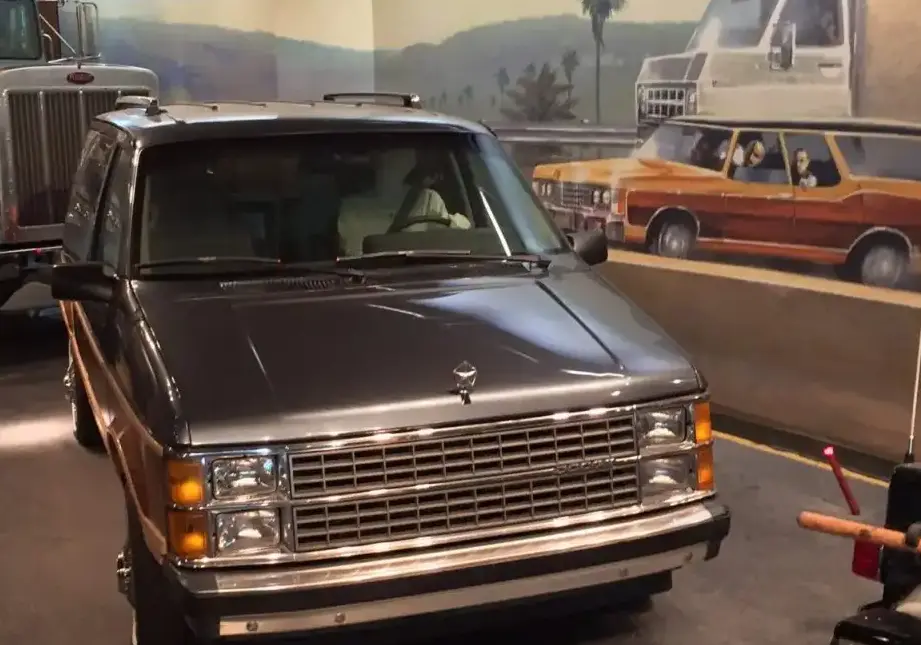
The Dodge Caravan III SWB 2.4 (152 Hp) 4×4, produced between 1996 and 2000, represented a significant iteration of Dodge’s popular minivan line. Falling within the third generation (NS-body) of the Caravan, this specific variant – the short wheelbase (SWB) model equipped with the 2.4-liter engine and all-wheel drive – aimed to provide a versatile and practical transportation solution for families. It occupied a middle ground in the Caravan lineup, offering all-wheel drive capability not found on base models, but without the larger engine options available on higher trims. This model was primarily sold in North America, capitalizing on the growing demand for minivans and the increasing popularity of all-wheel drive systems for enhanced traction in various weather conditions.
Technical Specifications
| Brand | Dodge |
| Model | Caravan |
| Generation | Caravan III SWB |
| Type (Engine) | 2.4 (152 Hp) 4×4 |
| Start of production | 1996 |
| End of production | 2000 |
| Powertrain Architecture | Internal Combustion engine |
| Body type | Minivan |
| Seats | 7 |
| Doors | 5 |
| Fuel Type | Petrol (Gasoline) |
| Maximum speed | 170 km/h (105.63 mph) |
| Weight-to-power ratio | 10.6 kg/Hp, 94.4 Hp/tonne |
| Weight-to-torque ratio | 7.1 kg/Nm, 140.4 Nm/tonne |
| Power | 152 Hp @ 5200 rpm |
| Power per litre | 62.6 Hp/l |
| Torque | 226 Nm @ 4000 rpm (166.69 lb.-ft. @ 4000 rpm) |
| Engine layout | Front, Transverse |
| Engine Model/Code | EDZ |
| Engine displacement | 2429 cm3 (148.23 cu. in.) |
| Number of cylinders | 4 |
| Engine configuration | Inline |
| Cylinder Bore | 87.5 mm (3.44 in.) |
| Piston Stroke | 101 mm (3.98 in.) |
| Compression ratio | 9.4:1 |
| Number of valves per cylinder | 4 |
| Fuel injection system | Multi-port manifold injection |
| Engine aspiration | Naturally aspirated engine |
| Valvetrain | DOHC |
| Engine oil capacity | 4.3 l (4.54 US qt | 3.78 UK qt) |
| Coolant | 9 l (9.51 US qt | 7.92 UK qt) |
| Kerb Weight | 1610 kg (3549.44 lbs.) |
| Max. weight | 2454 kg (5410.14 lbs.) |
| Max load | 844 kg (1860.7 lbs.) |
| Trunk (boot) space – minimum | 450 l (15.89 cu. ft.) |
| Trunk (boot) space – maximum | 4140 l (146.2 cu. ft.) |
| Fuel tank capacity | 75 l (19.81 US gal | 16.5 UK gal) |
| Length | 4733 mm (186.34 in.) |
| Width | 1920 mm (75.59 in.) |
| Height | 1740 mm (68.5 in.) |
| Wheelbase | 2878 mm (113.31 in.) |
| Front track | 1600 mm (62.99 in.) |
| Rear (Back) track | 1626 mm (64.02 in.) |
| Ride height (ground clearance) | 140 mm (5.51 in.) |
| Drag coefficient (Cd) | 0.35 |
| Minimum turning circle (turning diameter) | 11.5 m (37.73 ft.) |
| Drive wheel | All wheel drive (4×4) |
| Number of gears and type of gearbox | 5 gears, manual transmission |
| Front suspension | Wishbone |
| Rear suspension | Rigid axle suspension |
| Front brakes | Ventilated discs |
| Rear brakes | Drum |
| Assisting systems | ABS (Anti-lock braking system) |
| Steering type | Steering rack and pinion |
| Power steering | Hydraulic Steering |
| Tires size | 205/75 R14 |
| Wheel rims size | 14 |
Powertrain & Engine Architecture
The heart of the Caravan III SWB 2.4 4×4 was the EDZ engine, a 2.4-liter inline-four cylinder gasoline engine. This engine utilized a multi-port fuel injection system, delivering fuel directly into the intake ports for improved combustion efficiency. The engine featured a double overhead camshaft (DOHC) valvetrain, operating four valves per cylinder, which contributed to its respectable power output for its displacement. The 9.4:1 compression ratio was a compromise between performance and the ability to run on readily available fuel grades. Paired with this engine was a 5-speed manual transmission, providing drivers with a degree of control over gear selection. The all-wheel drive system was typically a viscous coupling system, automatically engaging the rear wheels when front wheel slippage was detected. This system wasn’t a sophisticated full-time AWD, but rather a reactive system designed to improve traction in adverse conditions.
Driving Characteristics
The 152 horsepower and 166.69 lb-ft of torque produced by the 2.4-liter engine provided adequate, though not exhilarating, performance for the Caravan. Acceleration was modest, and passing maneuvers required planning. The 5-speed manual transmission allowed drivers to keep the engine in its optimal power band, but the Caravan’s weight – approximately 3550 pounds – was a noticeable factor. Compared to the optional 3.0-liter V6 engine available on other Caravan trims, the 2.4-liter felt noticeably less powerful. However, the 2.4L/manual combination offered better fuel economy than the V6. The all-wheel drive system provided enhanced stability and traction, particularly on slippery surfaces, making it a popular choice in regions with inclement weather. The ride quality was typical of a minivan – comfortable and compliant, prioritizing passenger comfort over sporty handling.
Equipment & Trim Levels
The Caravan III SWB 2.4 4×4 typically came with a reasonable level of standard equipment. This included features like air conditioning, power windows and locks, an AM/FM stereo, and cloth upholstery. Optional extras included features like upgraded sound systems, alloy wheels, a sunroof, and rear air conditioning. The interior design was functional and family-oriented, with durable materials and ample storage space. The SWB (short wheelbase) configuration meant slightly less cargo space compared to the longer wheelbase models, but it also made the van more maneuverable in tight spaces.
Chassis & Braking
The Caravan III SWB utilized a front-wheel-drive-based chassis with an independent wishbone suspension in the front and a rigid axle suspension in the rear. The rear drum brakes were a cost-saving measure, and while adequate for normal driving, they lacked the stopping power of disc brakes. The front brakes were ventilated discs, providing better heat dissipation. An anti-lock braking system (ABS) was standard, enhancing safety by preventing wheel lockup during hard braking. The steering was rack-and-pinion with hydraulic power assist, providing relatively light and precise steering feel.
Market Reception & Comparison
The Dodge Caravan III SWB 2.4 4×4 was generally well-received by critics and consumers alike. It offered a compelling combination of practicality, versatility, and affordability. The all-wheel drive system was a significant selling point, particularly in areas with harsh winters. Compared to other minivans of the era, such as the Chrysler Town & Country and the Honda Odyssey, the Caravan offered a more affordable entry point, though it often lacked the refinement and features of its Japanese competitors. Fuel economy was respectable for a minivan of its size and weight, averaging around 18-22 mpg in mixed driving. Reliability was generally good, though some owners reported issues with the automatic transmission (when equipped) and the cooling system.
Legacy
The Dodge Caravan III SWB 2.4 4×4 remains a relatively common sight on used car lots today. The EDZ engine, while not known for being particularly high-performance, is generally considered to be reliable and durable with proper maintenance. Parts availability is good, and repair costs are typically reasonable. These Caravans represent a practical and affordable option for families seeking a versatile vehicle with all-wheel drive capability. While not a collector’s item, the Caravan III SWB 2.4 4×4 holds a place in automotive history as a popular and influential minivan that helped shape the segment.