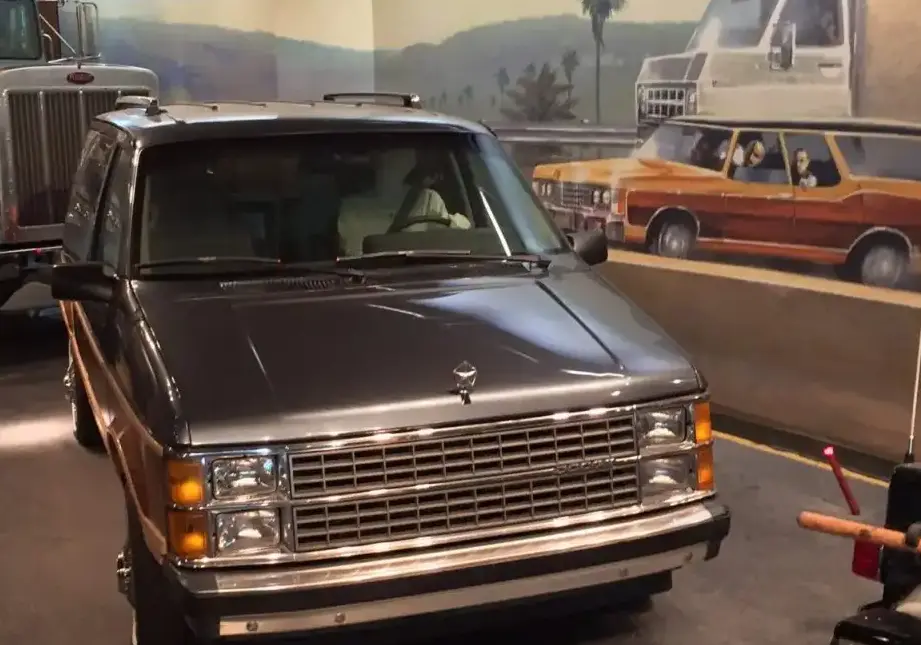
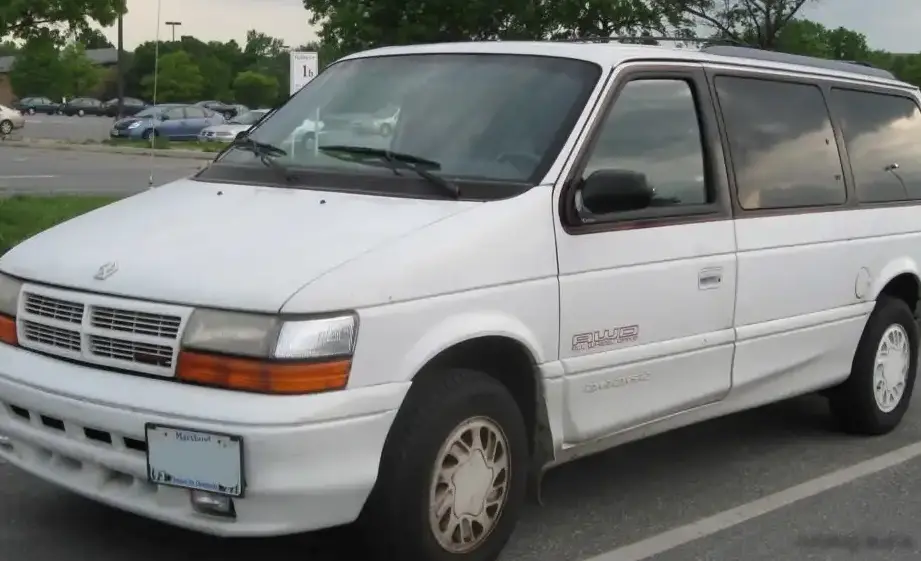
The Dodge Caravan IV Long Wheelbase (LWB) 3.5 V6 4×4 Automatic, produced from 2000 to 2007, represented a significant offering in the North American minivan market. This variant occupied a premium position within the fourth-generation Caravan lineup (often referred to as the NS platform), catering to buyers seeking a blend of power, all-weather capability, and spaciousness. The LWB designation indicated an extended wheelbase compared to the standard Caravan, providing increased interior volume and cargo capacity. This model was a direct competitor to vehicles like the Honda Odyssey, Toyota Sienna, and Chrysler Town & Country, all vying for dominance in the family transportation segment.
Technical Specifications
| Brand | Dodge |
| Model | Caravan |
| Generation | Caravan IV LWB |
| Type (Engine) | 3.5 V6 (233 Hp) 4×4 Automatic |
| Start of production | 2000 year |
| End of production | 2007 year |
| Powertrain Architecture | Internal Combustion engine |
| Body type | Minivan |
| Seats | 7 |
| Doors | 5 |
| Fuel Type | Petrol (Gasoline) |
| Maximum speed | 177 km/h (109.98 mph) |
| Power | 233 Hp @ 6400 rpm |
| Power per litre | 66.2 Hp/l |
| Torque | 339 Nm @ 4000 rpm (250.03 lb.-ft. @ 4000 rpm) |
| Engine layout | Front, Transverse |
| Engine displacement | 3518 cm3 (214.68 cu. in.) |
| Number of cylinders | 6 |
| Engine configuration | V-engine |
| Cylinder Bore | 96 mm (3.78 in.) |
| Piston Stroke | 81 mm (3.19 in.) |
| Compression ratio | 9.4:1 |
| Number of valves per cylinder | 4 |
| Fuel injection system | Multi-port manifold injection |
| Engine aspiration | Naturally aspirated engine |
| Trunk (boot) space – minimum | 580 l (20.48 cu. ft.) |
| Trunk (boot) space – maximum | 4680 l (165.27 cu. ft.) |
| Fuel tank capacity | 75 l (19.81 US gal | 16.5 UK gal) |
| Length | 5093 mm (200.51 in.) |
| Width | 1995 mm (78.54 in.) |
| Height | 1750 mm (68.9 in.) |
| Wheelbase | 3030 mm (119.29 in.) |
| Front track | 1600 mm (62.99 in.) |
| Rear (Back) track | 1625 mm (63.98 in.) |
| Ride height (ground clearance) | 140 mm (5.51 in.) |
| Drive wheel | All wheel drive (4×4) |
| Number of gears and type of gearbox | 4 gears, automatic transmission |
| Front suspension | Wishbone |
| Rear suspension | Rigid axle suspension |
| Front brakes | Ventilated discs |
| Rear brakes | Drum |
| Assisting systems | ABS (Anti-lock braking system) |
| Steering type | Steering rack and pinion |
| Power steering | Hydraulic Steering |
| Tires size | 215/65 R16 |
| Wheel rims size | 16 |
Powertrain & Engine Architecture
The heart of the Caravan IV LWB 3.5 V6 4×4 was the 3.5-liter EGE V6 engine. This engine, part of the Chrysler’s third-generation V6 family, featured a 60-degree V-angle and a cast iron block with aluminum cylinder heads. The engine utilized a multi-port fuel injection (MPI) system, delivering fuel directly to each intake port for optimized combustion. The valvetrain employed two valves per cylinder (four valves total per cylinder), operated by a single overhead camshaft. The 42RE four-speed automatic transmission was the sole transmission option for this configuration. This transmission was known for its durability but lacked the efficiency of more modern automatic gearboxes. The 4×4 system was an active, on-demand system, engaging the rear wheels when slippage was detected at the front, providing enhanced traction in inclement weather.
Driving Characteristics
The 233 horsepower and 250 lb-ft of torque provided by the 3.5L V6 delivered respectable acceleration for a minivan. While not a performance vehicle, the Caravan IV LWB 3.5 V6 could achieve a 0-60 mph time in around 8-9 seconds. The four-speed automatic transmission, while reliable, had relatively wide gear ratios. This resulted in noticeable shifts and a tendency for the engine to rev higher during acceleration compared to minivans with more modern transmissions. The all-wheel-drive system significantly improved handling and stability, particularly on slippery surfaces. Compared to the base 2.4L four-cylinder Caravan, the V6 offered a dramatically improved driving experience, with significantly more power for merging onto highways and carrying a full load of passengers and cargo. Compared to the higher-end Town & Country with Stow ‘n Go seating, the Caravan prioritized cargo volume over the flexible seating configurations.
Equipment & Trim Levels
The Caravan IV LWB 3.5 V6 4×4 typically came standard with features such as air conditioning, power windows and locks, an AM/FM stereo with a CD player, and cloth upholstery. Higher trim levels, such as the ES or SXT, added features like alloy wheels, upgraded audio systems, leather upholstery, power-adjustable front seats, and a sunroof. Optional extras included a rear entertainment system, navigation system, and premium sound systems. The LWB models generally offered more standard features than the shorter wheelbase Caravans.
Chassis & Braking
The Caravan IV LWB utilized a front independent suspension with MacPherson struts and a rear rigid axle suspension with coil springs. This suspension setup provided a comfortable ride, although it wasn’t particularly sporty. The front brakes were ventilated discs, providing adequate stopping power, while the rear brakes were drum brakes, a cost-saving measure. Anti-lock brakes (ABS) were standard, enhancing safety. Steering was provided by a hydraulic power rack-and-pinion system, offering reasonable steering feel.
Market Reception & Comparison
The Dodge Caravan IV LWB 3.5 V6 4×4 was generally well-received by critics and consumers. It was praised for its spacious interior, powerful engine, and all-weather capability. However, the four-speed automatic transmission and somewhat dated interior design were points of criticism. Fuel economy was average for the class, typically around 17-20 mpg in combined driving. Compared to the front-wheel-drive V6 Caravan, the 4×4 model offered superior traction but at the cost of slightly reduced fuel economy and a higher price point. The Toyota Sienna and Honda Odyssey were often considered more refined and fuel-efficient alternatives, but the Caravan offered a compelling value proposition, particularly for buyers prioritizing space and power.
Legacy
The 3.5L EGE V6 engine proved to be a relatively reliable powertrain when properly maintained. Common issues included oil leaks and occasional sensor failures. The 42RE transmission, while durable, could experience issues with torque converter failure or solenoid problems. Today, the Caravan IV LWB 3.5 V6 4×4 can be found on the used car market at affordable prices. It remains a practical and spacious option for families, although potential buyers should be aware of the potential maintenance costs associated with an older vehicle. Its robust engine and all-wheel-drive system continue to appeal to those seeking a dependable and capable minivan.