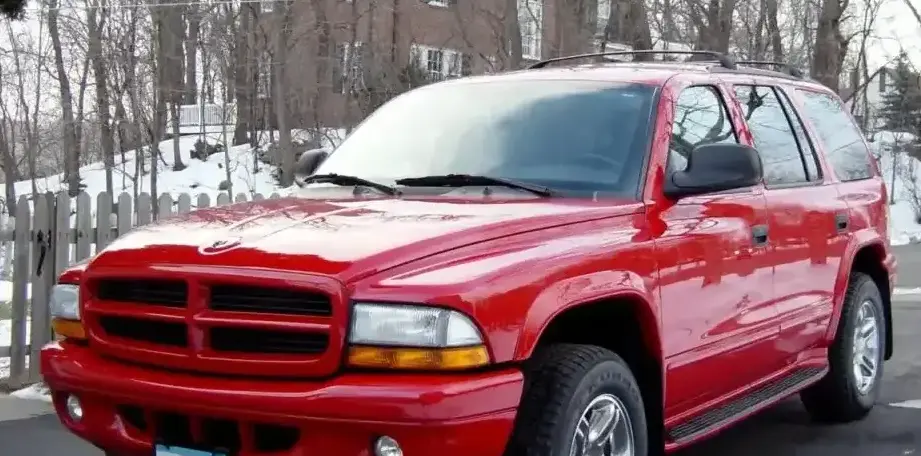
The Dodge Durango II, specifically the facelifted version introduced in 2006, represented a significant shift for the model. Moving away from the shared platform with the Mitsubishi Montero, the second-generation Durango (HB) was built on a body-on-frame chassis, aiming to provide a more rugged and traditionally American SUV experience. The 3.7 Magnum V6 with an automatic transmission, produced from 2006 through December 2008, served as the entry-level powertrain option for this generation, offering a balance of affordability and capability within the Durango lineup. It was positioned below the more powerful 4.7L and 5.7L HEMI V8 engines.
Technical Specifications
| Brand | Dodge |
| Model | Durango |
| Generation | Durango II (HB, facelift 2006) |
| Type (Engine) | 3.7 Magnum V6 (210 Hp) Automatic |
| Start of production | 2006 |
| End of production | December, 2008 |
| Powertrain Architecture | Internal Combustion engine |
| Body type | SUV |
| Seats | 5-8 |
| Doors | 5 |
| Fuel consumption (economy) – urban (EPA) | 16.8 l/100 km (14 US mpg, 16.8 UK mpg) |
| Fuel consumption (economy) – extra urban (EPA) | 12.4 l/100 km (19 US mpg, 22.8 UK mpg) |
| Fuel Type | Petrol (Gasoline) |
| Emission standard | SULEV I |
| Weight-to-power ratio | 10 kg/Hp, 100.2 Hp/tonne |
| Weight-to-torque ratio | 6.6 kg/Nm, 152.2 Nm/tonne |
| Power | 210 Hp @ 5200 rpm |
| Power per litre | 56.7 Hp/l |
| Torque | 319 Nm @ 4000 rpm (235.28 lb.-ft. @ 4000 rpm) |
| Maximum engine speed | 5800 rpm |
| Engine layout | Front, Longitudinal |
| Engine Model/Code | EKG |
| Engine displacement | 3701 cm3 (225.85 cu. in.) |
| Number of cylinders | 6 |
| Engine configuration | V-engine |
| Cylinder Bore | 93 mm (3.66 in.) |
| Piston Stroke | 90.8 mm (3.57 in.) |
| Compression ratio | 9.7:1 |
| Number of valves per cylinder | 2 |
| Fuel injection system | Multi-port manifold injection |
| Engine aspiration | Naturally aspirated engine |
| Valvetrain | SOHC |
| Engine oil capacity | 4.7 l (4.97 US qt | 4.14 UK qt) |
| Coolant | 12.9 l (13.63 US qt | 11.35 UK qt) |
| Kerb Weight | 2096 kg (4620.89 lbs.) |
| Max. weight | 2903 kg (6400.02 lbs.) |
| Max load | 807 kg (1779.13 lbs.) |
| Trunk (boot) space – minimum | 569 l (20.09 cu. ft.) |
| Trunk (boot) space – maximum | 3070 l (108.42 cu. ft.) |
| Fuel tank capacity | 102 l (26.95 US gal | 22.44 UK gal) |
| Permitted trailer load with brakes (12%) | 1746 kg (3849.27 lbs.) |
| Length | 5101 mm (200.83 in.) |
| Width | 1930 mm (75.98 in.) |
| Height | 1887 mm (74.29 in.) |
| Wheelbase | 3027 mm (119.17 in.) |
| Front track | 1636 mm (64.41 in.) |
| Rear (Back) track | 1636 mm (64.41 in.) |
| Ride height (ground clearance) | 221 mm (8.7 in.) |
| Drag coefficient (Cd) | 0.393 |
| Minimum turning circle (turning diameter) | 12.2 m (40.03 ft.) |
| Approach angle | 26.8° |
| Departure angle | 29.9° |
| Ramp-over (brakeover) angle | 22.8° |
| Drivetrain Architecture | The Internal combustion engine (ICE) drives the rear wheels of the vehicle. |
| Drive wheel | Rear wheel drive |
| Number of gears and type of gearbox | 4 gears, automatic transmission |
| Front suspension | Independent torsion bar, double wishbone, Transverse stabilizer |
| Rear suspension | Rigid axle suspension, Transverse stabilizer, Coil spring |
| Front brakes | Ventilated discs, 336×28 mm |
| Rear brakes | Disc, 352×22 mm |
| Assisting systems | ABS (Anti-lock braking system) |
| Steering type | Steering rack and pinion |
| Power steering | Hydraulic Steering |
| Tires size | 245/70 R17; 265/65 R17; 265/60 R18; 265/50 R20 |
| Wheel rims size | 7J x 17; 8J x 18; 8J x 20 |
Powertrain & Engine Architecture
The 3.7-liter Magnum V6, designated engine code EKG, was a significant departure from the previous Durango’s engine options. This engine featured a 90-degree V6 configuration with a single overhead camshaft (SOHC) design operating two valves per cylinder. The engine utilized a multi-port fuel injection system, delivering fuel directly to each intake port for improved efficiency and responsiveness. The 3.7L engine was known for its relatively smooth operation, though it lacked the raw power of the V8 options. Paired with a 4-speed automatic transmission, the powertrain was designed for comfortable cruising and everyday driving rather than high-performance acceleration. The automatic transmission was a traditional hydraulic control unit, offering smooth shifts but lacking the efficiency of more modern transmissions.
Driving Characteristics
The 3.7L V6-powered Durango offered a noticeably different driving experience compared to its V8 siblings. Acceleration was adequate for daily commuting and highway merging, but it lacked the strong pull of the larger engines. The 4-speed automatic transmission, while smooth, had relatively wide gear ratios, which could sometimes result in the engine feeling strained during uphill climbs or when fully loaded. The rear-wheel-drive configuration provided a traditional truck-like feel, and the Durango’s substantial weight contributed to a stable, planted ride. Fuel economy, while not exceptional, was better than the V8 models, making it a more appealing option for those prioritizing cost-effectiveness.
Equipment & Trim Levels
The 3.7L Durango typically came standard with features like air conditioning, power windows and locks, and a basic audio system. Higher trim levels, such as the SLT, added features like alloy wheels, upgraded interior trim, and a premium sound system. Optional extras included a DVD entertainment system, sunroof, and leather upholstery. The interior generally featured durable materials and a functional layout, prioritizing practicality over luxury. The base upholstery was typically cloth, with leather available as an upgrade.
Chassis & Braking
The Durango II utilized a body-on-frame construction, providing a robust and durable chassis. The front suspension consisted of an independent torsion bar setup with a double wishbone design and a transverse stabilizer bar. The rear suspension employed a rigid axle configuration with coil springs and a transverse stabilizer bar. Braking duties were handled by ventilated discs at the front and solid discs at the rear. Anti-lock braking system (ABS) was standard, enhancing safety and control during emergency braking situations. The Durango’s substantial weight necessitated a robust braking system, but stopping distances were not as short as those of lighter vehicles.
Market Reception & Comparison
The 3.7L Durango was generally viewed as a sensible and affordable option within the Durango lineup. Critics acknowledged its adequate performance for everyday driving but noted its lack of power compared to the V8 models. Fuel economy was a positive point, but it still lagged behind more modern SUVs. Compared to the 4.7L and 5.7L HEMI V8 Durangos, the 3.7L offered a lower price point but sacrificed significant performance. The V8 models were favored by those who needed to tow heavy loads or desired a more engaging driving experience. The 3.7L appealed to buyers who prioritized value and fuel efficiency over outright power.
Legacy
The 3.7L Magnum V6 in the Durango II, while not the most powerful engine option, proved to be a relatively reliable powertrain. The engine’s simple design and robust construction contributed to its longevity. Today, used examples of the 3.7L Durango are often found to be relatively affordable and well-maintained. However, potential buyers should be aware of the age-related issues common to older vehicles, such as worn suspension components and potential oil leaks. The 4-speed automatic transmission, while durable, is less efficient than modern transmissions. Overall, the 3.7L Durango represents a capable and affordable SUV option for those seeking a rugged and reliable vehicle.