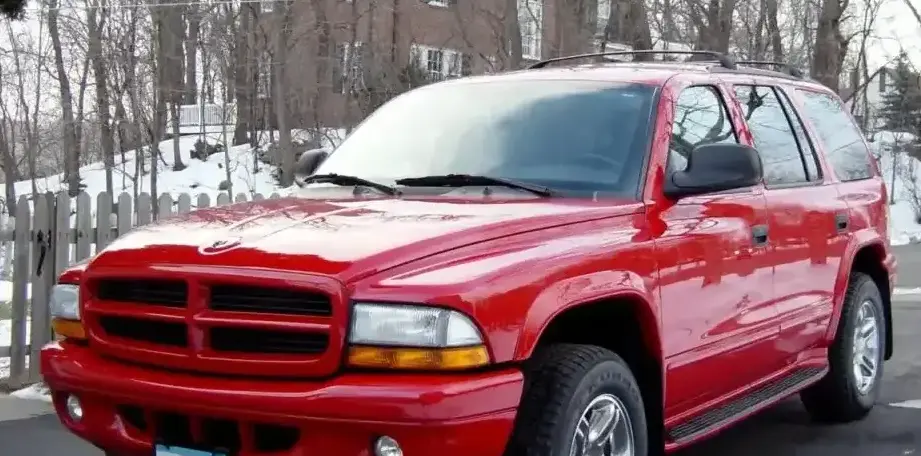
The Dodge Durango II, specifically the facelifted version introduced in 2006, represented a significant shift for the Durango nameplate. Moving away from the first generation’s association with the Dakota pickup, the second generation Durango (HB) was built on a dedicated SUV platform, offering a more refined and family-oriented experience. Produced from 2007 through December 2008 in this configuration, the 4.7 Magnum V8 with an automatic transmission and all-wheel drive was a popular choice, positioned as a mid-range offering within the Durango lineup. It bridged the gap between the base 3.7L V6 models and the higher-performance 5.7L HEMI V8 variants.
Technical Specifications
| Brand | Dodge |
| Model | Durango |
| Generation | Durango II (HB, facelift 2006) |
| Type (Engine) | 4.7 Magnum V8 (303 Hp) AWD Automatic |
| Start of production | 2007 |
| End of production | December, 2008 |
| Powertrain Architecture | Internal Combustion engine |
| Body type | SUV |
| Seats | 5-8 |
| Doors | 5 |
| Fuel consumption (urban) | 18.1 l/100 km (13 US mpg, 15.6 UK mpg) |
| Fuel consumption (extra urban) | 13.1 l/100 km (18 US mpg, 21.6 UK mpg) |
| Fuel Type | Petrol (Gasoline) |
| Emission standard | SULEV I |
| Weight-to-power ratio | 7.4 kg/Hp, 135 Hp/tonne |
| Weight-to-torque ratio | 5 kg/Nm, 199.1 Nm/tonne |
| Power | 303 Hp @ 5650 rpm |
| Power per litre | 64.5 Hp/l |
| Torque | 447 Nm @ 3950 rpm (329.69 lb.-ft. @ 3950 rpm) |
| Maximum engine speed | 6000 rpm |
| Engine layout | Front, Longitudinal |
| Engine Model/Code | EVA |
| Engine displacement | 4701 cm3 (286.87 cu. in.) |
| Number of cylinders | 8 |
| Engine configuration | V-engine |
| Cylinder Bore | 93 mm (3.66 in.) |
| Piston Stroke | 86.5 mm (3.41 in.) |
| Compression ratio | 9:1 |
| Number of valves per cylinder | 2 |
| Fuel injection system | Multi-port manifold injection |
| Engine aspiration | Naturally aspirated engine |
| Valvetrain | SOHC |
| Engine oil capacity | 5.7 l (6.02 US qt | 5.02 UK qt) |
| Coolant capacity | 12.5 l (13.21 US qt | 11 UK qt) |
| Kerb Weight | 2245 kg (4949.38 lbs.) |
| Max. weight | 3016 kg (6649.14 lbs.) |
| Max load | 771 kg (1699.76 lbs.) |
| Trunk (boot) space – minimum | 569 l (20.09 cu. ft.) |
| Trunk (boot) space – maximum | 3070 l (108.42 cu. ft.) |
| Fuel tank capacity | 102 l (26.95 US gal | 22.44 UK gal) |
| Permitted trailer load with brakes (12%) | 2744 kg (6049.48 lbs.) |
| Length | 5101 mm (200.83 in.) |
| Width | 1930 mm (75.98 in.) |
| Height | 1887 mm (74.29 in.) |
| Wheelbase | 3027 mm (119.17 in.) |
| Front track | 1636 mm (64.41 in.) |
| Rear track | 1636 mm (64.41 in.) |
| Ride height (ground clearance) | 221 mm (8.7 in.) |
| Drag coefficient (Cd) | 0.393 |
| Minimum turning circle | 12.2 m (40.03 ft.) |
| Approach angle | 26.8° |
| Departure angle | 29.9° |
| Ramp-over angle | 22.8° |
| Drivetrain Architecture | All wheel drive (4×4). ICE drives all four wheels. |
| Number of gears | 5 |
| Gearbox type | Automatic transmission |
| Front suspension | Independent torsion bar, double wishbone, Transverse stabilizer |
| Rear suspension | Rigid axle suspension, Transverse stabilizer, Coil spring |
| Front brakes | Ventilated discs, 336×28 mm |
| Rear brakes | Disc, 352×22 mm |
| Assisting systems | ABS (Anti-lock braking system) |
| Steering type | Steering rack and pinion |
| Power steering | Hydraulic Steering |
| Tires size | 265/65 R17; 265/60 R18; 265/50 R20 |
| Wheel rims size | 7J x 17; 8J x 18; 8J x 20 |
INTRODUCTION
The 2007-2008 Dodge Durango II 4.7L V8 AWD Automatic represented a sweet spot for buyers seeking a capable and comfortable SUV without the premium price tag of the HEMI models. Built on the Chrysler/Dodge Durango platform (D-platform), this iteration of the Durango aimed to provide a more car-like driving experience compared to its truck-based predecessor. The 4.7-liter engine, coupled with a five-speed automatic transmission and all-wheel drive, offered a balance of power, efficiency, and all-weather capability. This configuration was aimed at families and individuals needing space and versatility, but not necessarily requiring the ultimate in towing capacity or performance.
Powertrain & Engine Architecture
The heart of this Durango variant is the 4.7-liter Magnum V8 engine, internally designated as the EVA engine code. This engine is a pushrod V8, utilizing a single overhead camshaft (SOHC) design. It features multi-port fuel injection, delivering fuel directly into each intake port. The engine’s 9:1 compression ratio and relatively conservative valvetrain design prioritized reliability and low-end torque over outright horsepower. The 4.7L engine produced 303 horsepower at 5650 rpm and 329.69 lb-ft of torque at 3950 rpm. The five-speed automatic transmission (typically the 545RFE) was chosen for its smooth shifting and ability to handle the engine’s torque output. The all-wheel-drive system was typically an on-demand system, engaging the front wheels when slippage was detected, providing enhanced traction in adverse conditions.
Driving Characteristics
The 4.7L V8 and automatic transmission combination in the Durango offered a comfortable and predictable driving experience. Acceleration was adequate for everyday driving, but it wasn’t particularly sporty. The automatic transmission’s gear ratios were tuned for fuel efficiency and smooth cruising, rather than aggressive downshifts. Compared to the 5.7L HEMI, the 4.7L felt less powerful, especially when fully loaded or towing. However, the 4.7L’s lower weight and simpler design contributed to slightly better fuel economy. The all-wheel-drive system provided confident handling in slippery conditions, but it didn’t transform the Durango into an off-road specialist. The ride quality was generally comfortable, thanks to the suspension tuning and available tire sizes.
Equipment & Trim Levels
The 4.7L Durango typically came standard with features like air conditioning, power windows and locks, a CD player, and cloth upholstery. Higher trim levels, such as the SLT, added features like leather upholstery, heated seats, a premium sound system, and alloy wheels. Optional extras included a DVD entertainment system, a sunroof, and a navigation system. The interior design was functional and spacious, with seating for up to seven passengers depending on the configuration. The dashboard layout was straightforward and easy to use, with clearly labeled controls.
Chassis & Braking
The Durango II utilized an independent torsion bar suspension in the front and a rigid axle suspension with coil springs in the rear. A transverse stabilizer bar was included at both ends to reduce body roll. The braking system consisted of ventilated discs in the front and solid discs in the rear. Anti-lock brakes (ABS) were standard. The Durango’s chassis was designed to provide a comfortable ride and stable handling, but it wasn’t particularly sporty. The steering was hydraulic power-assisted, providing a reasonable level of feedback.
Market Reception & Comparison
The 4.7L Durango was generally well-received by critics as a practical and affordable SUV. It offered a good balance of space, comfort, and capability. However, some reviewers noted that the 4.7L engine felt underpowered compared to the HEMI V8. Fuel economy was considered average for its class. Compared to competitors like the Chevrolet TrailBlazer and Ford Explorer, the Durango offered a more refined interior and a more comfortable ride. The 4.7L variant was often seen as a good value proposition, offering a lot of features for the price.
Legacy
The 4.7L Magnum V8 in the Durango II is generally considered a reliable engine, although it’s not without its potential issues. Common problems include oil leaks, exhaust manifold cracking, and occasional issues with the cooling system. The five-speed automatic transmission is also generally reliable, but it requires regular maintenance. Today, the 2007-2008 Durango 4.7L AWD Automatic can be found on the used car market at relatively affordable prices. It remains a viable option for buyers seeking a spacious and capable SUV, but potential buyers should be aware of the engine’s potential maintenance needs and inspect the vehicle thoroughly before purchasing.