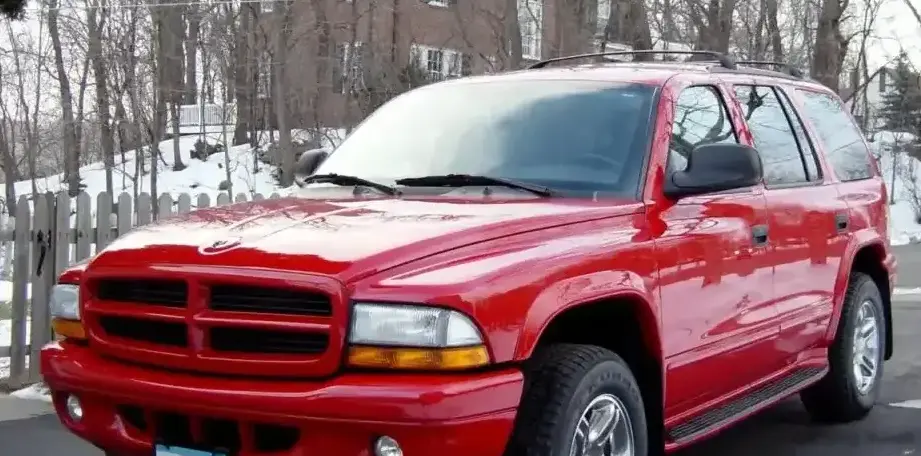
The Dodge Durango II, specifically the facelifted version produced from 2006 to 2008, represented a significant evolution for Dodge’s full-size SUV. This generation, internally designated HB, aimed to blend truck-based durability with more refined on-road manners. Among the engine options available, the 5.7-liter HEMI V8 paired with an automatic transmission was a popular choice, offering a balance of power and capability. This variant positioned itself as the premium offering within the Durango II lineup, appealing to buyers needing substantial towing capacity and robust performance. It sat above the base 3.7L V6 and 4.7L V8 models, and below any potential high-performance or specialized trims.
Technical Specifications
| Brand | Dodge |
| Model | Durango |
| Generation | Durango II (HB, facelift 2006) |
| Type (Engine) | 5.7 HEMI V8 (335 Hp) Automatic |
| Start of production | 2006 |
| End of production | 2008 |
| Powertrain Architecture | Internal Combustion engine |
| Body type | SUV |
| Seats | 5-8 |
| Doors | 5 |
| Fuel consumption (economy) – urban (EPA) | 18.1 l/100 km (13 US mpg, 15.6 UK mpg, 5.5 km/l) |
| Fuel consumption (economy) – extra urban (EPA) | 12.4 l/100 km (19 US mpg, 22.8 UK mpg, 8.1 km/l) |
| Fuel Type | Petrol (Gasoline) |
| Emission standard | LEV I |
| Weight-to-power ratio | 6.6 kg/Hp, 151.3 Hp/tonne |
| Weight-to-torque ratio | 4.4 kg/Nm, 226.7 Nm/tonne |
| Power | 335 Hp @ 5200 rpm |
| Power per litre | 59.3 Hp/l |
| Torque | 502 Nm @ 4200 rpm (370.26 lb.-ft. @ 4200 rpm) |
| Maximum engine speed | 5800 rpm |
| Engine layout | Front, Longitudinal |
| Engine Model/Code | EZB |
| Engine displacement | 5654 cm3 (345.03 cu. in.) |
| Number of cylinders | 8 |
| Engine configuration | V-engine |
| Cylinder Bore | 99.5 mm (3.92 in.) |
| Piston Stroke | 90.9 mm (3.58 in.) |
| Compression ratio | 9.6:1 |
| Number of valves per cylinder | 2 |
| Fuel injection system | Multi-port manifold injection |
| Engine aspiration | Naturally aspirated engine |
| Valvetrain | OHV |
| Engine oil capacity | 6.6 l (6.97 US qt | 5.81 UK qt) |
| Coolant | 17.7 l (18.7 US qt | 15.57 UK qt) |
| Kerb Weight | 2214 kg (4881.03 lbs.) |
| Max. weight | 2926 kg (6450.73 lbs.) |
| Max load | 712 kg (1569.69 lbs.) |
| Trunk (boot) space – minimum | 569 l (20.09 cu. ft.) |
| Trunk (boot) space – maximum | 3070 l (108.42 cu. ft.) |
| Fuel tank capacity | 102 l (26.95 US gal | 22.44 UK gal) |
| Permitted trailer load with brakes (12%) | 4060 kg (8950.77 lbs.) |
| Length | 5101 mm (200.83 in.) |
| Width | 1930 mm (75.98 in.) |
| Height | 1887 mm (74.29 in.) |
| Wheelbase | 3027 mm (119.17 in.) |
| Front track | 1636 mm (64.41 in.) |
| Rear (Back) track | 1636 mm (64.41 in.) |
| Ride height (ground clearance) | 221 mm (8.7 in.) |
| Drag coefficient (Cd) | 0.393 |
| Minimum turning circle (turning diameter) | 12.2 m (40.03 ft.) |
| Approach angle | 26.8° |
| Departure angle | 29.9° |
| Ramp-over (brakeover) angle | 22.8° |
| Drivetrain Architecture | The Internal combustion engine (ICE) drives the rear wheels of the vehicle. |
| Drive wheel | Rear wheel drive |
| Number of gears and type of gearbox | 5 gears, automatic transmission |
| Front suspension | Independent torsion bar, double wishbone, Transverse stabilizer |
| Rear suspension | Rigid axle suspension, Transverse stabilizer, Coil spring |
| Front brakes | Ventilated discs, 336×28 mm |
| Rear brakes | Disc, 352×22 mm |
| Assisting systems | ABS (Anti-lock braking system) |
| Steering type | Steering rack and pinion |
| Power steering | Hydraulic Steering |
| Tires size | 265/65 R17; 265/60 R18; 265/50 R20 |
| Wheel rims size | 7J x 17; 8J x 18; 8J x 20 |
Powertrain & Engine Architecture
The heart of this Durango variant is the 5.7-liter HEMI V8 engine, designated the EZB code. This engine is a member of Chrysler’s third-generation HEMI family, reintroduced in the early 2000s. It features a cast iron block with aluminum cylinder heads, and utilizes a pushrod valvetrain (OHV) for a more compact engine design. The engine employs multi-port fuel injection, delivering fuel directly to each intake port. A key feature of the 5.7L HEMI is the Cylinder Deactivation System (MDS), which shuts down four cylinders during light-load cruising to improve fuel economy. The engine is longitudinally mounted in the chassis. The automatic transmission paired with this engine is a 5-speed unit, providing smooth shifts and optimized gear ratios for both towing and everyday driving. The transmission is electronically controlled, adapting to driving conditions and driver input.
Driving Characteristics
The 5.7L HEMI V8 and automatic transmission combination delivered a noticeable step up in performance compared to the lower-displacement engines offered in the Durango II. While not a sports car, the Durango provided ample power for merging onto highways, passing other vehicles, and towing trailers. The automatic transmission, while smooth, wasn’t particularly quick to downshift, meaning drivers sometimes needed to manually select a lower gear for more responsive acceleration. The torque curve of the HEMI engine provided strong low-end grunt, making it well-suited for hauling heavy loads. Fuel economy, however, was a significant drawback, typical for a large SUV with a V8 engine.
Equipment & Trim Levels
The 5.7 HEMI-equipped Durango typically came with a higher level of standard equipment than the base models. This included features like alloy wheels, upgraded interior trim, a premium sound system, and power-adjustable seats. Optional extras included a DVD entertainment system, sunroof, leather upholstery, and advanced safety features like rear parking sensors and a navigation system. Trim levels varied, but generally, the 5.7L engine was offered on the SLT and Limited trims, representing the higher end of the Durango lineup.
Chassis & Braking
The Durango II utilized a body-on-frame construction, providing a robust and durable platform. The front suspension consisted of an independent torsion bar setup with a double wishbone design and a transverse stabilizer bar. The rear suspension employed a rigid axle with coil springs and a transverse stabilizer bar. Braking duties were handled by ventilated discs at the front and solid discs at the rear. An Anti-lock Braking System (ABS) was standard. The Durango’s relatively heavy weight necessitated a robust braking system, and the discs provided adequate stopping power for most driving situations.
Market Reception & Comparison
The 5.7 HEMI Durango was generally well-received by critics and consumers alike. It was praised for its powerful engine, spacious interior, and towing capacity. However, its fuel economy was a common criticism. Compared to the 3.7L and 4.7L Durango models, the 5.7L offered significantly more power and torque, but at the expense of fuel efficiency. The HEMI version also commanded a higher price tag. Against competitors like the Chevrolet Tahoe and Ford Expedition, the Durango offered a competitive package, particularly in terms of value and styling.
Legacy
The 5.7L HEMI-powered Durango II has become a popular choice among enthusiasts and those seeking a capable and affordable used SUV. The HEMI engine is known for its reliability, although regular maintenance is crucial. Common issues include oil leaks and sensor failures. The automatic transmission, when properly maintained, is also generally reliable. Today, these Durangos can be found in good condition, offering a blend of classic SUV ruggedness and modern convenience. Their strong V8 engines and spacious interiors continue to appeal to buyers looking for a capable and versatile vehicle.