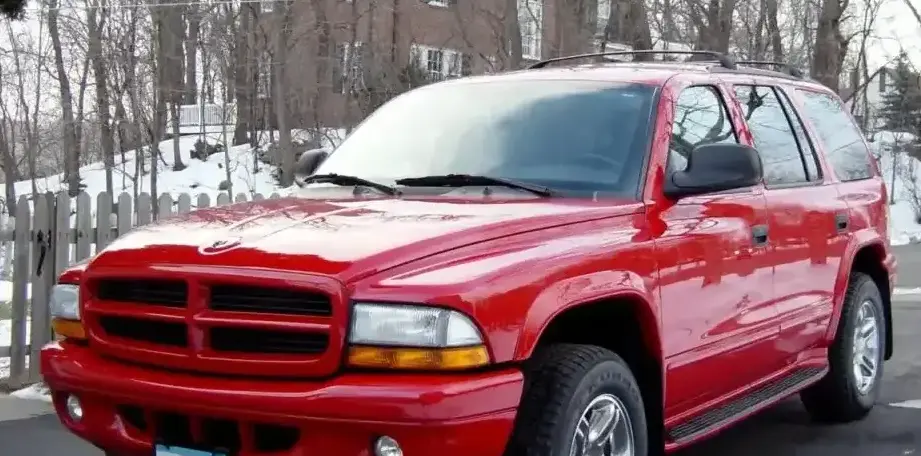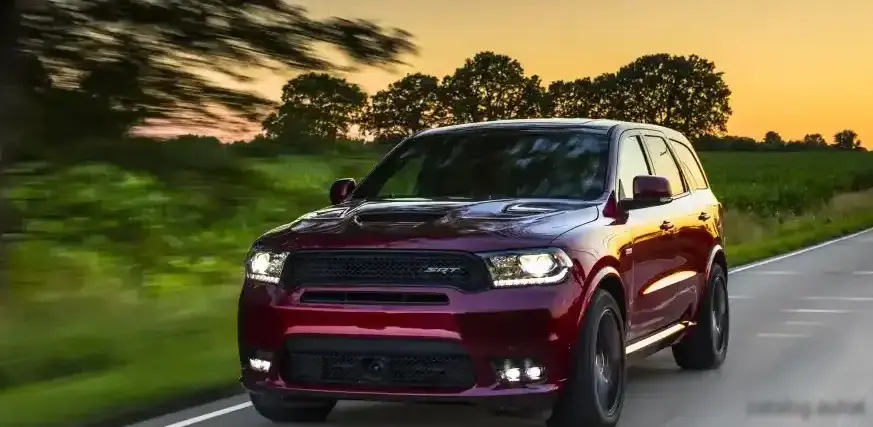
The Dodge Durango III, specifically the facelifted model produced from 2014 to 2020, represented a significant step forward for Dodge’s full-size SUV offering. The 5.7-liter V8 HEMI engine, paired with an eight-speed automatic transmission and all-wheel drive (AWD), was a cornerstone of the Durango lineup during this period. This configuration occupied a premium position within the Durango range, offering a balance of power, capability, and relative luxury. It catered to buyers needing substantial towing capacity and passenger space without sacrificing performance. The facelift brought updated styling, improved interior materials, and enhanced technology features, solidifying the Durango’s appeal in the competitive three-row SUV segment.
Technical Specifications
| Brand | Dodge |
| Model | Durango |
| Generation | Durango III (WD, facelift 2014) |
| Type (Engine) | 5.7 V8 (360 Hp) AWD HEMI |
| Start of production | 2014 |
| End of production | 2020 |
| Powertrain Architecture | Internal Combustion engine |
| Body type | SUV |
| Seats | 7 |
| Doors | 4 |
| Fuel consumption (urban) | 16.8 l/100 km (14 US mpg, 16.8 UK mpg, 6 km/l) |
| Fuel consumption (extra urban) | 10.7 l/100 km (22 US mpg, 26.4 UK mpg, 9.3 km/l) |
| Fuel consumption (combined) | 13.8 l/100 km (17 US mpg, 20.5 UK mpg, 7.2 km/l) |
| Fuel Type | Petrol (Gasoline) |
| Weight-to-power ratio | 6.8 kg/Hp, 147.5 Hp/tonne |
| Weight-to-torque ratio | 4.6 kg/Nm, 216.7 Nm/tonne |
| Power | 360 Hp @ 5150 rpm |
| Power per litre | 63.7 Hp/l |
| Torque | 529 Nm @ 4250 rpm (390.17 lb.-ft. @ 4250 rpm) |
| Maximum engine speed | 5800 rpm |
| Engine layout | Front, Longitudinal |
| Engine displacement | 5654 cm3 (345.03 cu. in.) |
| Number of cylinders | 8 |
| Engine configuration | V-engine |
| Cylinder Bore | 99.5 mm (3.92 in.) |
| Piston Stroke | 90.9 mm (3.58 in.) |
| Compression ratio | 10.5:1 |
| Number of valves per cylinder | 2 |
| Fuel injection system | Multi-port manifold injection |
| Engine aspiration | Naturally aspirated engine |
| Valvetrain | VVT |
| Engine oil capacity | 6.6 l (6.97 US qt | 5.81 UK qt) |
| Coolant capacity | 14.6 l (15.43 US qt | 12.85 UK qt) |
| Kerb Weight | 2441-2457 kg (5381.48 – 5416.76 lbs.) |
| Max. weight | 3221 kg (7101.09 lbs.) |
| Max load | 764-780 kg (1684.33 – 1719.61 lbs.) |
| Trunk (boot) space – minimum | 490 l (17.3 cu. ft.) |
| Trunk (boot) space – maximum | 2410 l (85.11 cu. ft.) |
| Fuel tank capacity | 93.1 l (24.59 US gal | 20.48 UK gal) |
| Permitted trailer load with brakes (12%) | 3946 kg (8699.44 lbs.) |
| Length | 5110 mm (201.18 in.) |
| Width | 1925 mm (75.79 in.) |
| Width including mirrors | 2172 mm (85.51 in.) |
| Height | 1801 mm (70.91 in.) |
| Wheelbase | 3043 mm (119.8 in.) |
| Front track | 1623 mm (63.9 in.) |
| Rear (Back) track | 1628 mm (64.09 in.) |
| Ride height (ground clearance) | 207 mm (8.15 in.) |
| Drag coefficient (Cd) | 0.35 |
| Minimum turning circle (turning diameter) | 12.5 m (41.01 ft.) |
| Approach angle | 16.3° |
| Departure angle | 21.5° |
| Ramp-over (brakeover) angle | 18.1° |
| Drive wheel | All wheel drive (4×4) |
| Number of gears and type of gearbox | 8 gears, automatic transmission |
| Front suspension | Wishbone, Transverse stabilizer |
| Rear suspension | Independent multi-link suspension |
| Front brakes | Ventilated discs, 350 mm |
| Rear brakes | Ventilated discs, 330 mm |
| Assisting systems | ABS (Anti-lock braking system) |
| Tires size | 265/60 R18; 265/50 R20 |
| Wheel rims size | 8J x 18; 10J x 20 |
Powertrain & Engine Architecture
The heart of this Durango variant is the 5.7-liter HEMI V8 engine, internally designated as part of the Chrysler Group’s engine family. This engine features a cast iron block with aluminum cylinder heads. The 5.7L HEMI utilizes a multi-point fuel injection system, delivering fuel directly to each cylinder. Variable Valve Timing (VVT) is employed on the intake camshaft, optimizing engine performance and efficiency across a wider RPM range. The engine produces 360 horsepower at 5,150 rpm and 390 lb-ft of torque at 4,250 rpm. Paired with this engine is the ZF 8HP70 eight-speed automatic transmission. This transmission is known for its smooth shifting and wide gear ratio spread, contributing to both fuel efficiency and responsive acceleration. The AWD system is typically an on-demand system, automatically engaging all four wheels when traction is needed.
Driving Characteristics
The 5.7L V8 and eight-speed automatic combination delivers a robust driving experience. While not as overtly sporty as some competitors, the Durango offers ample power for everyday driving and confident highway passing. The eight-speed transmission keeps the engine in its optimal power band, providing quick downshifts for acceleration and efficient cruising. Compared to the base V6 Durango, the V8 offers significantly more power and towing capacity. Compared to higher-output Durango trims like the SRT, this version prioritizes usability and fuel economy over outright performance. The AWD system provides enhanced stability in inclement weather and on slippery surfaces.
Equipment & Trim Levels
The 5.7L HEMI AWD Durango typically came standard with features like three-zone automatic climate control, a touchscreen infotainment system with Bluetooth connectivity, and a rearview camera. Higher trim levels, such as the Limited and R/T, added features like leather upholstery, heated and ventilated front seats, a premium sound system, and advanced safety technologies like blind-spot monitoring and rear cross-traffic alert. Optional extras included a dual-screen rear entertainment system, a panoramic sunroof, and various appearance packages.
Chassis & Braking
The Durango III utilizes a fully independent suspension system, with a short and long arm (SLA) setup at the front and a multi-link suspension at the rear. This configuration provides a comfortable ride and good handling characteristics. The 5.7L models typically featured larger brakes than the V6 versions, with ventilated discs at all four corners. ABS (Anti-lock Braking System) is standard. Rear brake size was 330mm, while front brakes were 350mm. Stabilizer bars are present at both the front and rear to reduce body roll during cornering.
Market Reception & Comparison
The 5.7L HEMI Durango was generally well-received by automotive critics. It was praised for its powerful engine, comfortable ride, spacious interior, and impressive towing capacity. Fuel economy, however, was a common criticism, as expected for a large SUV with a V8 engine. Compared to competitors like the Chevrolet Tahoe and Ford Expedition, the Durango offered a more refined driving experience and a more modern interior. The Durango’s smaller size also made it easier to maneuver in urban environments. Reliability was generally good, although some owners reported minor issues with the infotainment system.
Legacy
The 2014-2020 Dodge Durango 5.7L HEMI AWD remains a popular choice in the used car market. The HEMI V8 engine is known for its durability and relatively straightforward maintenance. While fuel economy isn’t exceptional, the Durango’s overall value proposition – combining power, space, and capability – continues to appeal to buyers. The ZF eight-speed automatic transmission has also proven to be reliable. These Durangos represent a sweet spot for those seeking a capable and comfortable full-size SUV without the higher price tag of newer models.