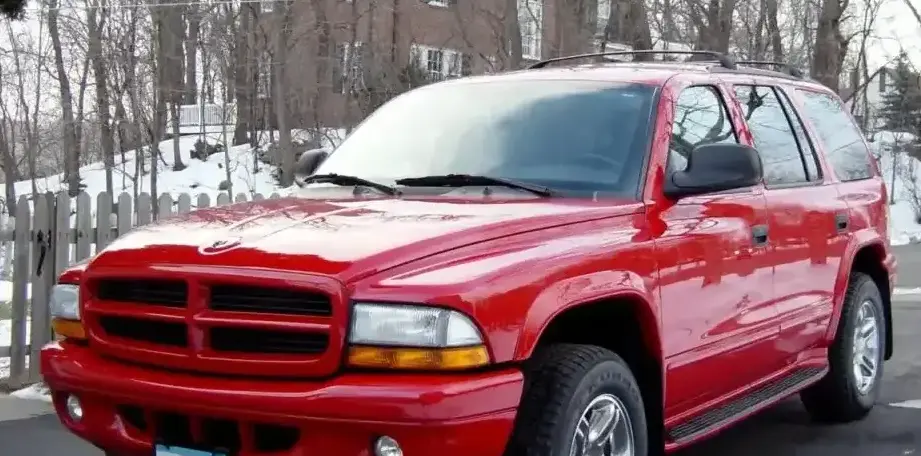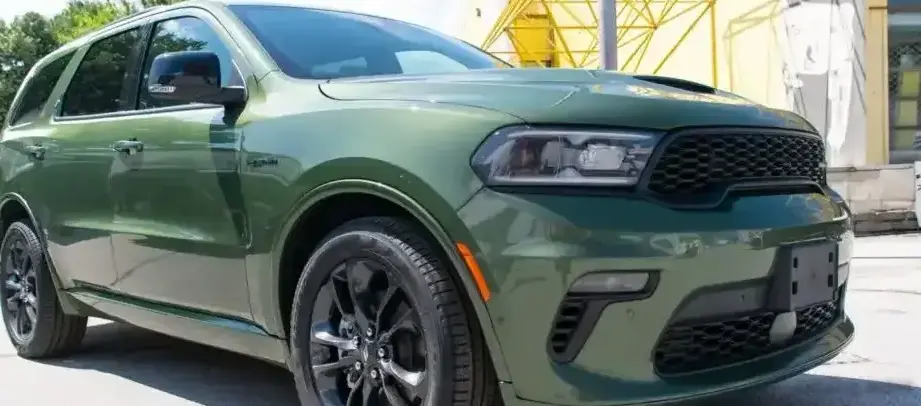
The Dodge Durango SRT 392, introduced for the 2021 model year as part of the WD facelift of the third-generation Durango (introduced in 2011), represents the highest performance variant of the Durango SUV. Positioned as the flagship model, it caters to buyers seeking a powerful, capable, and luxurious three-row SUV. The SRT 392 distinguishes itself with its naturally aspirated 6.4-liter HEMI V8 engine, a performance-tuned all-wheel-drive system, and a host of performance-oriented features. It occupies the top tier of the Durango lineup, above trims like the R/T, GT, and SXT, offering a significant step up in power and handling.
Technical Specifications
| Brand | Dodge |
| Model | Durango |
| Generation | Durango III (WD, facelift 2021) |
| Type | SRT 392 6.4 HEMI V8 (475 Hp) AWD TORQUEFLITE |
| Start of production | 2021 |
| Powertrain Architecture | Internal Combustion engine |
| Body type | SUV, MPV |
| Seats | 5 |
| Doors | 5 |
| Fuel consumption (urban) | 18.1 l/100 km (13 US mpg, 15.6 UK mpg, 5.5 km/l) |
| Fuel consumption (extra urban) | 12.4 l/100 km (19 US mpg, 22.8 UK mpg, 8.1 km/l) |
| Fuel consumption (combined) | 15.7 l/100 km (15 US mpg, 18 UK mpg, 6.4 km/l) |
| Fuel Type | Petrol (Gasoline) |
| Weight-to-power ratio | 5.1 kg/Hp, 197.8 Hp/tonne |
| Weight-to-torque ratio | 3.8 kg/Nm, 265.3 Nm/tonne |
| Power | 475 Hp @ 6000 rpm |
| Power per litre | 74 Hp/l |
| Torque | 637 Nm @ 4300 rpm (469.83 lb.-ft. @ 4300 rpm) |
| Maximum engine speed | 6400 rpm |
| Engine layout | Front, Longitudinal |
| Engine Model/Code | HEMI 392 Apache |
| Engine displacement | 6417 cm3 (391.59 cu. in.) |
| Number of cylinders | 8 |
| Engine configuration | V-engine |
| Cylinder Bore | 103.9 mm (4.09 in.) |
| Piston Stroke | 94.5 mm (3.72 in.) |
| Compression ratio | 10.9:1 |
| Number of valves per cylinder | 2 |
| Fuel injection system | Multi-port manifold injection |
| Engine aspiration | Naturally aspirated engine |
| Valvetrain | OHV |
| Engine oil capacity | 6.6 l (6.97 US qt | 5.81 UK qt) |
| Coolant capacity | 13.25 l (14 US qt | 11.66 UK qt) |
| Kerb Weight | 2401 kg (5293.3 lbs.) |
| Max. weight | 3221 kg (7101.09 lbs.) |
| Max load | 820 kg (1807.79 lbs.) |
| Trunk (boot) space – minimum | 487 l (17.2 cu. ft.) |
| Trunk (boot) space – maximum | 2410 l (85.11 cu. ft.) |
| Fuel tank capacity | 93.1 l (24.59 US gal | 20.48 UK gal) |
| Permitted trailer load with brakes (12%) | 3946 kg (8699.44 lbs.) |
| Length | 5101 mm (200.83 in.) |
| Width | 1940 mm (76.38 in.) |
| Width including mirrors | 2172 mm (85.51 in.) |
| Height | 1831 mm (72.09 in.) |
| Wheelbase | 3042 mm (119.76 in.) |
| Front track | 1637 mm (64.45 in.) |
| Rear (Back) track | 1645 mm (64.76 in.) |
| Drag coefficient (Cd) | 0.38 |
| Minimum turning circle (turning diameter) | 12.5 m (41.01 ft.) |
| Approach angle | 18.5° |
| Departure angle | 20.2° |
| Ramp-over (brakeover) angle | 16.3° |
| Drivetrain Architecture | All wheel drive (4×4). Internal Combustion engine. |
| Drive wheel | All wheel drive (4×4) |
| Number of gears and type of gearbox | 8 gears, automatic transmission |
| Front suspension | Double wishbone, Transverse stabilizer |
| Rear suspension | Independent multi-link suspension, Transverse stabilizer |
| Front brakes | Ventilated discs, 380×34 mm |
| Rear brakes | Ventilated discs, 350×28 mm |
| Assisting systems | ABS (Anti-lock braking system) |
| Steering type | Steering rack and pinion |
| Power steering | Electric Steering |
| Tires size | 295/45 R20 |
| Wheel rims size | 10J x 20 |
INTRODUCTION
The Dodge Durango SRT 392 debuted for the 2021 model year, representing a significant performance upgrade within the Durango lineup. Built on the WD platform, which is a refreshed version of the original Durango III (introduced in 2011), the SRT 392 aimed to deliver a blend of everyday practicality and high-performance capability. It directly competes with other high-performance SUVs like the Jeep Grand Cherokee Trackhawk and the Ford Explorer ST, offering a unique combination of American muscle and three-row seating. The facelift brought updated styling cues, improved interior materials, and enhanced technology features, further solidifying the Durango’s position in the competitive SUV market.
Powertrain & Engine Architecture
The heart of the Durango SRT 392 is the 6.4-liter (392 cubic inch) HEMI V8 engine, internally designated as the 6.4L HEMI Apache. This engine is a naturally aspirated, overhead valve (OHV) design featuring multi-port fuel injection. The engine produces 475 horsepower at 6,000 rpm and 470 lb-ft of torque at 4,300 rpm. The engine’s architecture is based on a cast iron block with aluminum cylinder heads, contributing to its robust construction and durability. The 6.4L HEMI utilizes a variable valve timing (VVT) system to optimize performance and fuel efficiency across the rev range. The engine is mated to a TorqueFlite 8-speed automatic transmission, known for its smooth shifts and responsiveness. This transmission is specifically tuned for performance applications, offering quicker shift times and enhanced control.
Driving Characteristics
The Durango SRT 392 delivers a distinctly powerful driving experience. The 6.4-liter V8 provides strong acceleration, with the SUV capable of reaching 60 mph in approximately 4.7 seconds. The 8-speed automatic transmission is well-matched to the engine’s powerband, providing quick and seamless gear changes. The all-wheel-drive system enhances traction and stability, particularly in adverse weather conditions. Compared to lower-trim Durango models with the 3.6-liter V6 or the 5.7-liter HEMI V8, the SRT 392 offers a significantly more aggressive and engaging driving experience. While the V6 prioritizes fuel economy and the 5.7-liter offers a balance of power and efficiency, the SRT 392 is focused solely on performance. The suspension is tuned for a firmer ride, providing improved handling and cornering stability, but at the expense of some ride comfort.
Equipment & Trim Levels
The Durango SRT 392 comes standard with a comprehensive list of features, including leather upholstery, heated and ventilated front seats, a premium sound system, and a large touchscreen infotainment system with Apple CarPlay and Android Auto compatibility. Standard safety features include blind-spot monitoring, rear cross-traffic alert, and adaptive cruise control. Optional extras include a sunroof, upgraded leather trim, and various appearance packages. The interior features unique SRT-specific badging and styling cues, differentiating it from other Durango trims. The SRT 392 also includes performance pages within the infotainment system, allowing drivers to monitor various performance parameters such as horsepower, torque, and G-forces.
Chassis & Braking
The Durango SRT 392 features a robust chassis designed to handle the engine’s power and provide a stable driving platform. The suspension consists of a double wishbone setup at the front and an independent multi-link suspension at the rear, both incorporating transverse stabilizers to reduce body roll. The braking system consists of ventilated discs at all four corners, with larger rotors and upgraded calipers compared to lower-trim models. The front brakes measure 380×34 mm, while the rear brakes are 350×28 mm. An anti-lock braking system (ABS) is standard, providing enhanced stopping power and control.
Market Reception & Comparison
The Durango SRT 392 has been generally well-received by automotive critics, praised for its powerful engine, impressive acceleration, and surprisingly agile handling for a large SUV. However, its fuel economy has been a common criticism, with the combined fuel consumption of 15.7 l/100 km being relatively high. Compared to the Durango R/T, which features the 5.7-liter HEMI V8, the SRT 392 offers a substantial performance upgrade but comes at a higher price point. The SRT 392 also offers a more focused driving experience than the more comfort-oriented trims.
Legacy
The Durango SRT 392 has established itself as a desirable performance SUV in the used car market. The 6.4-liter HEMI V8 engine is known for its reliability and durability, although regular maintenance is essential. The TorqueFlite 8-speed automatic transmission has also proven to be a reliable unit. As a relatively recent model, the SRT 392 is expected to hold its value well, particularly among enthusiasts seeking a powerful and capable three-row SUV. Its combination of performance, practicality, and American muscle car heritage ensures its continued appeal in the years to come.