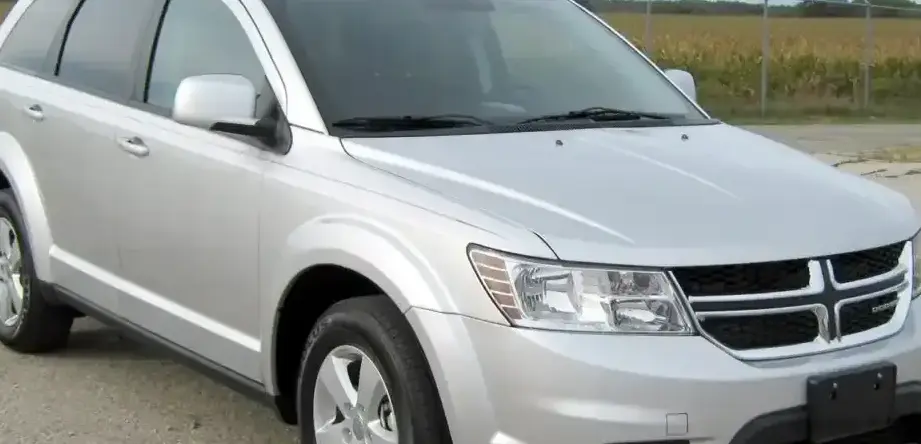
The Dodge Journey 2.0 CRD, producing 140 horsepower, was a diesel-powered variant of the Journey crossover utility vehicle (CUV) offered primarily in European and other international markets from 2008 to 2010. Positioned as a fuel-efficient alternative within the Journey lineup, it aimed to appeal to buyers seeking a practical family vehicle with lower running costs. This model occupied the lower to mid-range of the Journey offerings, slotting below the more powerful gasoline engine options available. It represented Dodge’s attempt to cater to the growing diesel market outside of North America, offering a blend of space, practicality, and economy.
Technical Specifications
| Brand | Dodge |
| Model | Journey |
| Generation | Journey |
| Type (Engine) | 2.0 CRD (140 Hp) |
| Start of production | 2008 |
| End of production | 2010 |
| Powertrain Architecture | Internal Combustion engine |
| Body type | CUV |
| Seats | 5-7 |
| Doors | 5 |
| Fuel consumption (urban) | 8.4 l/100 km (28 US mpg, 33.6 UK mpg, 11.9 km/l) |
| Fuel consumption (extra urban) | 5.4 l/100 km (43.6 US mpg, 52.3 UK mpg, 18.5 km/l) |
| Fuel consumption (combined) | 6.5 l/100 km (36.2 US mpg, 43.5 UK mpg, 15.4 km/l) |
| CO2 emissions | 172 g/km |
| Fuel Type | Diesel |
| Acceleration 0 – 100 km/h | 11.6 sec |
| Acceleration 0 – 62 mph | 11.6 sec |
| Acceleration 0 – 60 mph | 11 sec |
| Maximum speed | 188 km/h (116.82 mph) |
| Weight-to-power ratio | 13 kg/Hp, 76.9 Hp/tonne |
| Weight-to-torque ratio | 5.9 kg/Nm, 170.3 Nm/tonne |
| Power | 140 Hp @ 4000 rpm |
| Power per litre | 71.1 Hp/l |
| Torque | 310 Nm @ 1750-2500 rpm (228.64 lb.-ft. @ 1750-2500 rpm) |
| Engine layout | Front, Transverse |
| Engine Model/Code | BWD, ECE |
| Engine displacement | 1968 cm3 (120.09 cu. in.) |
| Number of cylinders | 4 |
| Engine configuration | Inline |
| Cylinder Bore | 81 mm (3.19 in.) |
| Piston Stroke | 95.5 mm (3.76 in.) |
| Compression ratio | 18:1 |
| Number of valves per cylinder | 4 |
| Fuel injection system | Pump-nozzle (Unit Injector) |
| Engine aspiration | Turbocharger, Intercooler |
| Valvetrain | DOHC |
| Engine oil capacity | 4 l (4.23 US qt | 3.52 UK qt) |
| Coolant | 8 l (8.45 US qt | 7.04 UK qt) |
| Kerb Weight | 1820 kg (4012.41 lbs.) |
| Max. weight | 2480 kg (5467.46 lbs.) |
| Max load | 660 kg (1455.05 lbs.) |
| Trunk (boot) space – minimum | 167 l (5.9 cu. ft.) |
| Trunk (boot) space – maximum | 1562 l (55.16 cu. ft.) |
| Fuel tank capacity | 77 l (20.34 US gal | 16.94 UK gal) |
| Permitted trailer load with brakes (12%) | 1360 kg (2998.29 lbs.) |
| Permitted trailer load without brakes | 450 kg (992.08 lbs.) |
| Permitted towbar download | 68 kg (149.91 lbs.) |
| Length | 4888 mm (192.44 in.) |
| Width | 1878 mm (73.94 in.) |
| Height | 1691 mm (66.57 in.) |
| Wheelbase | 2890 mm (113.78 in.) |
| Front track | 1571 mm (61.85 in.) |
| Rear (Back) track | 1582 mm (62.28 in.) |
| Minimum turning circle | 11.7 m (38.39 ft.) |
| Drivetrain Architecture | The Internal combustion engine (ICE) drives the front wheels of the vehicle. |
| Drive wheel | Front wheel drive |
| Number of gears and type of gearbox | 6 gears, manual transmission |
| Front suspension | Independent, type McPherson with coil spring and anti-roll bar |
| Rear suspension | Independent multi-link spring suspension with stabilizer |
| Front brakes | Ventilated discs |
| Rear brakes | Disc |
| Assisting systems | ABS (Anti-lock braking system) |
| Steering type | Steering rack and pinion |
| Tires size | 225/65 R16; 225/65 R17 |
| Wheel rims size | 6.5J x 16; 6.5J x 17 |
Powertrain & Engine Architecture
The heart of the Dodge Journey 2.0 CRD was the Volkswagen Group-sourced 1.968-liter inline-four cylinder diesel engine. This engine, often identified by the BWD or ECE engine codes depending on specific market regulations, was a common powerplant in various European vehicles of the era. It featured a turbocharger with an intercooler to boost power and efficiency. The engine utilized a pump-nozzle (unit injector) fuel injection system, a technology known for its precise fuel delivery and contribution to improved combustion efficiency. The engine employed a double overhead camshaft (DOHC) valvetrain with four valves per cylinder, optimizing airflow for enhanced performance. The 2.0 CRD was paired with a six-speed manual transmission as standard, delivering power to the front wheels. While an automatic transmission was offered on some Journey models, it was not typically paired with the 2.0 CRD engine.
Driving Characteristics
The 140 horsepower and 310 Nm (228.64 lb-ft) of torque provided by the 2.0 CRD engine offered a reasonable balance of performance and fuel economy. Acceleration from 0 to 100 km/h (0-62 mph) took approximately 11.6 seconds, which was adequate for everyday driving but not particularly sporty. The engine’s torque peak, available from 1750-2500 rpm, provided good responsiveness in typical driving situations, making it suitable for overtaking and highway cruising. Compared to the higher-output gasoline engines available in the Journey, the 2.0 CRD prioritized fuel efficiency over outright speed. The six-speed manual transmission allowed drivers to maximize the engine’s efficiency and control, while the gear ratios were tuned to provide a comfortable driving experience.
Equipment & Trim Levels
The 2.0 CRD variant of the Dodge Journey typically came with a standard equipment level focused on practicality and comfort. Standard features often included air conditioning, power windows and locks, a basic audio system, and cloth upholstery. Higher trim levels offered options such as alloy wheels, upgraded audio systems, rear parking sensors, and leather upholstery. The interior design was functional and family-oriented, with seating for five to seven passengers depending on the configuration. The dashboard layout was straightforward and easy to use, with clearly labeled controls.
Chassis & Braking
The Dodge Journey 2.0 CRD featured an independent suspension system, with McPherson struts at the front and a multi-link setup at the rear. This suspension configuration provided a comfortable ride quality and decent handling characteristics. The front brakes were ventilated discs, while the rear brakes were solid discs. An Anti-lock Braking System (ABS) was standard, enhancing safety and control during emergency braking situations. The steering system was a rack and pinion type, providing precise and responsive steering feel.
Market Reception & Comparison
The Dodge Journey 2.0 CRD was generally well-received in markets where diesel engines were popular. Critics praised its fuel efficiency and practicality, making it an attractive option for families seeking a versatile vehicle. However, some reviewers noted that the engine’s performance was not as refined or powerful as some of its competitors. Compared to the gasoline-powered Journey models, the 2.0 CRD offered significantly better fuel economy but less overall power. It also provided a more affordable entry point into the Journey lineup.
Legacy
The Dodge Journey 2.0 CRD, while not a long-lived variant, represents an interesting chapter in Dodge’s attempt to expand its presence in international markets. The Volkswagen-sourced diesel engine proved to be relatively reliable, and many examples are still on the road today. In the used car market, the 2.0 CRD variant is often sought after by buyers looking for a fuel-efficient and practical family vehicle. However, potential buyers should be aware of the maintenance requirements associated with diesel engines, such as regular servicing of the fuel injection system and diesel particulate filter.