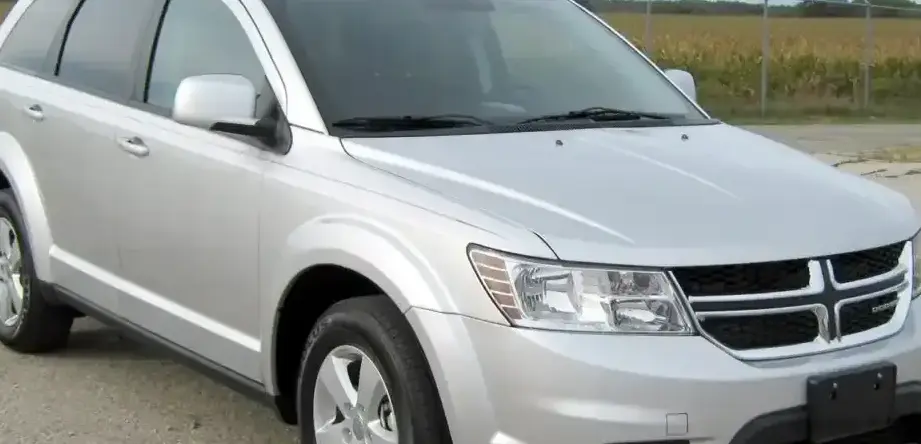
The Dodge Journey 2.0 CRD (140 hp) DCT was a diesel-powered variant of the first-generation Dodge Journey, produced between 2008 and 2010. Positioned as a mid-range offering in select European and international markets, this model aimed to provide a balance of fuel efficiency and practicality within the Journey’s crossover utility vehicle (CUV) lineup. The Journey, Dodge’s entry into the growing mid-size CUV segment, was based on a stretched version of the Chrysler/Dodge/Mitsubishi GS platform, also known as the JC49 platform. The 2.0 CRD variant distinguished itself through its advanced common-rail diesel engine and dual-clutch transmission (DCT), offering a different driving experience compared to the gasoline-powered options available in North America.
Technical Specifications
| Brand | Dodge |
| Model | Journey |
| Generation | Journey |
| Type (Engine) | 2.0 CRD (140 Hp) DCT |
| Start of production | 2008 |
| End of production | 2010 |
| Powertrain Architecture | Internal Combustion engine |
| Body type | CUV |
| Seats | 5-7 |
| Doors | 5 |
| Fuel consumption (urban) | 9.1 l/100 km (25.8 US mpg, 31 UK mpg, 11 km/l) |
| Fuel consumption (extra urban) | 5.9 l/100 km (39.9 US mpg, 47.9 UK mpg, 16.9 km/l) |
| Fuel consumption (combined) | 7 l/100 km (33.6 US mpg, 40.4 UK mpg, 14.3 km/l) |
| CO2 emissions | 186 g/km |
| Fuel Type | Diesel |
| Acceleration 0 – 100 km/h | 11.8 sec |
| Acceleration 0 – 62 mph | 11.8 sec |
| Acceleration 0 – 60 mph | 11.2 sec |
| Maximum speed | 182 km/h (113.09 mph) |
| Weight-to-power ratio | 13.1 kg/Hp, 76.5 Hp/tonne |
| Weight-to-torque ratio | 5.9 kg/Nm, 169.4 Nm/tonne |
| Power | 140 Hp @ 4000 rpm |
| Power per litre | 71.1 Hp/l |
| Torque | 310 Nm @ 1750-2500 rpm (228.64 lb.-ft. @ 1750-2500 rpm) |
| Engine layout | Front, Transverse |
| Engine Model/Code | BWD, ECE |
| Engine displacement | 1968 cm3 (120.09 cu. in.) |
| Number of cylinders | 4 |
| Engine configuration | Inline |
| Cylinder Bore | 81 mm (3.19 in.) |
| Piston Stroke | 95.5 mm (3.76 in.) |
| Compression ratio | 18:1 |
| Number of valves per cylinder | 4 |
| Fuel injection system | Pump-nozzle (Unit Injector) |
| Engine aspiration | Turbocharger, Intercooler |
| Valvetrain | DOHC |
| Engine oil capacity | 4 l (4.23 US qt | 3.52 UK qt) |
| Coolant | 8 l (8.45 US qt | 7.04 UK qt) |
| Kerb Weight | 1830 kg (4034.46 lbs.) |
| Max. weight | 2480 kg (5467.46 lbs.) |
| Max load | 650 kg (1433 lbs.) |
| Trunk (boot) space – minimum | 167 l (5.9 cu. ft.) |
| Trunk (boot) space – maximum | 1562 l (55.16 cu. ft.) |
| Fuel tank capacity | 77 l (20.34 US gal | 16.94 UK gal) |
| Permitted trailer load with brakes (12%) | 1360 kg (2998.29 lbs.) |
| Permitted trailer load without brakes | 450 kg (992.08 lbs.) |
| Permitted towbar download | 68 kg (149.91 lbs.) |
| Length | 4888 mm (192.44 in.) |
| Width | 1878 mm (73.94 in.) |
| Height | 1691 mm (66.57 in.) |
| Wheelbase | 2890 mm (113.78 in.) |
| Front track | 1571 mm (61.85 in.) |
| Rear (Back) track | 1582 mm (62.28 in.) |
| Minimum turning circle | 11.9 m (39.04 ft.) |
| Drivetrain | Front wheel drive |
| Number of gears and type of gearbox | 6 gears, automatic transmission DCT |
| Front suspension | Independent, type McPherson with coil spring and anti-roll bar |
| Rear suspension | Independent multi-link spring suspension with stabilizer |
| Front brakes | Ventilated discs |
| Rear brakes | Disc |
| Assisting systems | ABS (Anti-lock braking system) |
| Steering type | Steering rack and pinion |
| Tires size | 225/55 R19 |
| Wheel rims size | 7J x 19 |
Powertrain & Engine Architecture
The heart of the Journey 2.0 CRD was the Volkswagen Group-sourced 1.968-liter inline-four cylinder diesel engine. This engine, often identified by the BWD engine code (depending on specific market and emissions regulations), utilized a common-rail direct injection system with pump-nozzle technology. This system allowed for precise fuel delivery and optimized combustion, contributing to both power output and fuel efficiency. The engine was turbocharged and intercooled, further enhancing performance. The engine produced 140 horsepower at 4,000 rpm and 310 Nm (228.64 lb-ft) of torque between 1,750 and 2,500 rpm. The engine featured a double overhead camshaft (DOHC) valvetrain with four valves per cylinder. Paired with the engine was a six-speed dual-clutch transmission (DCT). This DCT provided quicker and smoother gear changes compared to a traditional automatic transmission, improving both acceleration and fuel economy.
Driving Characteristics
The 2.0 CRD DCT variant of the Dodge Journey offered a noticeably different driving experience compared to the gasoline-powered models. The diesel engine’s abundant low-end torque provided strong acceleration from a standstill and effortless cruising at highway speeds. While not a particularly sporty vehicle, the DCT transmission allowed for responsive shifts and a more engaging driving feel. Acceleration from 0 to 100 km/h (0-62 mph) took approximately 11.8 seconds. The DCT’s programming prioritized fuel efficiency, resulting in slightly slower shifts during relaxed driving. Compared to higher-output diesel versions available in Europe, the 140 hp variant offered a more accessible price point but sacrificed some outright performance.
Equipment & Trim Levels
The Journey 2.0 CRD DCT typically came equipped with a reasonable level of standard features. These included air conditioning, power windows and locks, a basic audio system, and alloy wheels. Higher trim levels added features such as leather upholstery, a sunroof, upgraded audio systems, and parking sensors. The interior design was functional and family-oriented, with seating for up to seven passengers depending on the configuration. Optional extras often included navigation systems and rear-seat entertainment systems.
Chassis & Braking
The Journey 2.0 CRD utilized an independent suspension setup, with McPherson struts at the front and a multi-link system at the rear. This configuration provided a comfortable ride quality, although handling was not particularly sharp. The front brakes were ventilated discs, while the rear brakes were solid discs. Anti-lock braking system (ABS) was standard. The suspension was tuned to prioritize comfort and ride quality, reflecting the vehicle’s role as a family hauler. Stabilizer bars were included at both the front and rear to reduce body roll during cornering.
Market Reception & Comparison
The Dodge Journey 2.0 CRD DCT was generally well-received in markets where diesel engines were popular. Critics praised its fuel efficiency and comfortable ride. However, some reviewers noted that the interior materials were not as refined as those found in some competitors. Compared to the gasoline-powered Journey models, the 2.0 CRD offered significantly better fuel economy, making it an attractive option for drivers who covered long distances. Compared to other diesel CUVs in the European market, the Journey offered a competitive price point and a spacious interior.
Legacy
The Dodge Journey 2.0 CRD DCT, while not a long-lived variant, remains a relatively common sight on the used car market in Europe and other regions where it was sold. The Volkswagen-sourced diesel engine and DCT transmission have proven to be generally reliable, although regular maintenance is essential. The pump-nozzle injection system can be prone to issues if not properly maintained. Today, the Journey 2.0 CRD represents an affordable and practical option for buyers seeking a spacious and fuel-efficient CUV. Its blend of practicality, fuel economy, and relatively robust powertrain continues to appeal to a segment of the used car market.