
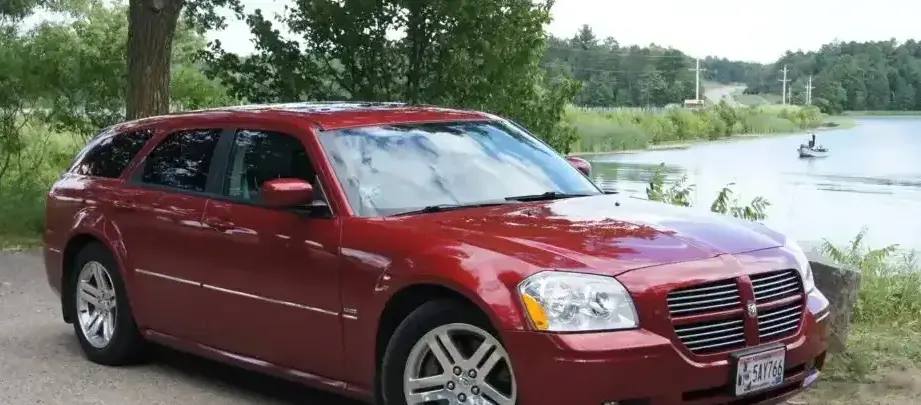
The Dodge Magnum 6.1i V8 SRT-8, produced from 2005 to 2008, represented the high-performance pinnacle of the second-generation Dodge Magnum. Positioned as the flagship trim, it brought a substantial power upgrade and aggressive styling to the already unique American station wagon. The Magnum, revived in 2005 after a 30-year hiatus, aimed to recapture the spirit of the original 1978-1983 models, offering a blend of practicality and muscle car performance. The SRT-8 variant specifically targeted enthusiasts seeking a powerful, spacious vehicle capable of both daily driving and spirited performance. It was built on the rear-wheel drive LX platform, shared with the Dodge Charger and Chrysler 300.
Technical Specifications
| Brand | Dodge |
| Model | Magnum |
| Generation | Magnum |
| Type (Engine) | 6.1i V8 SRT-8 (432 Hp) |
| Start of production | 2005 |
| End of production | 2008 |
| Powertrain Architecture | Internal Combustion engine |
| Body type | Station wagon (estate) |
| Seats | 5 |
| Doors | 5 |
| Fuel consumption (urban) | 18.1 l/100 km (13 US mpg, 15.6 UK mpg, 5.5 km/l) |
| Fuel consumption (extra urban) | 13.1 l/100 km (18 US mpg, 21.6 UK mpg, 7.6 km/l) |
| Fuel consumption (combined) | 15.7 l/100 km (15 US mpg, 18 UK mpg, 6.4 km/l) |
| Fuel Type | Petrol (Gasoline) |
| Acceleration 0 – 100 km/h | 5 sec |
| Acceleration 0 – 62 mph | 5 sec |
| Acceleration 0 – 60 mph | 4.8 sec |
| Maximum speed | 250 km/h (155.34 mph) |
| Weight-to-power ratio | 4.5 kg/Hp, 223.3 Hp/tonne |
| Weight-to-torque ratio | 3.4 kg/Nm, 294.1 Nm/tonne |
| Power | 432 Hp @ 6000 rpm |
| Power per litre | 71.3 Hp/l |
| Torque | 569 Nm @ 4800 rpm (419.67 lb.-ft. @ 4800 rpm) |
| Engine layout | Front, Longitudinal |
| Engine Model/Code | ESF |
| Engine displacement | 6059 cm3 (369.74 cu. in.) |
| Number of cylinders | 8 |
| Engine configuration | V-engine |
| Cylinder Bore | 103 mm (4.06 in.) |
| Piston Stroke | 90.9 mm (3.58 in.) |
| Compression ratio | 10.3:1 |
| Number of valves per cylinder | 2 |
| Fuel injection system | Multi-port manifold injection |
| Engine aspiration | Naturally aspirated engine |
| Engine oil capacity | 6.6 l (6.97 US qt | 5.81 UK qt) |
| Coolant capacity | 14.4 l (15.22 US qt | 12.67 UK qt) |
| Kerb Weight | 1935 kg (4265.94 lbs.) |
| Trunk (boot) space – minimum | 770 l (27.19 cu. ft.) |
| Fuel tank capacity | 72 l (19.02 US gal | 15.84 UK gal) |
| Length | 5020 mm (197.64 in.) |
| Width | 1880 mm (74.02 in.) |
| Height | 1505 mm (59.25 in.) |
| Wheelbase | 3050 mm (120.08 in.) |
| Front track | 1600 mm (62.99 in.) |
| Rear track | 1600 mm (62.99 in.) |
| Minimum turning circle | 10.3 m (33.79 ft.) |
| Drivetrain Architecture | Rear wheel drive |
| Number of gears and type of gearbox | 5 gears, automatic transmission |
| Front suspension | Double wishbone |
| Rear suspension | Wishbone |
| Front brakes | Ventilated discs |
| Rear brakes | Disc |
| Assisting systems | ABS (Anti-lock braking system) |
| Steering type | Steering rack and pinion |
| Tires size | 245/45 R20 |
Powertrain & Engine Architecture
The heart of the Magnum SRT-8 was the 6.1-liter (370 cubic inch) HEMI V8 engine, internally designated as the ESF. This engine was a significant upgrade over the 5.7L HEMI found in other Magnum trims. It featured a cast iron block, aluminum cylinder heads, and a revised camshaft profile for increased airflow. The 6.1L HEMI utilized a multi-port fuel injection system, delivering fuel directly into each intake port. The engine produced 432 horsepower at 6,000 rpm and 419 lb-ft of torque at 4,800 rpm. The engine’s robust bottom end and improved cylinder heads allowed it to rev freely and deliver a broad torque curve. The engine was mated to a five-speed automatic transmission (545RFE) specifically tuned for performance. This transmission featured AutoStick, a manual shift mode allowing the driver some control over gear selection.
Driving Characteristics
The combination of the 6.1L HEMI and the five-speed automatic resulted in impressive acceleration. The SRT-8 could sprint from 0 to 60 mph in around 4.8 seconds, and cover the quarter mile in the low 13-second range. While the automatic transmission wasn’t as engaging as a manual, it provided smooth and relatively quick shifts. The gear ratios were optimized for both acceleration and highway cruising. Compared to the standard Magnum trims with the 2.7L V6 or 3.5L V6, the SRT-8 offered a dramatically different driving experience. The V6 models focused on fuel economy and affordability, while the SRT-8 prioritized raw power and performance. Even compared to the 5.7L HEMI Magnum, the 6.1L SRT-8 provided a noticeable increase in horsepower and torque, resulting in quicker acceleration and a more aggressive feel.
Equipment & Trim Levels
The SRT-8 trim came standard with a comprehensive list of features. Interior appointments included performance-oriented bucket seats upholstered in leather and suede, a unique SRT steering wheel, and aluminum pedal covers. Exterior features included a distinctive SRT-specific front fascia, rear spoiler, and 20-inch chrome wheels. Standard equipment also included a premium sound system, automatic climate control, and power-adjustable pedals. Optional extras included a sunroof, navigation system, and rear-seat entertainment system. The interior generally featured a dark color scheme, emphasizing the vehicle’s performance character.
Chassis & Braking
The Magnum SRT-8 featured a performance-tuned suspension with stiffer springs and dampers compared to other trims. The front suspension utilized a double wishbone design, while the rear employed a multi-link setup. Larger diameter ventilated disc brakes were standard on all four wheels, providing ample stopping power. The SRT-8 also included ABS (Anti-lock Braking System) and traction control. The chassis was reinforced to handle the increased power and torque of the 6.1L HEMI. The rear suspension featured a heavier-duty stabilizer bar to reduce body roll during cornering.
Market Reception & Comparison
The Dodge Magnum SRT-8 received generally positive reviews from automotive critics. It was praised for its powerful engine, spacious interior, and unique styling. However, some critics noted the car’s relatively poor fuel economy and its large size, which could make it challenging to maneuver in tight spaces. Compared to other performance wagons of the time, such as the Audi S4 Avant or the BMW 3 Series Touring, the Magnum SRT-8 offered a significantly more affordable price point and a more muscular American aesthetic. However, it lacked the refined handling and sophisticated technology of its European competitors. Fuel economy was a consistent criticism, averaging around 15 mpg in combined driving.
Legacy
The Dodge Magnum SRT-8 remains a popular choice among enthusiasts seeking a unique and powerful American performance wagon. The 6.1L HEMI engine is known for its reliability and durability, although regular maintenance is essential. The automatic transmission has also proven to be relatively reliable. Today, well-maintained examples of the Magnum SRT-8 command a respectable price on the used car market. The vehicle’s combination of practicality, performance, and distinctive styling has cemented its place as a modern classic. While production numbers weren’t exceptionally high, the SRT-8 variant represents the ultimate expression of the second-generation Dodge Magnum’s potential.
