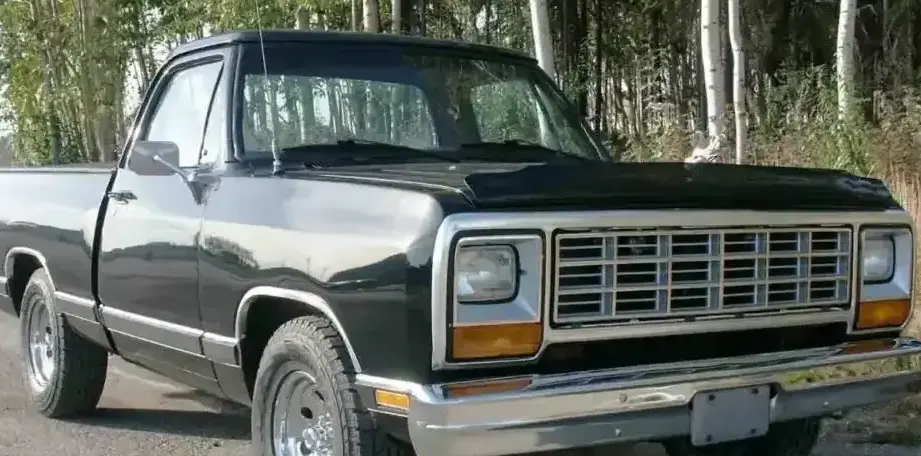
The Dodge Ram 150 Conventional Cab Short Bed, specifically the D150 variant equipped with the 3.7-liter engine producing 95 horsepower, represents an entry-level offering within the first generation of the Dodge Ram pickup trucks produced between 1981 and 1987. This generation, internally designated as the “D-Series,” marked a significant departure from the previous generation, offering a more modern design and improved features. The D150 with the 3.7L engine served as the base model, appealing to buyers prioritizing affordability and basic utility over outright performance. It occupied the lower end of the Ram 150 lineup, with higher trims featuring larger engines and more luxurious appointments.
Technical Specifications
| Brand | Dodge |
| Model | RAM |
| Generation | Ram 150 Conventional Cab Short Bed (D/W) |
| Type (Engine) | D150 3.7 (95 Hp) |
| Start of production | 1981 |
| End of production | 1987 |
| Powertrain Architecture | Internal Combustion engine |
| Body type | Pick-up |
| Seats | 3 |
| Doors | 2 |
| Fuel Type | Petrol (Gasoline) |
| Weight-to-power ratio | 16.5 kg/Hp, 60.5 Hp/tonne |
| Weight-to-torque ratio | 6.8 kg/Nm, 146.5 Nm/tonne |
| Power | 95 Hp @ 3600 rpm |
| Power per litre | 25.8 Hp/l |
| Torque | 230 Nm @ 1600 rpm (169.64 lb.-ft. @ 1600 rpm) |
| Engine layout | Front, Longitudinal |
| Engine displacement | 3687 cm3 (224.99 cu. in.) |
| Number of cylinders | 6 |
| Engine configuration | Inline |
| Cylinder Bore | 86.36 mm (3.4 in.) |
| Piston Stroke | 104.78 mm (4.13 in.) |
| Compression ratio | 8.4:1 |
| Fuel injection system | Carburettor |
| Engine aspiration | Naturally aspirated engine |
| Kerb Weight | 1570 kg (3461.26 lbs.) |
| Max. weight | 2177 kg (4799.46 lbs.) |
| Max load | 607 kg (1338.21 lbs.) |
| Fuel tank capacity | 76 l (20.08 US gal | 16.72 UK gal) |
| Length | 4846 mm (190.79 in.) |
| Width including mirrors | 2019 mm (79.49 in.) |
| Wheelbase | 2921 mm (115 in.) |
| Drivetrain Architecture | The Internal combustion engine (ICE) drives the rear wheels of the vehicle. |
| Drive wheel | Rear wheel drive |
| Number of gears and type of gearbox | 4 gears, manual transmission |
| Front suspension | Independent coil spring |
| Rear suspension | Rigid axle suspension, Leaf spring |
| Front brakes | Disc, 298.45×31.75 mm |
| Rear brakes | Drum, 254×63.5 mm |
| Steering type | Cone worm with recirculation balls |
| Tires size | 195/75 R15 |
| Wheel rims size | 5.5J x 15 |
Powertrain & Engine Architecture
The heart of the D150 3.7 was the 3687cc (224.99 cubic inch) inline-six cylinder engine. This engine, often referred to as the LA318 variant (though technically smaller), was a relatively simple and robust design. It featured a cast iron block and cylinder head, and utilized a two-barrel carburetor for fuel delivery. The 8.4:1 compression ratio was typical for the era, balancing performance and fuel economy. The engine’s valvetrain employed a single overhead camshaft, operating two valves per cylinder. The 95 horsepower output at 3600 rpm and 230 Nm (169.64 lb-ft) of torque at 1600 rpm were modest, but sufficient for light-duty tasks. The engine was mounted longitudinally in the chassis, driving the rear wheels through a four-speed manual transmission. While an automatic transmission was available on other Ram 150 trims, the base D150 3.7 was primarily offered with the manual gearbox to keep costs down.
Driving Characteristics
The D150 3.7 with the manual transmission offered a utilitarian driving experience. Acceleration was slow by modern standards, and the engine required frequent shifting to maintain momentum, especially when loaded. The four-speed manual transmission featured relatively wide gear ratios, prioritizing fuel economy over performance. Compared to the V6 and V8 engines available in higher Ram 150 trims, the 3.7L felt underpowered, particularly when towing or hauling heavy loads. However, the lighter weight of the base model and the manual transmission did contribute to slightly better fuel economy than its more powerful siblings. The steering was relatively slow and lacked power assistance, requiring more effort at low speeds. Overall, the driving experience was geared towards practicality and durability rather than excitement.
Equipment & Trim Levels
The D150 3.7 was the most basic Ram 150 offering. Standard equipment was minimal, typically including a vinyl bench seat, basic instrumentation (speedometer, fuel gauge, temperature gauge), and a simple AM radio. The interior trim was functional but spartan, with hard plastic surfaces dominating the cabin. Optional extras were limited, but could include a more comfortable cloth bench seat, a better radio, and a sliding rear window. The exterior featured minimal brightwork, with black plastic bumpers and steel wheels being standard. The focus was on providing a no-frills work truck at an affordable price.
Chassis & Braking
The D150 3.7 utilized a body-on-frame construction, typical of pickup trucks of the era. The front suspension consisted of independent coil springs, providing a reasonably comfortable ride. The rear suspension employed a traditional leaf spring setup, offering a robust and durable solution for carrying loads. Brakes were a combination of disc brakes at the front (298.45×31.75 mm) and drum brakes at the rear (254×63.5 mm). Steering was accomplished via a cone worm and recirculation balls system, which provided adequate control but lacked the precision of more modern steering technologies. The 195/75 R15 tires mounted on 5.5J x 15 steel wheels provided adequate grip for most road conditions.
Market Reception & Comparison
The D150 3.7 was generally viewed as a competent but unremarkable work truck. Critics acknowledged its affordability and durability, but noted its lack of power and refinement. Compared to the V6 and V8-powered Ram 150 models, the 3.7L offered significantly less performance. However, it did offer better fuel economy than the larger engines. The 3.7L engine was also considered relatively reliable, although its carburetor-based fuel system required periodic maintenance. The D150 3.7 primarily appealed to buyers who needed a basic pickup truck for light-duty tasks and were on a tight budget.
Legacy
The Dodge Ram 150 D150 3.7, while not a performance icon, holds a place in automotive history as a representative of the early 1980s American pickup truck. The LA318 engine, in its various forms, proved to be a durable and long-lasting powerplant. Today, these trucks are relatively affordable to acquire, but parts availability can be a challenge. The simplicity of the engine and drivetrain makes them relatively easy to maintain for those with mechanical skills. While not highly sought after by collectors, well-maintained examples are appreciated by enthusiasts who value classic American trucks and their utilitarian charm. The D150 3.7 represents a bygone era of simple, rugged, and affordable pickup trucks.