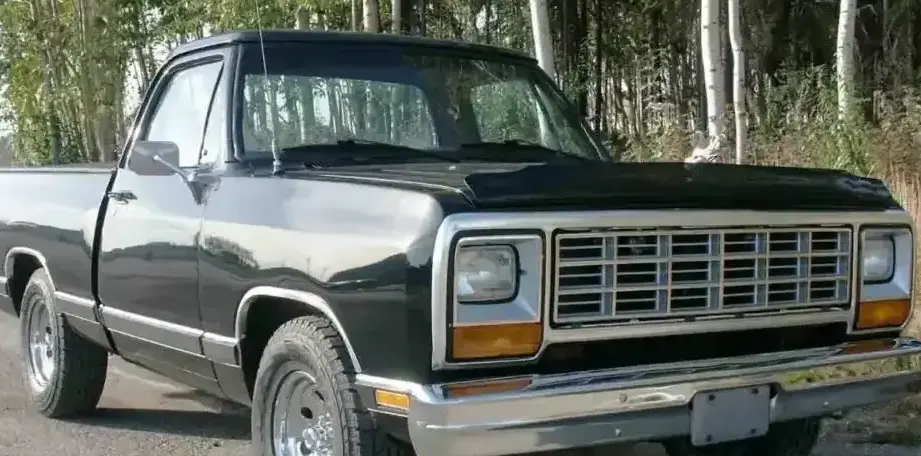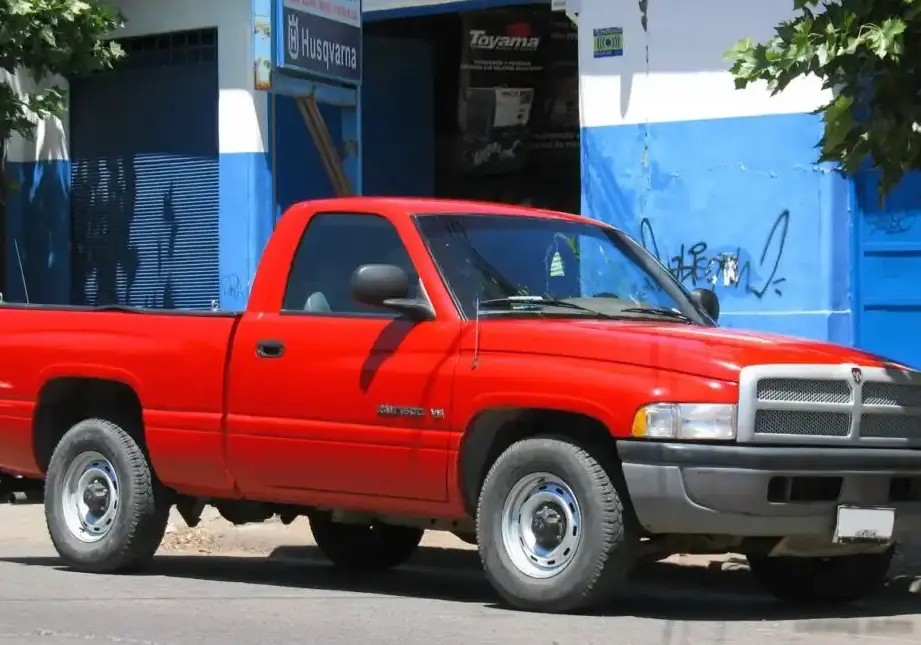
The Dodge Ram 1500 Regular Cab Short Bed (BR/BE) with the 3.9 V6 engine and automatic transmission represents a significant entry point into the full-size pickup truck market during its 1994-1998 production run. This configuration, powered by the 239 Magnum V6, served as the base engine option for the second generation of the Ram, known internally as the BR/BE series. It offered a balance of affordability and capability for buyers needing a work truck or a basic transportation solution. Positioned below the more powerful 5.2L and 5.9L V8 engines, the 3.9L V6 automatic was aimed at customers prioritizing fuel economy and lower initial cost over outright performance.
Technical Specifications
| Brand | Dodge |
| Model | RAM |
| Generation | Ram 1500 Regular Cab Short Bed (BR/BE) |
| Type (Engine) | 3.9 V6 (175 Hp) Automatic |
| Start of production | 1994 |
| End of production | 1998 |
| Powertrain Architecture | Internal Combustion engine |
| Body type | Pick-up |
| Seats | 3 |
| Doors | 2 |
| Fuel Type | Petrol (Gasoline) |
| Power | 175 Hp @ 4800 rpm |
| Power per litre | 44.7 Hp/l |
| Torque | 312 Nm @ 3200 rpm / 230.12 lb.-ft. @ 3200 rpm |
| Engine layout | Front, Longitudinal |
| Engine Model/Code | 239 Magnum |
| Engine displacement | 3917 cm3 / 239.03 cu. in. |
| Number of cylinders | 6 |
| Engine configuration | V-engine |
| Cylinder Bore | 99.31 mm / 3.91 in. |
| Piston Stroke | 84.07 mm / 3.31 in. |
| Compression ratio | 9.1:1 |
| Number of valves per cylinder | 2 |
| Fuel injection system | Multi-port manifold injection |
| Engine aspiration | Naturally aspirated engine |
| Valvetrain | OHV |
| Engine oil capacity | 3.8 l / 4.02 US qt | 3.34 UK qt |
| Coolant | 19 l / 20.08 US qt | 16.72 UK qt |
| Max. weight | 2726 kg / 6009.8 lbs |
| Fuel tank capacity | 98 l / 25.89 US gal | 21.56 UK gal |
| Permitted trailer load with brakes (12%) | 1542 kg / 3399.53 lbs |
| Length | 5077 mm / 199.88 in |
| Width | 2017 mm / 79.41 in |
| Height | 1826 mm / 71.89 in |
| Wheelbase | 3023 mm / 119.02 in |
| Minimum turning circle (turning diameter) | 12.4 m / 40.68 ft |
| Approach angle | 25.2° |
| Departure angle | 23.8° |
| Ramp-over (brakeover) angle | 18.4° |
| Drivetrain Architecture | The Internal combustion engine (ICE) drives the rear wheels of the vehicle. |
| Drive wheel | Rear wheel drive |
| Number of gears and type of gearbox | 4 gears, automatic transmission |
| Front suspension | Independent coil spring, Transverse stabilizer |
| Rear suspension | Leaf spring |
| Front brakes | Disc |
| Rear brakes | Drum |
| Assisting systems | ABS (Anti-lock braking system) |
| Steering type | Steering rack and pinion |
| Power steering | Hydraulic Steering |
| Tires size | 225/75 R16 |
| Wheel rims size | 7J x 16 |
Powertrain & Engine Architecture
The heart of this Ram 1500 variant is the 3.9L (239 cubic inch) Magnum V6 engine. This engine, designated as the 239, is a member of the LA engine family, known for its durability and relatively simple design. It features a cast iron block and cylinder heads, with a two-barrel throttle body fuel injection system. The overhead valve (OHV) valvetrain utilizes two valves per cylinder. The 9.1:1 compression ratio was a compromise between performance and the ability to run on readily available gasoline grades. The automatic transmission paired with this engine is a 4-speed A727 Torqueflite unit. This transmission, a mainstay of Chrysler vehicles for decades, is known for its robustness and relatively smooth shifting, though it lacks the efficiency of more modern transmissions. The transmission was selected to provide adequate performance for typical light-duty tasks while maintaining acceptable fuel economy.
Driving Characteristics
The 175 horsepower and 230 lb-ft of torque produced by the 3.9L V6 and automatic transmission combination resulted in a truck that was adequate for everyday driving and light hauling. Acceleration was modest, and passing maneuvers required planning. The automatic transmission’s gear ratios were optimized for towing and load-carrying, meaning that the truck felt somewhat sluggish at highway speeds. Compared to the 5.2L V8, the 3.9L offered significantly less power, resulting in slower acceleration and reduced towing capacity. However, the V6 provided a smoother and quieter driving experience, and its lighter weight contributed to slightly improved handling. The rear-wheel-drive configuration and leaf spring rear suspension provided a firm ride, typical of trucks of this era.
Equipment & Trim Levels
The 3.9L V6 automatic Ram 1500 typically came with a basic level of equipment. Standard features generally included a vinyl bench seat, AM/FM radio, manual windows and locks, and a basic instrument cluster. Air conditioning and a cruise control were often optional extras. Trim levels were relatively simple, with the base model offering minimal frills. Higher trim levels, such as the LE or Laramie, added features like cloth upholstery, upgraded sound systems, and power accessories. The short bed configuration provided a practical cargo area for hauling, while the regular cab offered seating for three passengers.
Chassis & Braking
The Ram 1500 BR/BE utilized a body-on-frame construction, providing a robust and durable platform. The front suspension consisted of independent coil springs with a transverse stabilizer bar, while the rear suspension employed leaf springs. This setup provided a reasonable balance of ride comfort and load-carrying capacity. The braking system featured disc brakes on the front wheels and drum brakes on the rear. Anti-lock brakes (ABS) were available as an option, enhancing safety during emergency braking situations. The steering system was a rack-and-pinion setup with hydraulic power assist, providing relatively precise steering control.
Market Reception & Comparison
The 3.9L V6 Ram 1500 was generally well-received as an affordable and practical work truck. Critics noted its adequate performance for light-duty tasks and its relatively good fuel economy compared to the V8 models. However, it was often criticized for its lack of power when heavily loaded or towing. Compared to the 5.2L V8, the 3.9L offered a significant price advantage, making it an attractive option for budget-conscious buyers. The 5.9L V8 provided even more power but came with a higher price tag and reduced fuel economy. The 3.9L automatic was often seen as a good compromise for those who didn’t require the full capabilities of the larger engines.
Legacy
The 3.9L Magnum V6 and A727 Torqueflite transmission combination proved to be a reliable and durable powertrain. Many examples of these trucks are still on the road today, a testament to their robust construction. While not known for blistering performance, the 3.9L V6 is relatively easy to maintain and repair, making it a popular choice for those seeking a simple and dependable pickup truck. In the used car market, these trucks are often valued for their affordability and practicality, making them a good option for those needing a basic work truck or a classic American pickup.