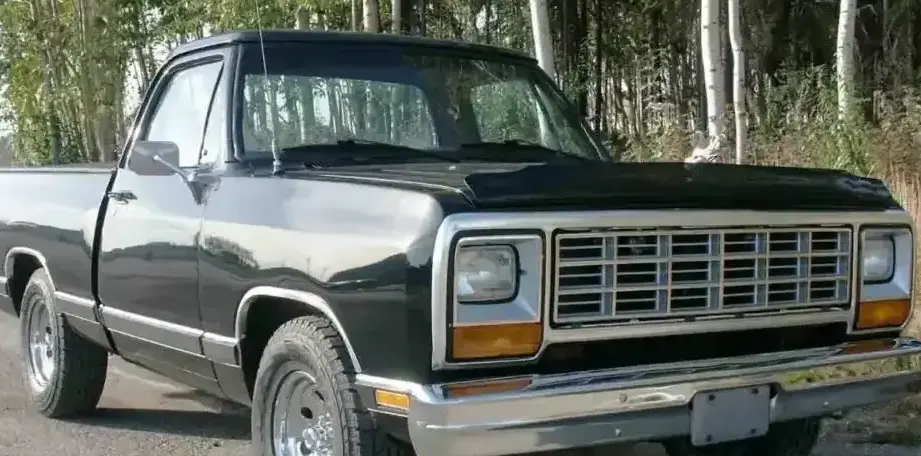
The Dodge Ram 3500 Club Cab Long Bed (BR/BE) DRW 5.9 Cummins TD, produced from 1994 to 1998, represents a significant iteration of Dodge’s heavy-duty pickup truck lineage. This particular variant, equipped with the 5.9-liter Cummins turbodiesel engine producing 175 horsepower, occupied a crucial position in the Ram 3500 lineup, catering to buyers needing substantial towing and hauling capacity without the expense of the higher-output engine options. The “DRW” designation signifies a Dual Rear Wheel configuration, further emphasizing its focus on heavy-duty applications. It was part of the second generation of Ram trucks (1994-2002), known for a substantial redesign that improved interior space and overall refinement compared to its predecessor.
Technical Specifications
| Brand | Dodge |
| Model | RAM |
| Generation | Ram 3500 Club Cab Long Bed (BR/BE) |
| Type (Engine) | DRW 5.9 Cummins TD (175 Hp) |
| Start of production | 1994 |
| End of production | 1998 |
| Powertrain Architecture | Internal Combustion engine |
| Body type | Pick-up |
| Seats | 6 |
| Doors | 2 |
| Fuel Type | Diesel |
| Power | 175 Hp @ 2500 rpm |
| Power per litre | 29.7 Hp/l |
| Torque | 583 Nm @ 1600 rpm |
| Torque (lb-ft) | 430 lb.-ft. @ 1600 rpm |
| Engine layout | Front, Longitudinal |
| Engine displacement | 5883 cm3 |
| Engine displacement (cu. in.) | 359 cu. in. |
| Number of cylinders | 6 |
| Engine configuration | Inline |
| Cylinder Bore | 102 mm (4.02 in) |
| Piston Stroke | 120 mm (4.72 in) |
| Compression ratio | 17.5:1 |
| Number of valves per cylinder | 2 |
| Fuel injection system | Direct injection |
| Engine aspiration | Turbocharger, Intercooler |
| Engine oil capacity | 10.4 l (10.99 US qt | 9.15 UK qt) |
| Coolant capacity | 24.5 l (25.89 US qt | 21.56 UK qt) |
| Max. weight | 4763 kg (10500.62 lbs) |
| Permitted trailer load with brakes (12%) | 4536 kg (10000.17 lbs) |
| Length | 6198 mm (244.02 in) |
| Width including mirrors | 2383 mm (93.82 in) |
| Height | 1849 mm (72.8 in) |
| Wheelbase | 3937 mm (155 in) |
| Approach angle | 26.3° |
| Departure angle | 24.6° |
| Ramp-over (brakeover) angle | 18° |
| Drivetrain Architecture | Rear wheel drive |
| Number of gears and type of gearbox | 5 gears, manual transmission |
| Front suspension | Independent coil spring |
| Rear suspension | Rigid axle suspension, Leaf spring |
| Front brakes | Disc |
| Rear brakes | Drum |
| Assisting systems | ABS (Anti-lock braking system) |
| Steering type | Steering rack and pinion |
| Power steering | Hydraulic Steering |
| Tires size | 215/85 R16 |
| Wheel rims size | 6J x 16 |
Powertrain & Engine Architecture
The heart of this Ram 3500 variant is the 5.9-liter (359 cubic inch) Cummins B-series inline-six diesel engine. This engine, designated with codes like ABS or ADZ depending on specific calibration and year, was renowned for its durability and torque output. The 175 horsepower version utilized a VE rotary injection pump, a system known for its reliability but less refined operation compared to later common-rail systems. The engine featured a cast iron block and head, contributing to its longevity. A turbocharger with an intercooler was standard, boosting power and efficiency. The five-speed manual transmission was the standard offering, chosen for its robustness and ability to handle the engine’s torque. The transmission’s gear ratios were optimized for towing and hauling, with a relatively low first gear for starting heavy loads and a higher overdrive fifth gear for fuel-efficient highway cruising.
Driving Characteristics
The 175 hp Cummins-powered Ram 3500 DRW offered a distinctly utilitarian driving experience. While not a performance-oriented truck, it excelled at its intended purpose: moving heavy loads. Acceleration was modest, but the engine’s substantial torque – 430 lb-ft – provided ample pulling power. The manual transmission required deliberate shifting, but offered the driver full control over the engine’s powerband. Compared to the higher-output Cummins variants (typically around 215-230 hp), this version prioritized fuel economy and longevity over outright speed. The dual rear wheels provided increased stability when towing or hauling heavy payloads, and the leaf spring rear suspension was tuned for load-carrying capacity rather than ride comfort.
Equipment & Trim Levels
The Club Cab configuration offered a small rear seat, increasing passenger capacity to six. The interior of the BR/BE Ram 3500 was functional and durable, with vinyl or cloth upholstery being common. Standard features typically included air conditioning, a basic AM/FM radio, and power steering. Options included power windows and locks, cruise control, and upgraded sound systems. The trim level was generally considered a mid-range offering, positioned below the more luxurious SLT or Laramie trims but above the base model. The focus was on providing a work-oriented truck with essential comfort features.
Chassis & Braking
The Ram 3500’s chassis was built for heavy-duty use. It featured a robust frame and a solid rear axle suspended by leaf springs. The front suspension utilized independent coil springs, providing a degree of ride comfort. Brakes were disc on the front axle and drum on the rear, with ABS (Anti-lock Braking System) becoming increasingly common towards the end of the production run. The steering system was a hydraulic rack-and-pinion setup, offering reasonable steering feel and control. The DRW configuration significantly increased the truck’s stability and load-carrying capacity, but also widened its overall footprint.
Market Reception & Comparison
The Dodge Ram 3500 DRW 5.9 Cummins TD was well-received by buyers needing a capable and reliable heavy-duty truck. Critics praised the Cummins engine’s durability and torque, as well as the Ram 3500’s overall build quality. Compared to the gasoline-powered Ram 3500 models, the diesel offered significantly better fuel economy and towing capacity. Against competitors like the Ford F-350 and Chevrolet/GMC 3500 series, the Ram 3500 was often seen as offering a good balance of price, performance, and features. The 175 hp Cummins version was a popular choice for those who didn’t require the extra power of the higher-output engines, offering a more affordable entry point into the heavy-duty truck market.
Legacy
The 5.9-liter Cummins engine in this Ram 3500 variant has earned a reputation for exceptional longevity. Many examples remain on the road today, often with hundreds of thousands of miles accumulated. The engine’s robust construction and relatively simple design contribute to its reliability. In the used car market, these trucks are sought after by those needing a dependable workhorse. While maintenance costs can be higher than gasoline-powered trucks, the Cummins engine’s durability and fuel efficiency often offset these expenses. The BR/BE generation Ram 3500, particularly the DRW models, are considered by many to be among the most reliable and capable heavy-duty trucks ever built, cementing their place in automotive history.