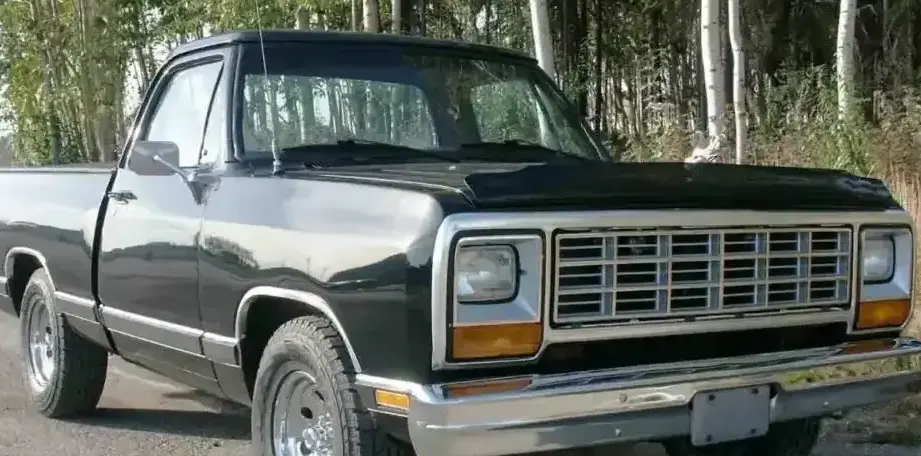
The Dodge Ram 3500 Club Cab Long Bed (BR/BE) DRW 5.9 Cummins TD, produced from 1994 to 1998, represents a significant iteration of Dodge’s heavy-duty pickup truck lineage. This particular variant, equipped with the 5.9-liter Cummins turbodiesel engine and a four-wheel-drive system, was positioned as a workhorse for demanding tasks, appealing to owners needing substantial towing and payload capacity. The “DRW” designation signifies a Dual Rear Wheel configuration, further enhancing its capabilities. It sat within the second generation of the Ram series, known for its robust construction and improvements over its predecessor.
Technical Specifications
| Brand | Dodge |
| Model | RAM |
| Generation | Ram 3500 Club Cab Long Bed (BR/BE) |
| Type (Engine) | DRW 5.9 Cummins TD (175 Hp) 4×4 |
| Start of production | 1994 |
| End of production | 1998 |
| Powertrain Architecture | Internal Combustion engine |
| Body type | Pick-up |
| Seats | 6 |
| Doors | 2 |
| Fuel Type | Diesel |
| Power | 175 Hp @ 2500 rpm |
| Power per litre | 29.7 Hp/l |
| Torque | 583 Nm @ 1600 rpm |
| Torque (lb-ft) | 430 lb.-ft. @ 1600 rpm |
| Engine layout | Front, Longitudinal |
| Engine displacement | 5883 cm3 |
| Engine displacement (cu. in.) | 359 cu. in. |
| Number of cylinders | 6 |
| Engine configuration | Inline |
| Cylinder Bore | 102 mm (4.02 in.) |
| Piston Stroke | 120 mm (4.72 in.) |
| Compression ratio | 17.5:1 |
| Number of valves per cylinder | 2 |
| Fuel injection system | Direct injection |
| Engine aspiration | Turbocharger, Intercooler |
| Engine oil capacity | 10.4 l (10.99 US qt | 9.15 UK qt) |
| Coolant capacity | 24.5 l (25.89 US qt | 21.56 UK qt) |
| Max. weight | 4581 kg (10099.38 lbs.) |
| Permitted trailer load with brakes (12%) | 4400 kg (9700.34 lbs.) |
| Length | 6198 mm (244.02 in.) |
| Width including mirrors | 2383 mm (93.82 in.) |
| Height | 1961 mm (77.2 in.) |
| Wheelbase | 3937 mm (155 in.) |
| Approach angle | 33.4° |
| Departure angle | 28.9° |
| Ramp-over (brakeover) angle | 21.4° |
| Drivetrain Architecture | All wheel drive (4×4). ICE drives rear wheels, front wheels engaged via clutch. |
| Number of gears and type of gearbox | 5 gears, manual transmission |
| Front suspension | Dependent spring suspension with anti-roll bar |
| Rear suspension | Rigid axle suspension, Leaf spring |
| Front brakes | Disc |
| Rear brakes | Drum |
| Assisting systems | ABS (Anti-lock braking system) |
| Steering type | Steering rack and pinion |
| Power steering | Hydraulic Steering |
| Tires size | 215/85 R16 |
| Wheel rims size | 6J x 16 |
Powertrain & Engine Architecture
The heart of this Ram 3500 variant is the 5.9-liter (359 cubic inch) Cummins B-series inline-six diesel engine. This engine, designated with various codes depending on specific calibration (though commonly associated with the BE code in this era), was renowned for its durability and torque output. The 175 horsepower rating at 2500 rpm, while modest by modern standards, was coupled with a substantial 430 lb-ft of torque available at a low 1600 rpm. This torque curve made it exceptionally well-suited for heavy hauling and towing. The engine utilized a direct injection system, a hallmark of Cummins diesels, and was equipped with a turbocharger and intercooler to boost power and efficiency. The intercooler cooled the compressed air from the turbocharger, increasing air density and further improving combustion. The engine’s robust construction, featuring a cast iron block and head, contributed to its longevity. The five-speed manual transmission was chosen for its durability and ability to handle the engine’s torque, providing a direct connection to the drivetrain.
Driving Characteristics
Behind the wheel, the 1994-1998 Ram 3500 with the 5.9L Cummins and manual transmission offered a distinctly truck-like experience. Acceleration was not its forte; the focus was squarely on providing ample low-end torque for work. The manual transmission allowed for precise control, especially when towing or navigating challenging terrain. The gear ratios were optimized for pulling power, meaning the engine would operate comfortably at lower RPMs even under heavy loads. Compared to later Ram 3500 models with higher horsepower ratings, this variant prioritized usability and reliability over outright speed. It also differed significantly from gasoline-powered Ram 3500s, which generally offered more horsepower but less low-end torque. The dual rear wheels provided enhanced stability when hauling heavy loads, and the 4×4 system ensured traction in a variety of conditions.
Equipment & Trim Levels
The Club Cab configuration offered a small rear seat, providing limited passenger space but expanding the truck’s versatility. Standard features typically included a basic AM/FM radio, vinyl upholstery, and manual windows and locks. The dashboard layout was functional and straightforward, prioritizing practicality over luxury. Optional extras included air conditioning, power windows and locks, a tilt steering wheel, and upgraded sound systems. The trim level was generally considered a mid-range offering, positioned above the base models but below the more luxurious variants. The long bed provided ample cargo space, making it ideal for hauling large items.
Chassis & Braking
The Ram 3500’s chassis was built around a heavy-duty frame designed to withstand the stresses of demanding work. The front suspension utilized a dependent spring setup with an anti-roll bar, while the rear suspension employed a traditional leaf spring configuration. This setup prioritized load-carrying capacity and durability over ride comfort. The front brakes were discs, providing adequate stopping power, while the rear brakes were drums. An Anti-lock Braking System (ABS) was included as a standard safety feature. The tires, typically 215/85 R16, were chosen for their durability and load-carrying capacity.
Market Reception & Comparison
The Dodge Ram 3500 with the 5.9L Cummins diesel engine was well-received by buyers who needed a reliable and capable heavy-duty truck. Critics praised the engine’s durability and torque output, as well as the truck’s overall build quality. Compared to competing trucks from Ford and Chevrolet, the Ram 3500 offered a compelling combination of performance, reliability, and value. Fuel economy, while not exceptional, was reasonable for a vehicle of this size and capability. The manual transmission was favored by many owners for its durability and control, although some preferred the convenience of an automatic transmission.
Legacy
The 5.9L Cummins engine, in particular, has earned a legendary reputation for its longevity and reliability. Many examples of these engines are still in service today, often with hundreds of thousands of miles on the odometer. The Ram 3500 (BR/BE) DRW 5.9 Cummins TD remains a popular choice among collectors and enthusiasts, and well-maintained examples command a premium in the used car market. Its robust construction and proven powertrain make it a capable and dependable work truck, even by modern standards. The engine’s aftermarket support is extensive, allowing owners to upgrade and modify their trucks to suit their specific needs.