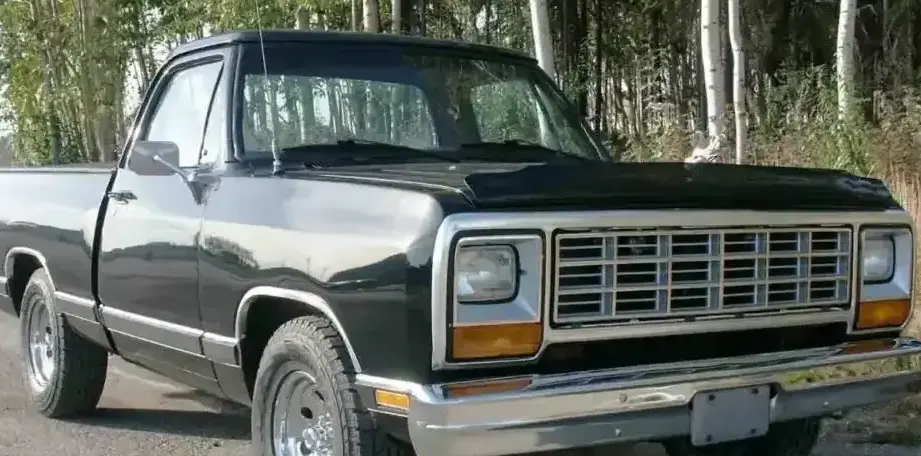
The Dodge Ram 3500 Club Cab Long Bed (BR/BE) DRW 5.9 V8, produced from 1994 to 1998, represented a significant offering in the heavy-duty pickup truck segment. This particular configuration, featuring a dual rear wheel (DRW) setup and the 5.9-liter V8 engine, was aimed at buyers needing substantial towing and payload capacity. It occupied a position within the Ram 3500 lineup as a work-focused trim, prioritizing capability over luxury, though the Club Cab offered increased passenger space compared to the standard cab models. The BR/BE generation marked a substantial redesign for the Ram series, moving away from the older designs and embracing a more modern aesthetic and engineering approach.
Technical Specifications
| Brand | Dodge |
| Model | RAM |
| Generation | Ram 3500 Club Cab Long Bed (BR/BE) |
| Type (Engine) | DRW 5.9 V8 (230 Hp) |
| Start of production | 1994 |
| End of production | 1998 |
| Powertrain Architecture | Internal Combustion engine |
| Body type | Pick-up |
| Seats | 6 |
| Doors | 2 |
| Fuel Type | Petrol (Gasoline) |
| Power | 230 Hp @ 4000 rpm |
| Power per litre | 39 Hp/l |
| Torque | 447 Nm @ 2800 rpm |
| Torque (lb-ft) | 329.69 lb.-ft. @ 2800 rpm |
| Engine layout | Front, Longitudinal |
| Engine Model/Code | 360 Magnum |
| Engine displacement | 5899 cm3 |
| Engine displacement (cu. in.) | 359.98 cu. in. |
| Number of cylinders | 8 |
| Engine configuration | V-engine |
| Fuel injection system | Multi-port manifold injection |
| Engine aspiration | Naturally aspirated engine |
| Engine oil capacity | 4.7 l |
| Engine oil capacity (US qt) | 4.97 US qt |
| Engine oil capacity (UK qt) | 4.14 UK qt |
| Coolant capacity | 19 l |
| Coolant capacity (US qt) | 20.08 US qt |
| Coolant capacity (UK qt) | 16.72 UK qt |
| Max. weight | 4763 kg |
| Max. weight (lbs) | 10500.62 lbs |
| Permitted trailer load with brakes (12%) | 4354 kg |
| Permitted trailer load with brakes (12%) (lbs) | 9598.93 lbs |
| Length | 6198 mm |
| Length (in) | 244.02 in |
| Width including mirrors | 2383 mm |
| Width including mirrors (in) | 93.82 in |
| Height | 1849 mm |
| Height (in) | 72.8 in |
| Wheelbase | 3937 mm |
| Wheelbase (in) | 155 in |
| Approach angle | 26.3° |
| Departure angle | 24.6° |
| Ramp-over (brakeover) angle | 18° |
| Drivetrain Architecture | The Internal combustion engine (ICE) drives the rear wheels of the vehicle. |
| Drive wheel | Rear wheel drive |
| Number of gears and type of gearbox | 5 gears, manual transmission |
| Front suspension | Independent coil spring |
| Rear suspension | Rigid axle suspension, Leaf spring |
| Front brakes | Disc |
| Rear brakes | Drum |
| Assisting systems | ABS (Anti-lock braking system) |
| Steering type | Steering rack and pinion |
| Power steering | Hydraulic Steering |
| Tires size | 215/85 R16 |
| Wheel rims size | 6J x 16 |
Powertrain & Engine Architecture
The heart of this Ram 3500 was the 360 Magnum 5.9-liter V8 engine. This engine, a member of the LA engine family, was known for its robust construction and relatively simple design. It featured a cast iron block and cylinder heads, and utilized a multi-port fuel injection system for improved efficiency and power delivery. The 360 Magnum produced 230 horsepower at 4000 rpm and 447 Nm (329.69 lb-ft) of torque at 2800 rpm. The engine’s longitudinal mounting and rear-wheel-drive configuration were standard for heavy-duty trucks of the era. The standard transmission was a 5-speed manual, providing direct control over the engine’s power. While an automatic transmission was available, the manual was favored by those prioritizing work capability and fuel economy.
Driving Characteristics
The 5.9L V8 with the 5-speed manual transmission provided a usable, if not exhilarating, driving experience. The truck’s strength lay in its ability to handle heavy loads and challenging terrain. The gear ratios were optimized for towing and hauling, meaning acceleration was modest, but the engine delivered strong low-end torque. Compared to potential upgrades like the Cummins diesel engine offered in the Ram 3500, the 5.9L V8 was less refined and less fuel-efficient, but also significantly less expensive to purchase and maintain. The dual rear wheel setup enhanced stability when towing, but also made maneuvering in tight spaces more challenging.
Equipment & Trim Levels
The Club Cab configuration offered a step up in comfort compared to the standard cab, providing additional seating and interior space. Standard features typically included a basic AM/FM radio, vinyl upholstery, and manual windows and locks. Air conditioning was often an optional extra. The BR/BE generation Ram 3500 focused on functionality, so luxury features were limited. The interior was designed to be durable and easy to clean, reflecting its work-truck orientation. Options could include upgraded sound systems, power windows and locks, and a tilt steering wheel.
Chassis & Braking
The Ram 3500’s chassis was built for durability and heavy-duty use. It featured a robust frame and a solid rear axle suspension with leaf springs, designed to handle substantial payloads. The front suspension utilized independent coil springs for a more comfortable ride. Braking duties were handled by disc brakes up front and drum brakes in the rear. An Anti-lock Braking System (ABS) was included as a standard safety feature. The DRW configuration provided increased stability and load-carrying capacity, but also added to the vehicle’s overall weight.
Market Reception & Comparison
The Dodge Ram 3500 DRW 5.9 V8 was well-received by buyers who needed a capable and affordable heavy-duty truck. Critics acknowledged its strong towing capacity and robust construction. However, the 5.9L V8 engine was often criticized for its relatively low fuel economy compared to diesel alternatives. Compared to the Cummins diesel-powered Ram 3500, the 5.9L V8 offered a lower initial cost but higher long-term operating expenses. The manual transmission was appreciated by those who preferred direct control, but it was less popular with buyers seeking the convenience of an automatic.
Legacy
The Dodge Ram 3500 BR/BE generation, and specifically the 5.9 V8 configuration, holds a place as a reliable and capable work truck. While not as sought-after as the diesel-powered models, the 5.9L V8-equipped trucks remain relatively affordable and readily available in the used market. The 360 Magnum engine is known for its durability, but regular maintenance is crucial to prevent issues. Common concerns include oil leaks and wear on the timing chain. Today, these trucks are often found in the hands of farmers, ranchers, and tradespeople who appreciate their simplicity and ruggedness. They represent a bygone era of American truck design, prioritizing capability and affordability over luxury and refinement.