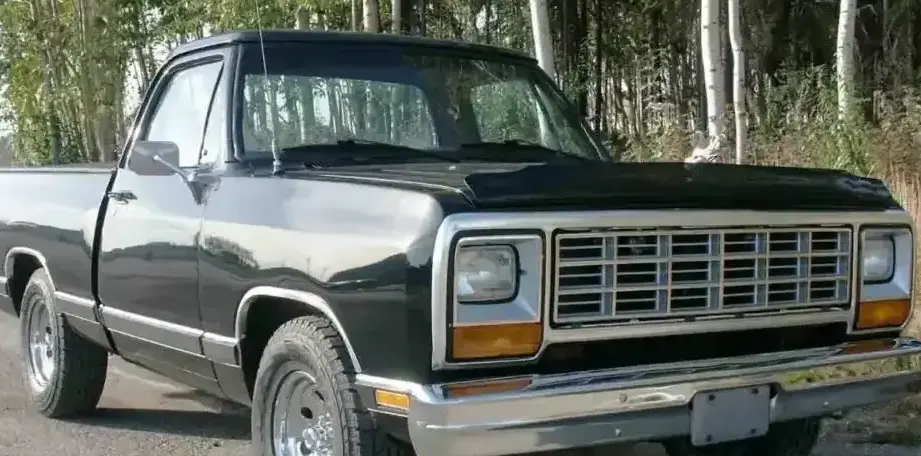
The Dodge Ram 3500 Club Cab Long Bed (BR/BE) DRW, equipped with the 5.9 V8 engine producing 230 horsepower and paired with a four-speed automatic transmission, was a mainstay of Dodge’s heavy-duty truck lineup from 1994 to 1998. This particular configuration represented a balance between capability and affordability within the Ram 3500 range, targeting buyers who needed substantial towing and hauling capacity but didn’t require the higher performance of the Cummins diesel options or the more luxurious features of higher trim levels. The “DRW” designation signifies a Dual Rear Wheel configuration, further emphasizing its focus on heavy-duty applications. It was part of the second generation of the Ram series, known for its more aerodynamic styling and improved interior compared to its predecessors.
Technical Specifications
| Brand | Dodge |
| Model | RAM |
| Generation | Ram 3500 Club Cab Long Bed (BR/BE) |
| Type (Engine) | DRW 5.9 V8 (230 Hp) 4×4 Automatic |
| Start of production | 1994 |
| End of production | 1998 |
| Powertrain Architecture | Internal Combustion engine |
| Body type | Pick-up |
| Seats | 6 |
| Doors | 2 |
| Fuel Type | Petrol (Gasoline) |
| Power | 230 Hp @ 4000 rpm |
| Power per litre | 39 Hp/l |
| Torque | 447 Nm @ 2800 rpm |
| Torque (lb-ft) | 329.69 lb.-ft. @ 2800 rpm |
| Engine layout | Front, Longitudinal |
| Engine Model/Code | 360 Magnum |
| Engine displacement | 5899 cm3 |
| Engine displacement (cu. in.) | 359.98 cu. in. |
| Number of cylinders | 8 |
| Engine configuration | V-engine |
| Fuel injection system | Multi-port manifold injection |
| Engine aspiration | Naturally aspirated engine |
| Engine oil capacity | 4.7 l |
| Engine oil capacity (US qt) | 4.97 US qt |
| Engine oil capacity (UK qt) | 4.14 UK qt |
| Coolant | 19 l |
| Coolant (US qt) | 20.08 US qt |
| Coolant (UK qt) | 16.72 UK qt |
| Max. weight | 4763 kg |
| Max. weight (lbs) | 10500.62 lbs |
| Permitted trailer load with brakes (12%) | 4173 kg |
| Permitted trailer load with brakes (12%) (lbs) | 9199.89 lbs |
| Length | 6198 mm |
| Length (in) | 244.02 in |
| Width including mirrors | 2383 mm |
| Width including mirrors (in) | 93.82 in |
| Height | 1961 mm |
| Height (in) | 77.2 in |
| Wheelbase | 3937 mm |
| Wheelbase (in) | 155 in |
| Approach angle | 33.4° |
| Departure angle | 28.9° |
| Ramp-over (brakeover) angle | 21.4° |
| Drivetrain Architecture | All wheel drive (4×4). Internal Combustion engine. |
| Drive wheel | All wheel drive (4×4) |
| Number of gears and type of gearbox | 4 gears, automatic transmission |
| Front suspension | Dependent spring suspension with anti-roll bar |
| Rear suspension | Rigid axle suspension, Leaf spring |
| Front brakes | Disc |
| Rear brakes | Drum |
| Assisting systems | ABS (Anti-lock braking system) |
| Steering type | Steering rack and pinion |
| Power steering | Hydraulic Steering |
| Tires size | 215/85 R16 |
| Wheel rims size | 6J x 16 |
Powertrain & Engine Architecture
The heart of this Ram 3500 variant was the 360 Magnum 5.9-liter V8 engine. This engine, a member of the LA engine family, was known for its robust construction and relatively simple design. It featured a cast iron block and cylinder heads, and utilized a hydraulic roller camshaft for improved valve control and reduced friction. The multi-port fuel injection system, controlled by the engine’s computer, delivered fuel directly to each cylinder, optimizing combustion efficiency. The 360 Magnum produced 230 horsepower at 4000 rpm and 330 lb-ft of torque at 2800 rpm, providing ample power for hauling and towing. The four-speed automatic transmission (typically the 42RE or 46RE) was chosen for its durability and ease of use, making it a popular choice for drivers who preferred not to operate a manual transmission. While not offering the quickest acceleration, the automatic transmission provided smooth shifts and adequate power delivery for most tasks.
Driving Characteristics
The 1994-1998 Dodge Ram 3500 with the 5.9L V8 and automatic transmission offered a driving experience focused on capability rather than outright performance. Acceleration was adequate, but not brisk, with the automatic transmission prioritizing smooth operation over aggressive shifting. The 42RE/46RE transmission featured relatively wide gear ratios, which helped to maximize fuel economy at highway speeds but could feel somewhat sluggish during acceleration. The dual rear wheel configuration provided enhanced stability when towing heavy loads, but also resulted in a wider turning radius. The suspension, designed for heavy-duty use, offered a firm ride, even when unloaded. Compared to the Cummins diesel-powered Ram 3500s, this gasoline-powered version lacked the low-end torque and fuel efficiency of the diesel, but it was significantly less expensive to purchase and maintain.
Equipment & Trim Levels
The Club Cab configuration offered a small rear seat, providing seating for up to six passengers. Standard features typically included air conditioning, a basic AM/FM radio, and cloth upholstery. The BR trim level generally represented the base model, while the BE trim added some additional features such as upgraded interior trim and optional power windows and locks. Popular optional extras included a cassette player, cruise control, and a sliding rear window. The interior was functional and durable, designed to withstand the rigors of heavy-duty use. The dashboard layout was straightforward and easy to use, with clearly labeled controls.
Chassis & Braking
The Ram 3500’s chassis was built to withstand significant loads. It featured a heavy-duty frame and a solid rear axle suspended by leaf springs. The front suspension utilized a dependent spring setup with an anti-roll bar to improve stability. Braking duties were handled by disc brakes at the front and drum brakes at the rear. An anti-lock braking system (ABS) was included as standard equipment, enhancing safety during emergency braking situations. The tires, typically 215/85 R16, were designed for durability and load-carrying capacity. The steering system was a hydraulic rack-and-pinion setup, providing responsive steering feel.
Market Reception & Comparison
The Dodge Ram 3500 with the 5.9 V8 and automatic transmission was generally well-received by buyers who needed a capable and affordable heavy-duty truck. Critics praised its robust construction and ample towing capacity, but noted that its fuel economy was not as good as the diesel-powered alternatives. Compared to the Cummins diesel versions, this gasoline-powered Ram 3500 was significantly less expensive to purchase, but it also lacked the diesel’s superior torque and fuel efficiency. It was often chosen by owners who did not require the extreme towing capacity of the diesel models and preferred the lower initial cost and simpler maintenance.
Legacy
The 1994-1998 Dodge Ram 3500 with the 5.9 V8 and automatic transmission remains a popular choice among truck enthusiasts and those seeking a reliable and affordable heavy-duty work truck. The 360 Magnum engine is known for its durability and relatively simple maintenance requirements. While not as fuel-efficient as modern trucks, these older Rams offer a unique blend of capability and affordability. Today, well-maintained examples can be found in the used car market, often at reasonable prices. The DRW configuration, in particular, is sought after by those who need to tow heavy trailers or haul large loads. The truck’s robust construction and readily available parts supply ensure that it will continue to be a viable option for years to come.