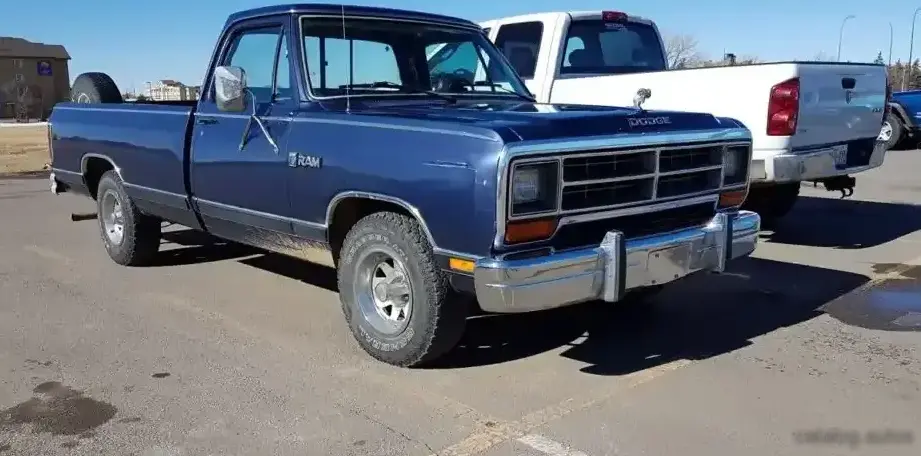
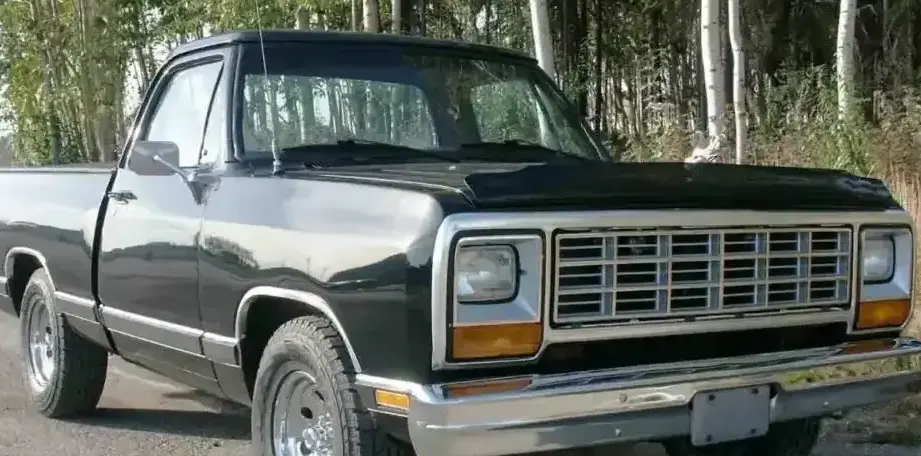
The Dodge Ram 3500 Club Cab Long Bed (BR/BE) DRW 8.0 V10 4×4 Automatic, produced from 1994 to 1998, represented a significant offering in the heavy-duty pickup truck segment. This variant, part of the second generation of the Ram series (introduced in 1994), was positioned as a premium work truck capable of substantial towing and hauling. The “DRW” designation indicates a Dual Rear Wheel configuration, further emphasizing its heavy-duty capabilities. It occupied a niche above the standard Ram 3500 models, catering to owners needing maximum payload and towing capacity. This model was primarily sold in the North American market, where large, powerful pickup trucks were – and continue to be – in high demand.
Technical Specifications
| Brand | Dodge |
| Model | RAM |
| Generation | Ram 3500 Club Cab Long Bed (BR/BE) |
| Type (Engine) | DRW 8.0 V10 (300 Hp) 4×4 Automatic |
| Start of production | 1994 |
| End of production | 1998 |
| Powertrain Architecture | Internal Combustion engine |
| Body type | Pick-up |
| Seats | 6 |
| Doors | 2 |
| Fuel Type | Petrol (Gasoline) |
| Power | 300 Hp @ 4000 rpm |
| Power per litre | 37.5 Hp/l |
| Torque | 610 Nm @ 2400 rpm / 449.91 lb.-ft. @ 2400 rpm |
| Engine layout | Front, Longitudinal |
| Engine Model/Code | 488 Magnum |
| Engine displacement | 7997 cm3 / 488.01 cu. in. |
| Number of cylinders | 10 |
| Engine configuration | V-engine |
| Fuel injection system | Multi-port manifold injection |
| Engine oil capacity | 6.6 l / 6.97 US qt | 5.81 UK qt |
| Coolant | 22.7 l / 23.99 US qt | 19.97 UK qt |
| Max. weight | 4763 kg / 10500.62 lbs |
| Permitted trailer load with brakes (12%) | 5806 kg / 12800.04 lbs |
| Length | 6198 mm / 244.02 in |
| Width including mirrors | 2383 mm / 93.82 in |
| Height | 1961 mm / 77.2 in |
| Wheelbase | 3937 mm / 155 in |
| Approach angle | 33.4° |
| Departure angle | 28.9° |
| Ramp-over (brakeover) angle | 21.4° |
| Drivetrain Architecture | All wheel drive (4×4). ICE drives rear wheels, front wheels engaged via clutch. |
| Number of gears and type of gearbox | 4 gears, automatic transmission |
| Front suspension | Dependent spring suspension with anti-roll bar |
| Rear suspension | Rigid axle suspension, Leaf spring |
| Front brakes | Disc |
| Rear brakes | Drum |
| Assisting systems | ABS (Anti-lock braking system) |
| Steering type | Steering rack and pinion |
| Power steering | Hydraulic Steering |
| Tires size | 215/85 R16 |
| Wheel rims size | 6J x 16 |
Powertrain & Engine Architecture
The heart of this Ram 3500 variant was the 488 Magnum 8.0-liter V10 engine. This engine, a significant departure from the traditional small-block and big-block V8s previously offered by Dodge, was designed to provide substantial torque for heavy-duty applications. The engine utilized a cast iron block and aluminum cylinder heads. Fuel delivery was managed by a multi-port fuel injection system, contributing to improved efficiency and drivability compared to carbureted engines. The V10 featured a robust valvetrain designed for durability and high-RPM operation. The 42RE four-speed automatic transmission was the sole transmission option for this configuration. This transmission was chosen for its ability to handle the engine’s substantial torque output and provide relatively smooth shifting. The transmission featured electronic control for improved shift quality and adaptability.
Driving Characteristics
The 300 horsepower and 450 lb-ft of torque delivered by the 8.0L V10, coupled with the four-speed automatic, resulted in a driving experience focused on capability rather than outright speed. Acceleration was adequate, but the truck’s considerable weight (over 10,500 lbs) limited its responsiveness. The automatic transmission’s gear ratios were optimized for towing and hauling, providing strong low-end torque. Compared to the 5.9L Cummins diesel option, the V10 offered less low-end grunt but a more familiar gasoline engine sound and feel. Manual transmission versions, while available in other Ram 3500 trims, were not offered with the V10 engine. The dual rear wheel setup provided enhanced stability when towing heavy loads, but also increased the vehicle’s overall width, requiring careful maneuvering in tight spaces.
Equipment & Trim Levels
The Club Cab configuration offered a small rear seat, increasing passenger capacity to six. Standard features typically included air conditioning, a basic AM/FM radio, and cloth upholstery. Power windows and locks were often optional extras. The interior was generally utilitarian, reflecting the truck’s work-oriented purpose. Higher trim levels, such as the Laramie SLT, added features like leather upholstery, upgraded sound systems, and woodgrain interior trim. The long bed provided ample cargo space, making it suitable for a wide range of hauling tasks. Options like a trailer brake controller and heavy-duty suspension packages were commonly selected by buyers who intended to utilize the truck’s full towing capacity.
Chassis & Braking
The Ram 3500 DRW featured a heavy-duty chassis designed to withstand the stresses of frequent heavy loads. The front suspension utilized a dependent spring setup with an anti-roll bar, while the rear suspension employed a traditional leaf spring configuration. This setup prioritized load-carrying capacity and durability over ride comfort. The braking system consisted of disc brakes on the front axle and drum brakes on the rear. An Anti-lock Braking System (ABS) was standard, enhancing safety during emergency braking situations. The dual rear wheels significantly increased the truck’s contact patch, improving stability and braking performance when heavily loaded.
Market Reception & Comparison
The Dodge Ram 3500 with the 8.0L V10 engine received mixed reviews. Critics praised its substantial power and towing capacity, but noted its relatively poor fuel economy compared to diesel alternatives. The V10 was often seen as a gasoline-powered alternative for those who didn’t want to pay the premium for a diesel engine. Compared to the Cummins diesel, the V10 offered lower fuel efficiency and less low-end torque, but a lower initial purchase price. The V10 was also considered less refined than the diesel, with more engine noise and vibration. However, it was generally regarded as a reliable engine, with relatively few major mechanical issues reported.
Legacy
The 8.0L V10 engine, while short-lived in the Ram lineup (production ended in 2003), gained a cult following among truck enthusiasts. Today, well-maintained examples of the Ram 3500 DRW with the V10 engine are sought after by collectors and those who appreciate its unique character. The powertrain is generally considered reliable, although regular maintenance is crucial to prevent issues. Parts availability remains good, as many components are shared with other Dodge trucks and SUVs. The V10-powered Ram 3500 represents a unique chapter in the history of heavy-duty pickup trucks, offering a blend of power, capability, and American V8/V10 bravado.