
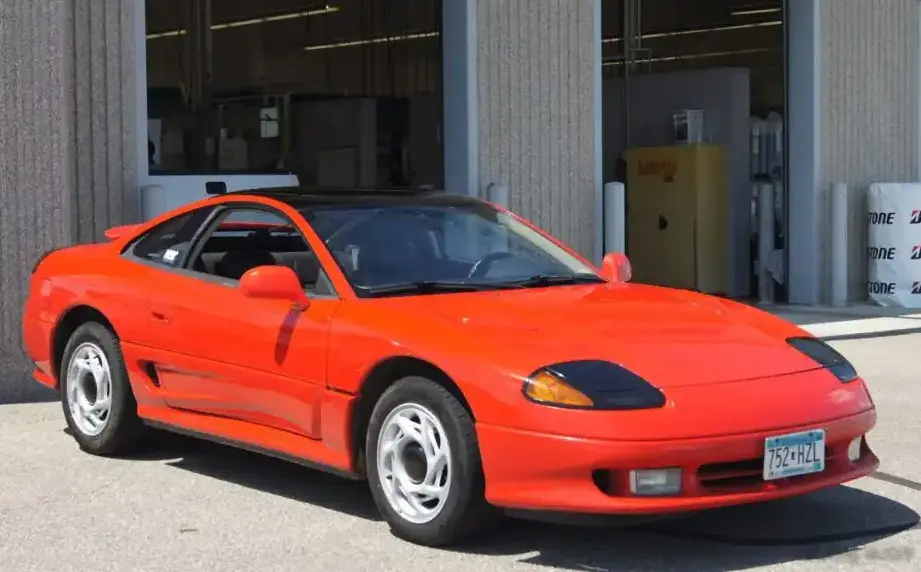
The Dodge Stealth 3.0 R/T, produced from 1992 to 1996, represented the performance pinnacle of the first-generation Stealth lineup. Born from the Diamond Star Motors (DSM) joint venture between Chrysler and Mitsubishi, the Stealth was essentially a rebadged Mitsubishi 3000GT, offering American buyers a technologically advanced, sporty coupe with a distinctly Japanese engineering influence. The 3.0 R/T trim, equipped with a turbocharged 3.0-liter V6 engine, was positioned as the top-of-the-line model, boasting significantly more power than the base and mid-range variants. It aimed to compete with established sports coupes like the Mazda RX-7 and Toyota Supra, offering a blend of performance, technology, and styling.
Technical Specifications
| Brand | Dodge |
| Model | Stealth |
| Generation | Stealth |
| Type (Engine) | 3.0 R/T (320 Hp) |
| Start of production | 1992 |
| End of production | 1996 |
| Powertrain Architecture | Internal Combustion engine |
| Body type | Coupe |
| Seats | 4 |
| Doors | 2 |
| Fuel consumption (economy) – urban | 14.7 l/100 km (16 US mpg, 19.2 UK mpg, 6.8 km/l) |
| Fuel consumption (economy) – extra urban | 10.7 l/100 km (22 US mpg, 26.4 UK mpg, 9.3 km/l) |
| Fuel consumption (economy) – combined | 13.1 l/100 km (18 US mpg, 21.6 UK mpg, 7.6 km/l) |
| Fuel Type | Petrol (Gasoline) |
| Weight-to-power ratio | 5.4 kg/Hp, 186 Hp/tonne |
| Weight-to-torque ratio | 4 kg/Nm, 248.3 Nm/tonne |
| Power | 320 Hp @ 6000 rpm |
| Power per litre | 107.7 Hp/l |
| Torque | 427 Nm @ 2500 rpm (314.94 lb.-ft. @ 2500 rpm) |
| Engine layout | Front, Transverse |
| Engine Model/Code | 6G72 |
| Engine displacement | 2972 cm3 (181.36 cu. in.) |
| Number of cylinders | 6 |
| Engine configuration | V-engine |
| Cylinder Bore | 91.1 mm (3.59 in.) |
| Piston Stroke | 76 mm (2.99 in.) |
| Compression ratio | 8:1 |
| Number of valves per cylinder | 4 |
| Fuel injection system | Multi-port manifold injection |
| Engine aspiration | Turbocharger |
| Valvetrain | DOHC |
| Engine oil capacity | 4.6 l (4.86 US qt | 4.05 UK qt) |
| Coolant | 8 l (8.45 US qt | 7.04 UK qt) |
| Kerb Weight | 1720 kg (3791.95 lbs.) |
| Trunk (boot) space – minimum | 315 l (11.12 cu. ft.) |
| Trunk (boot) space – maximum | 440 l (15.54 cu. ft.) |
| Fuel tank capacity | 75 l (19.81 US gal | 16.5 UK gal) |
| Length | 4565 mm (179.72 in.) |
| Width | 1840 mm (72.44 in.) |
| Height | 1253 mm (49.33 in.) |
| Wheelbase | 2470 mm (97.24 in.) |
| Front track | 1560 mm (61.42 in.) |
| Rear (Back) track | 1580 mm (62.2 in.) |
| Drive wheel | All wheel drive (4×4) |
| Number of gears and type of gearbox | 6 gears, manual transmission |
| Front suspension | Wishbone |
| Rear suspension | Several levers and rods |
| Front brakes | Ventilated discs |
| Rear brakes | Ventilated discs |
| Assisting systems | ABS (Anti-lock braking system), Hydraulic Steering |
| Tires size | 245/45 R17 |
Powertrain & Engine Architecture
The heart of the Stealth 3.0 R/T was the 6G72 engine, a 2.972-liter (181.36 cubic inches) DOHC 24-valve V6. This engine featured a cast iron block and an aluminum cylinder head, and was distinguished by its twin-scroll turbocharger and intercooler. The turbocharger provided significant boost, contributing to the engine’s impressive 320 horsepower and 314.94 lb-ft of torque. Fuel delivery was managed by a multi-port fuel injection system. The 6G72 engine was known for its robust construction and potential for modification, becoming a popular platform for aftermarket tuning. The R/T was exclusively offered with a 6-speed manual transmission, designed to handle the engine’s substantial power output. This transmission featured close gear ratios optimized for performance driving.
Driving Characteristics
The 3.0 R/T delivered a noticeably more engaging driving experience than the lower-trim Stealth models. The turbocharged engine provided strong acceleration, with peak torque available from a relatively low 2500 rpm. The all-wheel-drive system, a key feature of the Stealth, provided excellent traction, particularly in inclement weather or during spirited driving. The 6-speed manual transmission allowed for precise control over the engine’s power band. While the suspension was tuned for a balance between comfort and handling, it wasn’t as overtly sporty as some contemporary rivals. The car felt substantial in weight, but the turbocharger’s boost compensated for this, providing a thrilling surge of power. Compared to the naturally aspirated 3.0-liter V6 found in other Stealth trims, the R/T offered a dramatically different level of performance.
Equipment & Trim Levels
The 3.0 R/T came standard with a comprehensive list of features, reflecting its position as the premium trim level. Interior appointments included leather sport seats, a leather-wrapped steering wheel, and power windows and locks. Standard equipment also included air conditioning, a premium sound system, and an anti-lock braking system (ABS). Optional extras included a sunroof, upgraded audio systems, and various cosmetic enhancements. The dashboard layout was driver-focused, with clearly marked gauges and easy-to-reach controls. The interior styling, while functional, was somewhat understated compared to the exterior’s aggressive design.
Chassis & Braking
The Stealth 3.0 R/T utilized a robust chassis with independent suspension at all four wheels. The front suspension employed a wishbone design, while the rear featured a multi-link setup. This suspension configuration aimed to provide a comfortable ride while maintaining good handling characteristics. Braking duties were handled by ventilated disc brakes at all four corners, providing ample stopping power. The ABS system helped to prevent wheel lockup during hard braking. The car’s relatively wide track contributed to its stability and cornering ability.
Market Reception & Comparison
The Dodge Stealth 3.0 R/T was generally well-received by automotive critics, who praised its performance, technology, and styling. However, some reviewers noted that the car’s weight and somewhat numb steering feel detracted from the overall driving experience. Compared to the base and mid-range Stealth models, the R/T offered a significant performance upgrade, but at a higher price point. Fuel economy was also lower with the turbocharged engine, averaging around 18 mpg combined. The R/T’s all-wheel-drive system was a key selling point, providing a level of all-weather capability that was uncommon in sports coupes of the era.
Legacy
The Dodge Stealth 3.0 R/T has gained a cult following among enthusiasts, particularly those interested in Japanese sports cars of the 1990s. The 6G72 engine is known for its durability and potential for modification, making it a popular choice for performance upgrades. While the Stealth was discontinued in 1996, it remains a desirable vehicle in the used car market, particularly well-maintained examples with low mileage. The car’s unique blend of American styling and Japanese engineering continues to appeal to a dedicated group of fans. Common issues with older models include turbocharger wear, oil leaks, and aging suspension components, but parts availability remains relatively good.
