
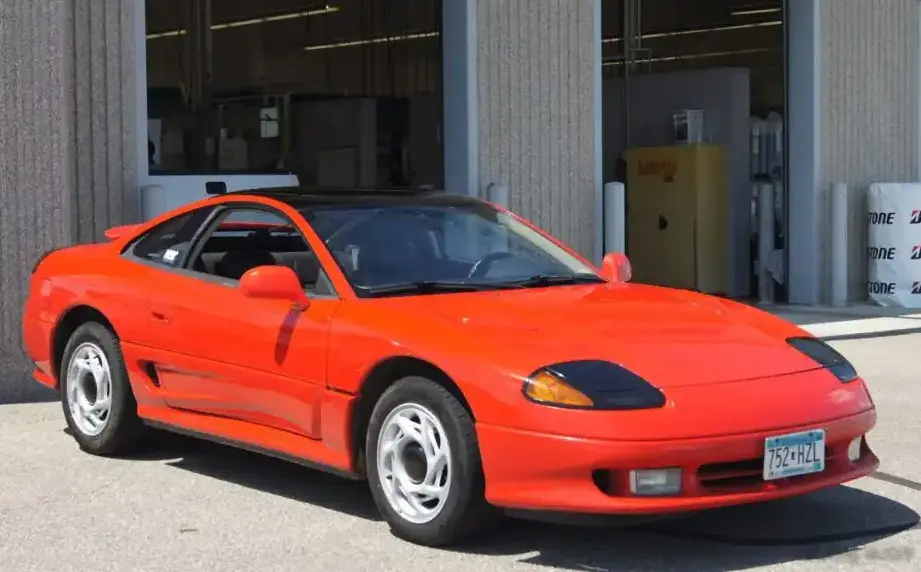
The Dodge Stealth 3.0 V6 24V, produced from 1990 to 1996, represents a unique chapter in Dodge’s history, born from the collaborative Diamond Star Motors (DSM) venture with Mitsubishi. This front-wheel-drive coupe aimed to deliver sporty performance and striking aesthetics to the American market. Positioned as a more attainable performance vehicle, the 3.0 V6 model served as a step up from the base 2.0-liter engine, offering a significant increase in power and torque. It occupied a middle ground in the Stealth lineup, bridging the gap between the entry-level models and the higher-performance R/T trim with its turbocharged engine.
Technical Specifications
| Brand | Dodge |
| Model | Stealth |
| Generation | Stealth |
| Type (Engine) | 3.0 V6 24V (226 Hp) |
| Start of production | 1990 |
| End of production | 1996 |
| Powertrain Architecture | Internal Combustion engine |
| Body type | Coupe |
| Seats | 4 |
| Doors | 2 |
| Fuel consumption (urban) | 17 l/100 km (13.8 US mpg) |
| Fuel consumption (extra urban) | 10 l/100 km (23.5 US mpg) |
| Fuel consumption (combined) | 10.7 l/100 km (22 US mpg) |
| Fuel Type | Petrol (Gasoline) |
| Maximum speed | 235 km/h (146.02 mph) |
| Weight-to-power ratio | 7.8 kg/Hp |
| Weight-to-torque ratio | 6.3 kg/Nm |
| Power | 226 Hp @ 6000 rpm |
| Power per litre | 76 Hp/l |
| Torque | 278 Nm @ 4500 rpm (205.04 lb.-ft. @ 4500 rpm) |
| Engine layout | Front, Transverse |
| Engine Model/Code | 6G72 |
| Engine displacement | 2972 cm3 (181.36 cu. in.) |
| Number of cylinders | 6 |
| Engine configuration | V-engine |
| Cylinder Bore | 91.1 mm (3.59 in.) |
| Piston Stroke | 76 mm (2.99 in.) |
| Compression ratio | 10:1 |
| Number of valves per cylinder | 4 |
| Fuel injection system | Multi-port manifold injection |
| Engine aspiration | Naturally aspirated engine |
| Valvetrain | DOHC |
| Engine oil capacity | 4.6 l (4.86 US qt | 4.05 UK qt) |
| Coolant | 8 l (8.45 US qt | 7.04 UK qt) |
| Kerb Weight | 1760 kg (3880.14 lbs.) |
| Trunk (boot) space (minimum) | 315 l (11.12 cu. ft.) |
| Fuel tank capacity | 75 l (19.81 US gal | 16.5 UK gal) |
| Length | 4565 mm (179.72 in.) |
| Width | 1840 mm (72.44 in.) |
| Height | 1253 mm (49.33 in.) |
| Wheelbase | 2470 mm (97.24 in.) |
| Front track | 1560 mm (61.42 in.) |
| Rear track | 1580 mm (62.2 in.) |
| Drivetrain Architecture | Front wheel drive |
| Number of gears and type of gearbox | 5 gears, manual transmission |
| Front suspension | Wishbone |
| Rear suspension | Several levers and rods |
| Front brakes | Ventilated discs |
| Rear brakes | Ventilated discs |
| Assisting systems | ABS (Anti-lock braking system), Hydraulic Power Steering |
| Tires size | 245/45 R17 |
Powertrain & Engine Architecture
The heart of the Dodge Stealth 3.0 V6 24V is the 6G72 engine, a 2.972-liter (181.36 cubic inch) naturally aspirated V6. This engine utilizes a double overhead camshaft (DOHC) valvetrain with four valves per cylinder, contributing to its relatively high output for its displacement. The 6G72 employs multi-port fuel injection, delivering fuel directly to each intake port for improved combustion efficiency. The engine’s 10:1 compression ratio strikes a balance between performance and reliability. The 3.0L engine was paired with a 5-speed manual transmission as standard, providing drivers with direct control over the power delivery. While an automatic transmission was offered, it was generally considered to detract from the sporty driving experience.
Driving Characteristics
The 3.0 V6 Stealth offered a noticeable step up in performance compared to the base 2.0-liter models. With 226 horsepower and 205 lb-ft of torque, it provided adequate acceleration for everyday driving and spirited weekend excursions. However, it didn’t possess the raw power of the turbocharged R/T variant. The front-wheel-drive configuration, while common for the time, could exhibit torque steer under hard acceleration. The 5-speed manual transmission allowed for precise gear selection, maximizing the engine’s powerband. The automatic transmission, while offering convenience, resulted in some power loss and a less engaging driving experience. The suspension, tuned for a balance of comfort and handling, provided a reasonably compliant ride without sacrificing too much cornering ability.
Equipment & Trim Levels
The Dodge Stealth 3.0 V6 typically came equipped with features such as power windows, power locks, and air conditioning. Interior upholstery was generally cloth, although leather options were available. The dashboard layout was driver-focused, with easy-to-read gauges and well-placed controls. Optional extras included a premium sound system, sunroof, and upgraded wheels. The trim level often dictated the availability of these features, with higher trims offering more standard equipment.
Chassis & Braking
The Stealth’s chassis featured an independent front suspension with wishbone configuration, providing good handling characteristics. The rear suspension utilized a multi-link setup, contributing to ride comfort and stability. Braking duties were handled by ventilated disc brakes on all four wheels, providing adequate stopping power. Anti-lock braking system (ABS) was standard, enhancing safety by preventing wheel lockup during hard braking. Hydraulic power steering made maneuvering the vehicle easier, especially at low speeds.
Market Reception & Comparison
The Dodge Stealth 3.0 V6 was generally well-received by automotive critics as a stylish and capable coupe. It offered a compelling alternative to other sports coupes of the era, such as the Mazda MX-6 and Toyota Celica. Compared to the base 2.0-liter Stealth, the 3.0 V6 provided a significant performance boost. However, it couldn’t match the outright speed of the turbocharged R/T model. Fuel economy was reasonable for a vehicle of its class, averaging around 22 mpg in combined driving. Reliability was generally good, although some owners reported issues with the cooling system and electrical components.
Legacy
The Dodge Stealth, while discontinued in 1996, remains a popular choice among enthusiasts. The 3.0 V6 variant, in particular, is valued for its balance of performance, reliability, and affordability. The 6G72 engine is known for its durability and relatively simple maintenance requirements. Today, well-maintained examples of the Stealth 3.0 V6 can be found on the used car market, offering a unique and stylish alternative to more common sports coupes. Its collaborative origins and distinctive design continue to make it a memorable vehicle in automotive history.
