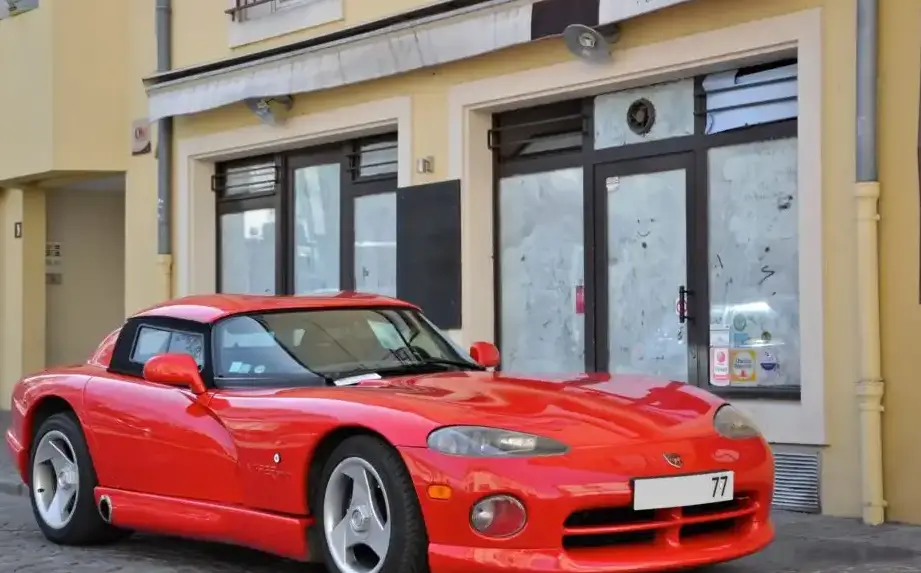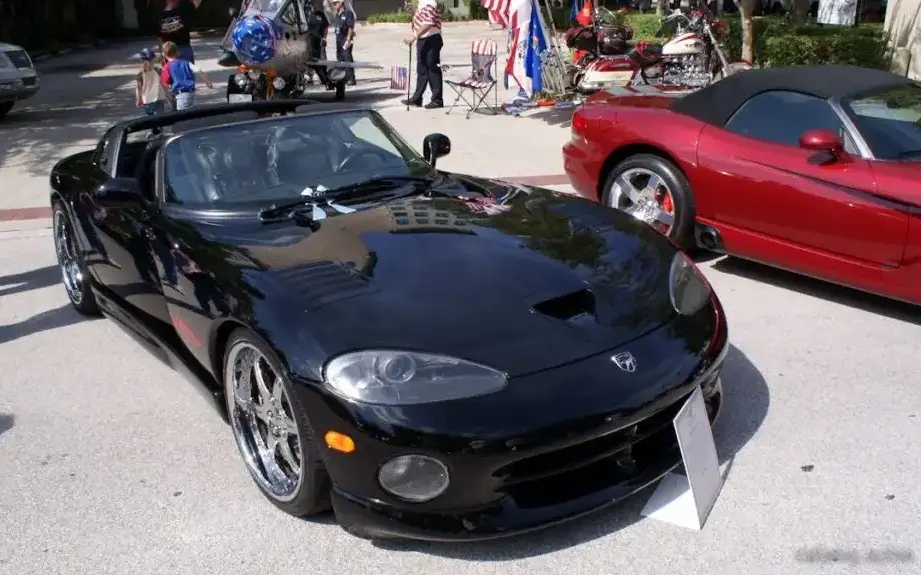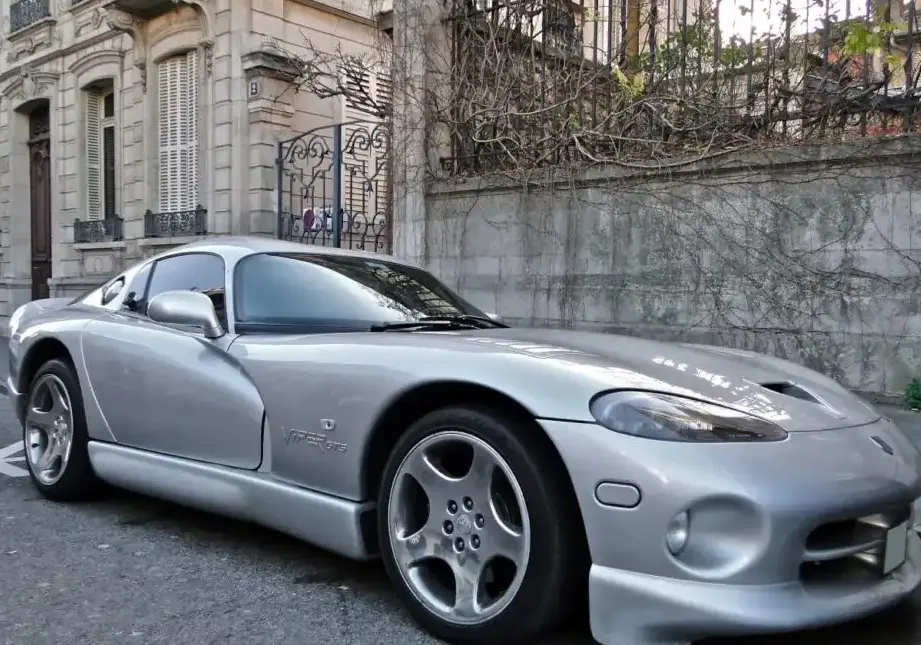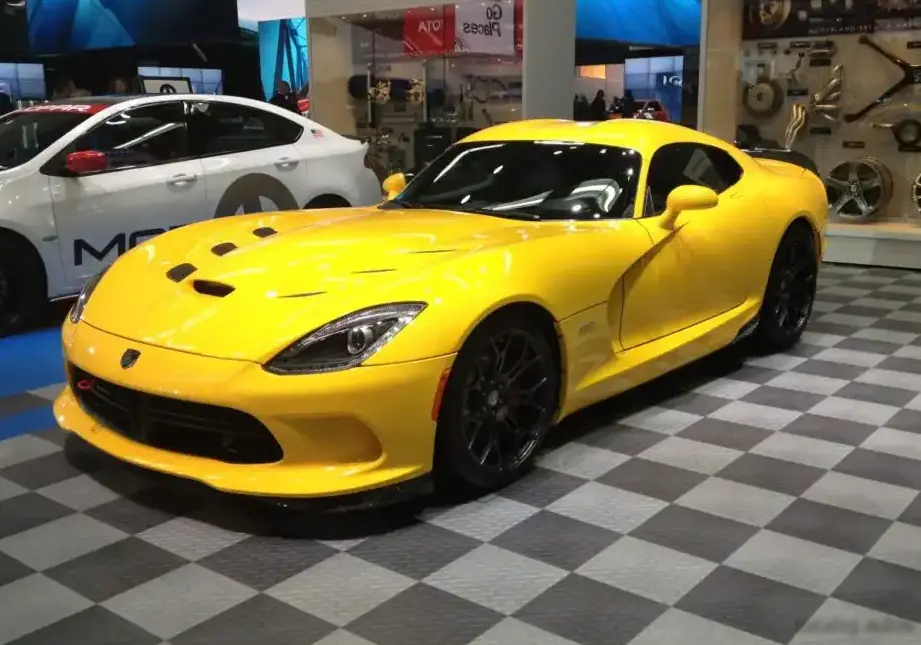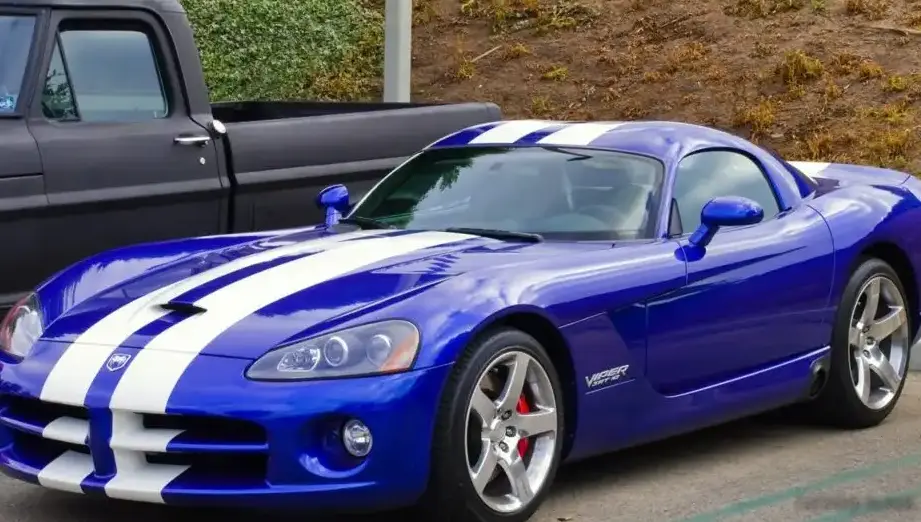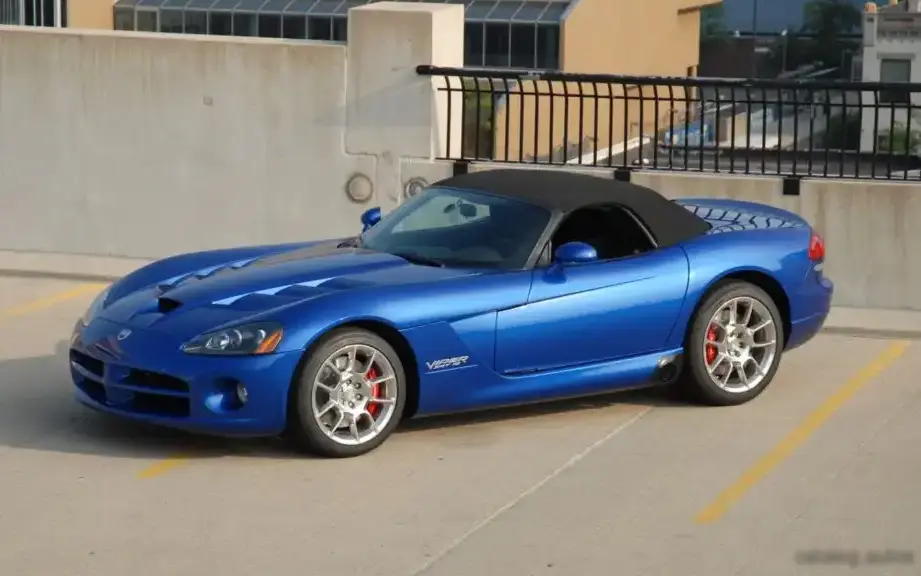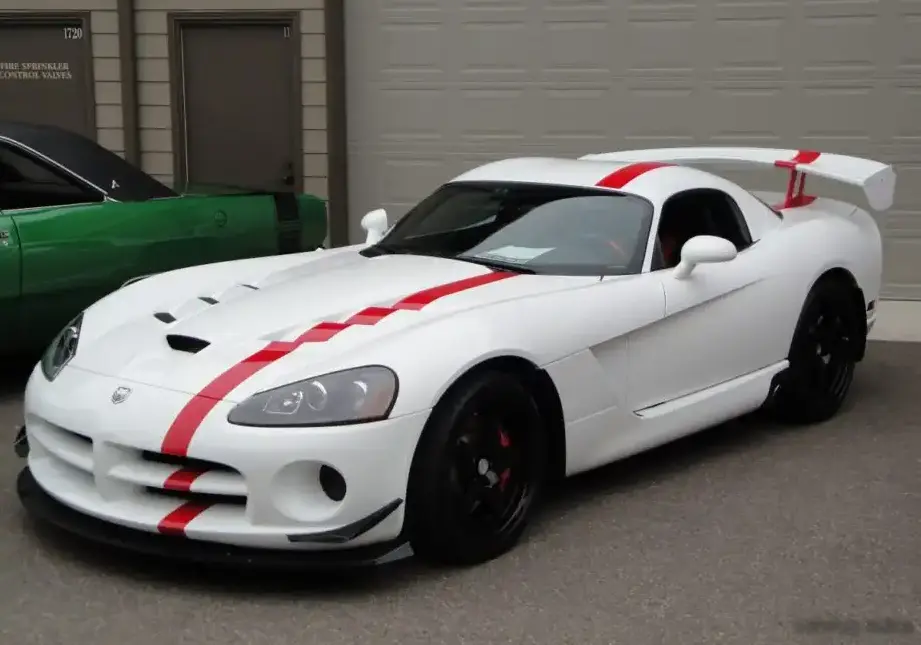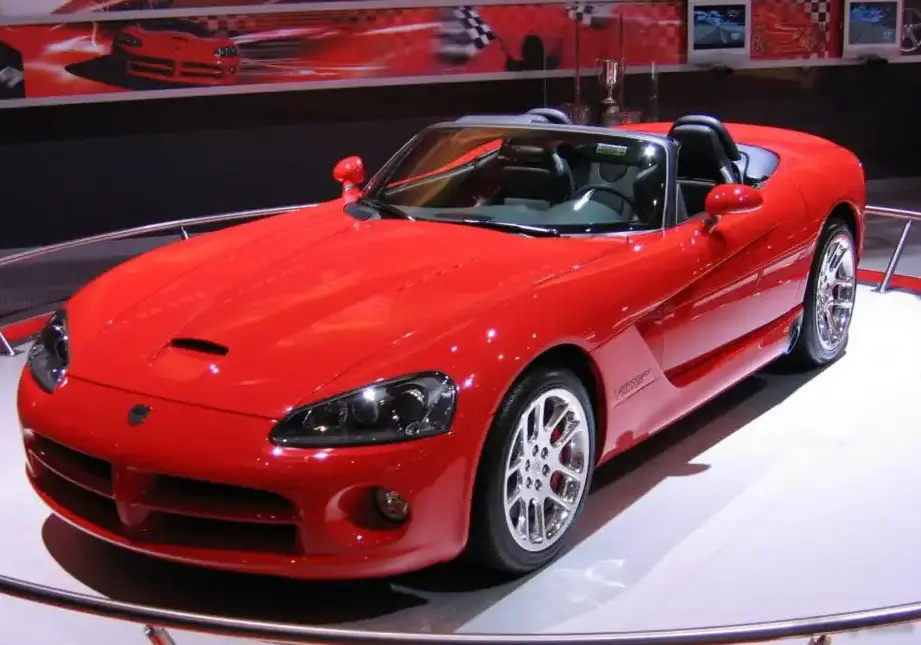
The Dodge Viper ZB I Convertible, produced for the 2006 and 2007 model years, represented the final iteration of the second-generation (ZB) Viper. This open-top variant continued the Viper’s legacy as a high-performance, American-built sports car, emphasizing raw power and a visceral driving experience. Positioned as the flagship convertible within the Viper lineup, the ZB I SRT-10 boasted a substantial 8.3-liter V10 engine, delivering 517 horsepower and 534.73 lb-ft of torque. It was built upon the success of the ZB platform, which aimed to refine the original Viper’s aggressive character with improved build quality and a more sophisticated chassis.
Technical Specifications
| Brand | Dodge |
| Model | Viper |
| Generation | Viper ZB I Convertible |
| Type (Engine) | 8.3 i V10 20V SRT-10 (517 Hp) |
| Start of production | 2006 |
| End of production | 2007 |
| Powertrain Architecture | Internal Combustion engine |
| Body type | Roadster |
| Seats | 2 |
| Doors | 2 |
| Fuel consumption (urban) | 30.5 l/100 km (7.7 US mpg, 9.3 UK mpg, 3.3 km/l) |
| Fuel consumption (extra urban) | 12.4 l/100 km (19 US mpg, 22.8 UK mpg, 8.1 km/l) |
| Fuel consumption (combined) | 19.4 l/100 km (12.1 US mpg, 14.6 UK mpg, 5.2 km/l) |
| Fuel Type | Petrol (Gasoline) |
| Acceleration 0 – 100 km/h | 3.9 sec |
| Acceleration 0 – 62 mph | 3.9 sec |
| Acceleration 0 – 60 mph | 3.7 sec |
| Maximum speed | 306 km/h (190.14 mph) |
| Weight-to-power ratio | 3 kg/Hp, 334.6 Hp/tonne |
| Weight-to-torque ratio | 2.1 kg/Nm, 469.3 Nm/tonne |
| Power | 517 Hp @ 5600 rpm |
| Power per litre | 62.4 Hp/l |
| Torque | 725 Nm @ 4200 rpm (534.73 lb.-ft. @ 4200 rpm) |
| Engine layout | Front, Longitudinal |
| Engine displacement | 8285 cm3 (505.58 cu. in.) |
| Number of cylinders | 10 |
| Engine configuration | V-engine |
| Cylinder Bore | 102.4 mm (4.03 in.) |
| Piston Stroke | 100.6 mm (3.96 in.) |
| Compression ratio | 9.6:1 |
| Number of valves per cylinder | 2 |
| Fuel injection system | Multi-port manifold injection |
| Engine aspiration | Naturally aspirated engine |
| Engine oil capacity | 9.5 l (10.04 US qt | 8.36 UK qt) |
| Coolant capacity | 15 l (15.85 US qt | 13.2 UK qt) |
| Kerb Weight | 1545 kg (3406.14 lbs.) |
| Max. weight | 1800 kg (3968.32 lbs.) |
| Max load | 255 kg (562.18 lbs.) |
| Trunk (boot) space – maximum | 240 l (8.48 cu. ft.) |
| Fuel tank capacity | 70 l (18.49 US gal | 15.4 UK gal) |
| Length | 4459 mm (175.55 in.) |
| Width | 1911 mm (75.24 in.) |
| Height | 1210 mm (47.64 in.) |
| Wheelbase | 2510 mm (98.82 in.) |
| Front track | 1565 mm (61.61 in.) |
| Rear (Back) track | 1547 mm (60.91 in.) |
| Drivetrain Architecture | Rear wheel drive |
| Number of gears and type of gearbox | 6 gears, manual transmission |
| Front suspension | Independent, type McPherson with coil spring and anti-roll bar |
| Rear suspension | Independent multi-link spring suspension with stabilizer |
| Front brakes | Ventilated discs |
| Rear brakes | Disc |
| Assisting systems | ABS (Anti-lock braking system) |
| Steering type | Steering rack and pinion |
| Power steering | Hydraulic Steering |
| Tires size | 275/35 R19; 345/30 R19 |
Powertrain & Engine Architecture
The heart of the ZB I Convertible was the 8.3-liter (505.58 cubic inch) V10 engine, designated as the SRT-10. This naturally aspirated powerplant was a significant engineering achievement, boasting a robust cast-iron block and aluminum cylinder heads. The engine utilized a multi-port fuel injection system, delivering fuel directly into each intake port. Its 20 valves per cylinder (two per cylinder) and a 9.6:1 compression ratio contributed to its high output. The engine’s longitudinal mounting and rear-wheel-drive configuration were central to the Viper’s performance characteristics. The sole transmission option was a six-speed manual gearbox, chosen for its direct connection and driver engagement. This transmission was designed to handle the immense torque produced by the V10, providing precise and robust shifting.
Driving Characteristics
The 2006-2007 Viper ZB I Convertible delivered a raw and exhilarating driving experience. The 517 horsepower and 534.73 lb-ft of torque translated into blistering acceleration – 0 to 60 mph in approximately 3.7 seconds and a top speed exceeding 190 mph. The manual transmission demanded skilled operation, requiring precise clutch control and gear selection to maximize performance. Compared to potential future iterations with more driver aids, the ZB I offered minimal electronic intervention, placing a strong emphasis on driver skill. The relatively short wheelbase and wide track contributed to sharp handling, but also demanded respect and careful throttle control, especially on less-than-perfect road surfaces. The lack of traction control meant that managing the immense power required a delicate touch.
Equipment & Trim Levels
The ZB I Convertible was relatively sparsely equipped compared to contemporary luxury sports cars, reflecting its focus on performance over comfort. Standard features included leather upholstery, air conditioning, power windows and locks, and a premium sound system. However, options were limited. The interior design was functional and driver-focused, with large analog gauges providing essential information. The convertible top was manually operated, further emphasizing the car’s raw and engaging nature. The exterior styling remained largely unchanged from previous ZB models, featuring the signature Viper long hood, short deck proportions, and aggressive bodywork.
Chassis & Braking
The ZB I Convertible utilized a tubular steel chassis, providing a rigid and lightweight foundation. The suspension consisted of independent McPherson struts at the front and an independent multi-link setup at the rear, both incorporating coil springs and anti-roll bars. This configuration aimed to balance handling performance with ride comfort, although the Viper’s ride remained firm. Braking duties were handled by ventilated discs at all four corners, providing ample stopping power. An Anti-lock Braking System (ABS) was standard, enhancing safety and control during hard braking. The tire size was 275/35 R19 at the front and 345/30 R19 at the rear, providing a large contact patch for maximum grip.
Market Reception & Comparison
The Dodge Viper ZB I Convertible was generally well-received by automotive critics, who praised its immense power, exhilarating performance, and distinctive styling. However, its lack of refinement, demanding driving characteristics, and limited practicality were also noted. Compared to other high-performance sports cars of the era, such as the Chevrolet Corvette Z06 or Porsche 911, the Viper offered a more visceral and uncompromising experience. Fuel economy was predictably poor, averaging around 12.1 US mpg in combined driving. Reliability was also a concern for some owners, with the V10 engine requiring careful maintenance and occasional repairs.
Legacy
The 2006-2007 Dodge Viper ZB I Convertible represents the culmination of the second-generation Viper’s development. While production numbers were relatively limited, these final-year models are highly sought after by collectors and enthusiasts. The 8.3-liter V10 engine remains a legendary powerplant, renowned for its immense power and distinctive exhaust note. Today, the ZB I Convertible is considered a modern classic, offering a unique and unforgettable driving experience. Maintenance can be costly due to the specialized nature of the vehicle, but well-maintained examples continue to command strong prices in the used car market, solidifying its place as an icon of American performance.