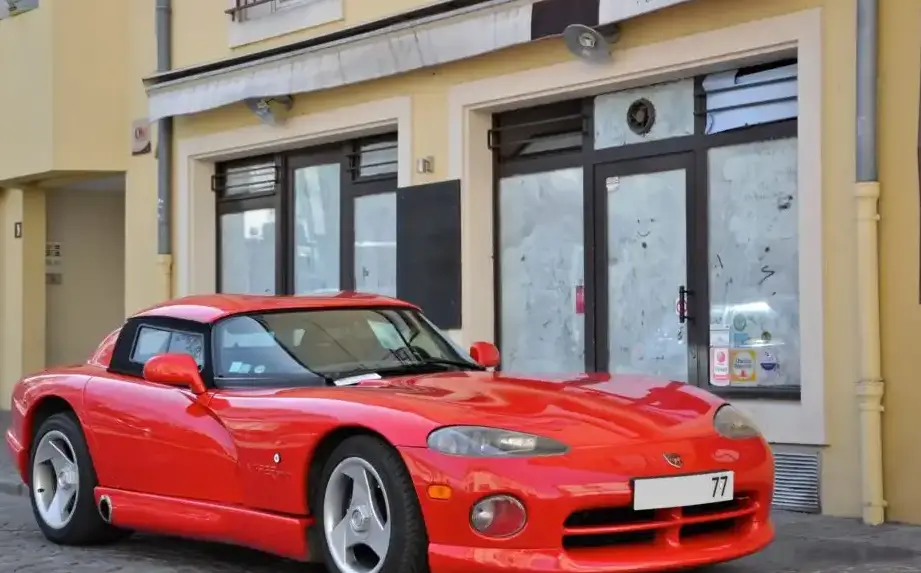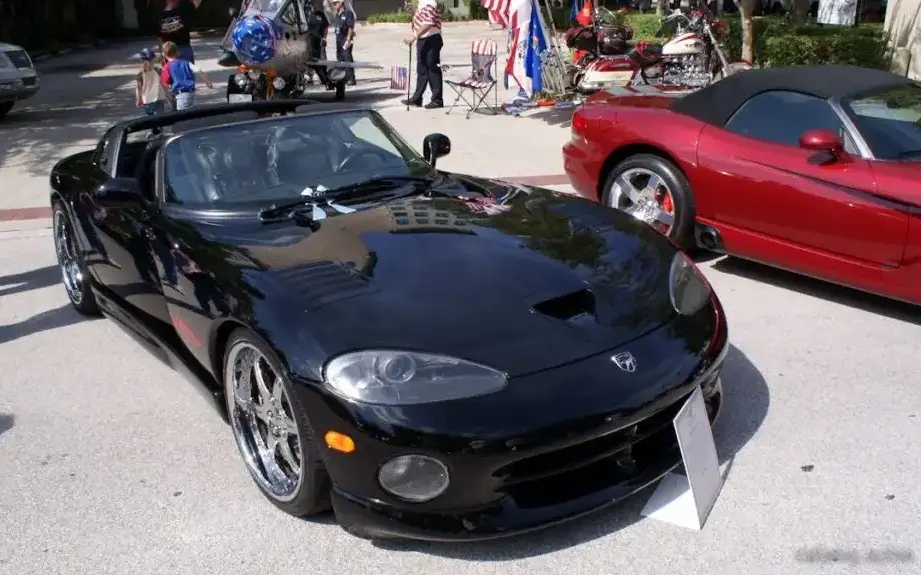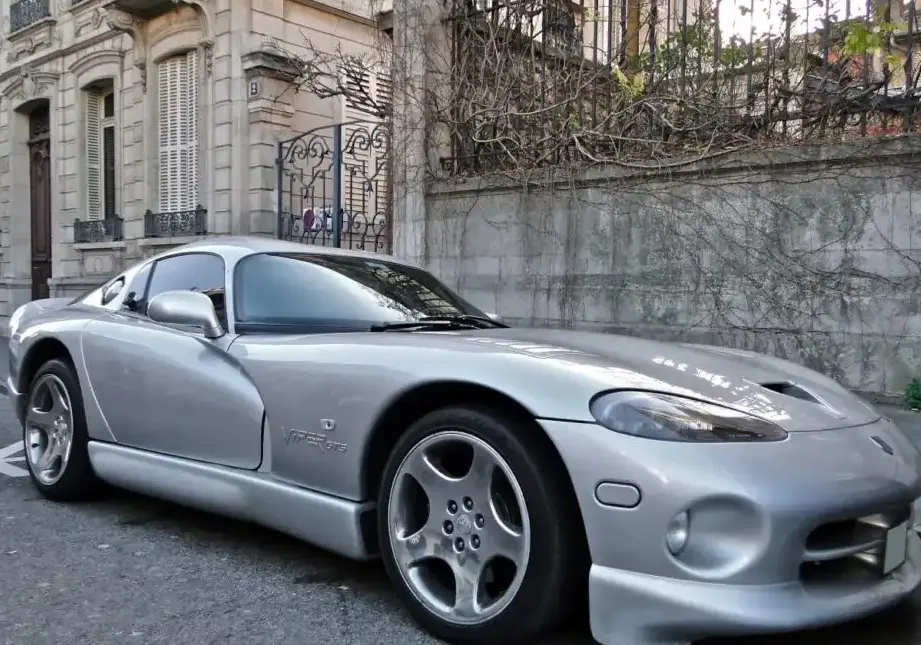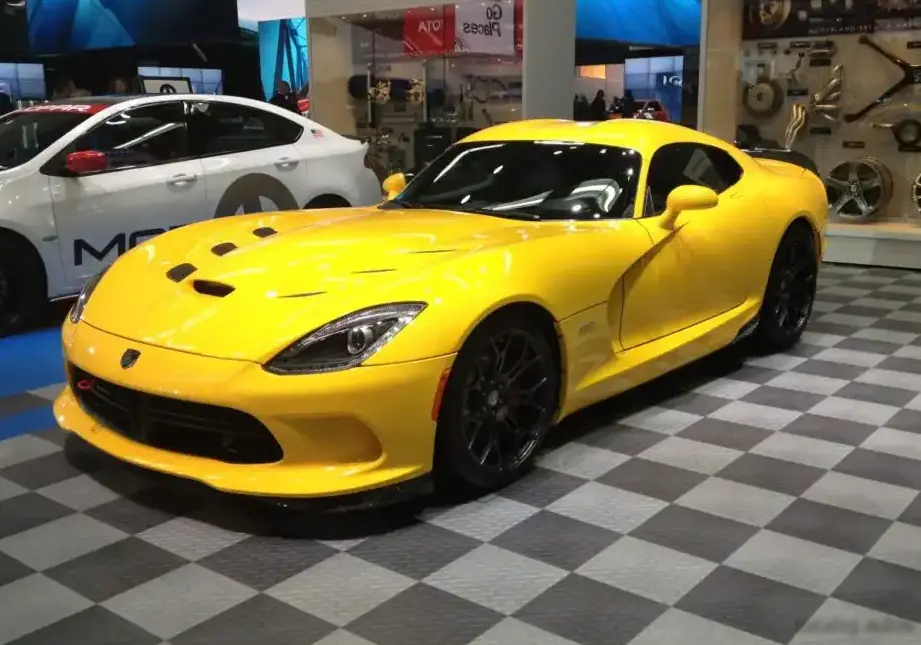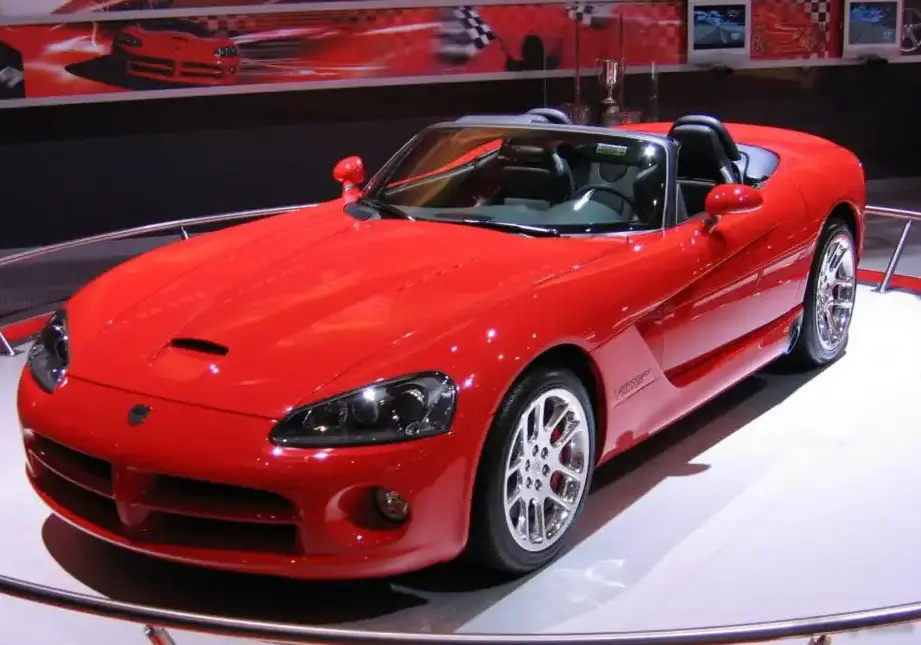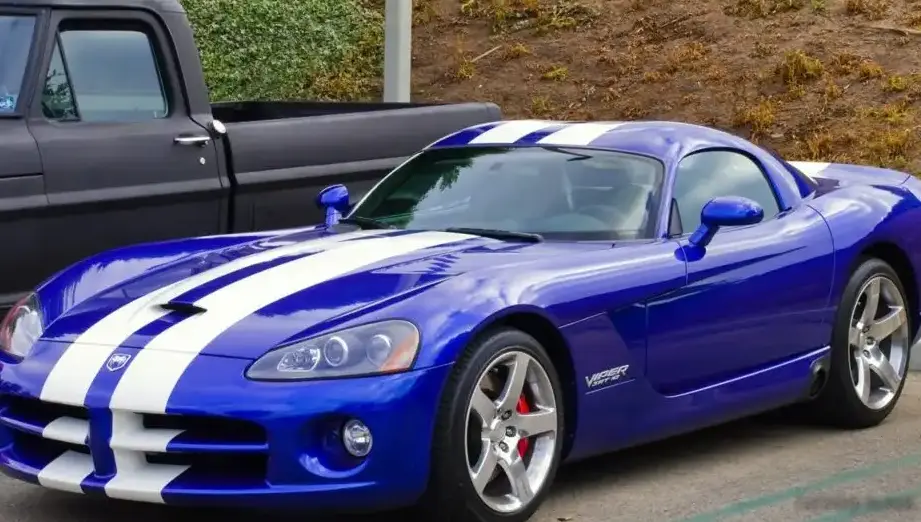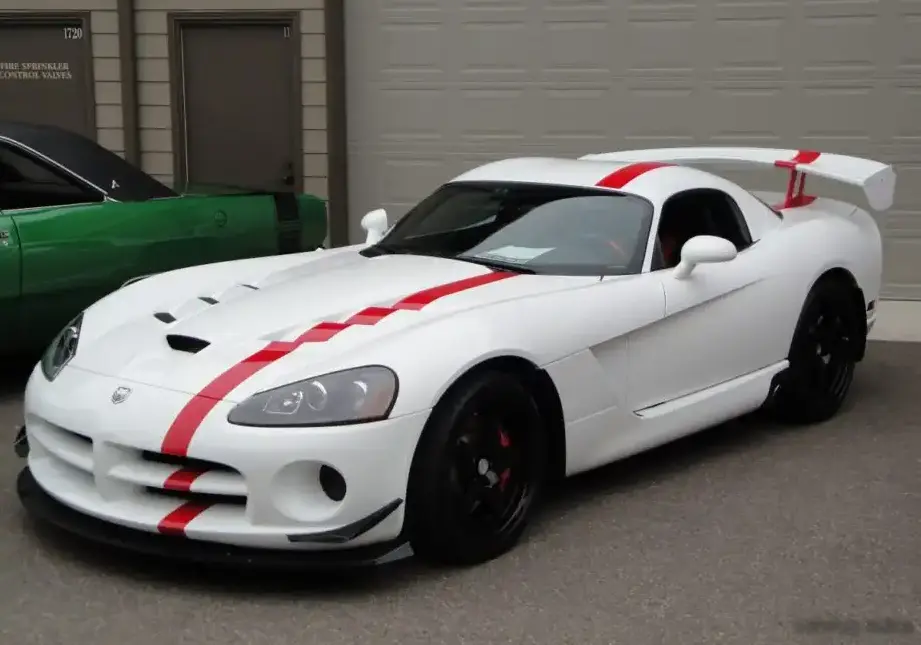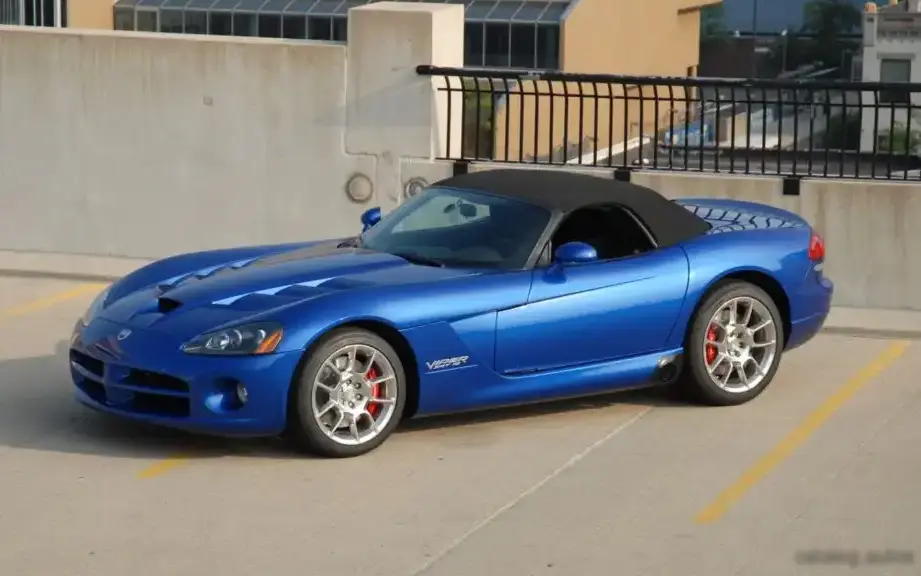
The Dodge Viper ZB II Convertible, produced from 2007 to 2010, represented the final iteration of the fourth-generation Viper. Building upon the foundation laid by the ZB I, the ZB II focused on refining the already potent performance characteristics of the Viper while offering a more luxurious and driver-focused experience. This model year saw the continuation of the 8.4-liter V10 engine, now producing 600 horsepower, cementing the Viper’s reputation as a raw, uncompromising American sports car. The ZB II Convertible was positioned as the premium open-top variant within the Viper lineup, appealing to enthusiasts seeking the ultimate in visceral driving enjoyment.
Technical Specifications
| Brand | Dodge |
| Model | Viper |
| Generation | Viper ZB II Convertible |
| Type (Engine) | 8.4i V10 20V SRT-10 (600 Hp) |
| Start of production | 2007 |
| End of production | 2010 |
| Powertrain Architecture | Internal Combustion engine |
| Body type | Roadster |
| Seats | 2 |
| Doors | 2 |
| Fuel consumption (urban) | 30.5 l/100 km (7.7 US mpg, 9.3 UK mpg, 3.3 km/l) |
| Fuel consumption (extra urban) | 12.4 l/100 km (19 US mpg, 22.8 UK mpg, 8.1 km/l) |
| Fuel consumption (combined) | 19.4 l/100 km (12.1 US mpg, 14.6 UK mpg, 5.2 km/l) |
| Fuel Type | Petrol (Gasoline) |
| Acceleration 0 – 100 km/h | 3.9 sec |
| Acceleration 0 – 62 mph | 3.9 sec |
| Acceleration 0 – 60 mph | 3.7 sec |
| Maximum speed | 325 km/h (201.95 mph) |
| Weight-to-power ratio | 2.6 kg/Hp, 384.6 Hp/tonne |
| Weight-to-torque ratio | 2.1 kg/Nm, 487.2 Nm/tonne |
| Power | 600 Hp @ 6100 rpm |
| Power per litre | 71.6 Hp/l |
| Torque | 760 Nm @ 5000 rpm (560.55 lb.-ft. @ 5000 rpm) |
| Engine layout | Front, Longitudinal |
| Engine displacement | 8382 cm3 (511.5 cu. in.) |
| Number of cylinders | 10 |
| Engine configuration | V-engine |
| Cylinder Bore | 103 mm (4.06 in.) |
| Piston Stroke | 100.6 mm (3.96 in.) |
| Compression ratio | 10.2:1 |
| Number of valves per cylinder | 2 |
| Fuel injection system | Multi-port manifold injection |
| Engine aspiration | Naturally aspirated engine |
| Engine oil capacity | 9.5 l (10.04 US qt | 8.36 UK qt) |
| Coolant capacity | 15 l (15.85 US qt | 13.2 UK qt) |
| Kerb Weight | 1560 kg (3439.21 lbs.) |
| Max. weight | 1800 kg (3968.32 lbs.) |
| Max load | 240 kg (529.11 lbs.) |
| Trunk (boot) space – maximum | 240 l (8.48 cu. ft.) |
| Fuel tank capacity | 70 l (18.49 US gal | 15.4 UK gal) |
| Length | 4459 mm (175.55 in.) |
| Width | 1911 mm (75.24 in.) |
| Height | 1210 mm (47.64 in.) |
| Wheelbase | 2510 mm (98.82 in.) |
| Front track | 1565 mm (61.61 in.) |
| Rear (Back) track | 1547 mm (60.91 in.) |
| Drivetrain Architecture | Rear wheel drive |
| Number of gears and type of gearbox | 6 gears, manual transmission |
| Front suspension | Independent, type McPherson with coil spring and anti-roll bar |
| Rear suspension | Independent multi-link spring suspension with stabilizer |
| Front brakes | Ventilated discs |
| Rear brakes | Disc |
| Assisting systems | ABS (Anti-lock braking system) |
| Steering type | Steering rack and pinion |
| Power steering | Hydraulic Steering |
| Tires size | 275/35 R19; 345/30 R19 |
Powertrain & Engine Architecture
The heart of the ZB II Convertible was the 8.4-liter (8382 cc) V10 engine, designated as the SRT-10. This naturally aspirated powerplant, based on the Chrysler LA engine family, was a significant departure from the earlier, smaller displacement V8s used in previous Vipers. The engine featured an oversquare configuration with a 103 mm bore and a 100.6 mm stroke, contributing to its high-revving nature. It utilized a cast iron block with aluminum cylinder heads, incorporating two valves per cylinder and a multi-port fuel injection system. The 600 horsepower output was achieved through careful tuning and optimization of the engine’s components, including high-flow cylinder heads and a revised camshaft profile. The engine was mated exclusively to a six-speed manual transmission, delivering power to the rear wheels. This transmission was known for its robust construction and precise shift feel, complementing the engine’s raw power.
Driving Characteristics
The ZB II Convertible offered a driving experience that was both exhilarating and demanding. The 600 horsepower and 560 lb-ft of torque provided immense acceleration, with 0-60 mph times consistently in the 3.7-3.9 second range. The manual transmission required a skilled driver to fully exploit the engine’s potential, demanding precise gear changes and clutch control. Compared to hypothetical lower-powered Vipers, the ZB II offered a significantly more intense and visceral experience. The lack of electronic driver aids meant that the driver was fully responsible for controlling the car’s immense power, making it a challenging but rewarding machine to drive. The relatively short wheelbase and wide track contributed to sharp handling, but also demanded respect and careful throttle control.
Equipment & Trim Levels
The ZB II Convertible was relatively sparsely equipped compared to contemporary luxury roadsters, reflecting its focus on performance. Standard features included leather upholstery, air conditioning, power windows and locks, and a premium sound system. However, options were limited, with most buyers opting for minimal additions to maintain the car’s lightweight nature. Available options included upgraded audio systems and various exterior color choices. The interior design was functional and driver-focused, with a simple dashboard layout and supportive bucket seats. The convertible top was manually operated, further emphasizing the car’s raw and analog character.
Chassis & Braking
The ZB II Convertible utilized a tubular steel chassis, providing a rigid and lightweight platform. The suspension consisted of independent McPherson struts at the front and an independent multi-link setup at the rear, both with coil springs and anti-roll bars. This configuration provided a good balance between handling and ride comfort, although the ride was firm due to the car’s performance-oriented nature. Braking duties were handled by ventilated disc brakes at all four corners, providing ample stopping power. An Anti-lock Braking System (ABS) was standard, enhancing safety and control during hard braking situations.
Market Reception & Comparison
The Dodge Viper ZB II Convertible was generally well-received by automotive critics, who praised its immense power, engaging driving experience, and classic American muscle car character. However, its lack of refinement and challenging driving dynamics were also noted. Compared to other high-performance roadsters of the era, such as the Porsche 911 and Chevrolet Corvette, the Viper offered a more raw and visceral experience, but lacked the same level of sophistication and everyday usability. Fuel economy was predictably poor, averaging around 12 mpg in combined driving. Reliability was also a concern for some owners, with the V10 engine requiring regular maintenance and occasional repairs.
Legacy
The Dodge Viper ZB II Convertible represents the culmination of the fourth-generation Viper’s development. While production numbers were relatively low, the ZB II has become a highly sought-after collectible among enthusiasts. The 8.4-liter V10 engine is widely regarded as one of the greatest American engines ever produced, and the ZB II Convertible offers a unique and unforgettable driving experience. Today, well-maintained examples command high prices in the used car market, reflecting their rarity and desirability. The powertrain, while demanding in terms of maintenance, is generally considered robust when properly cared for, ensuring that these iconic sports cars will continue to thrill drivers for years to come.