
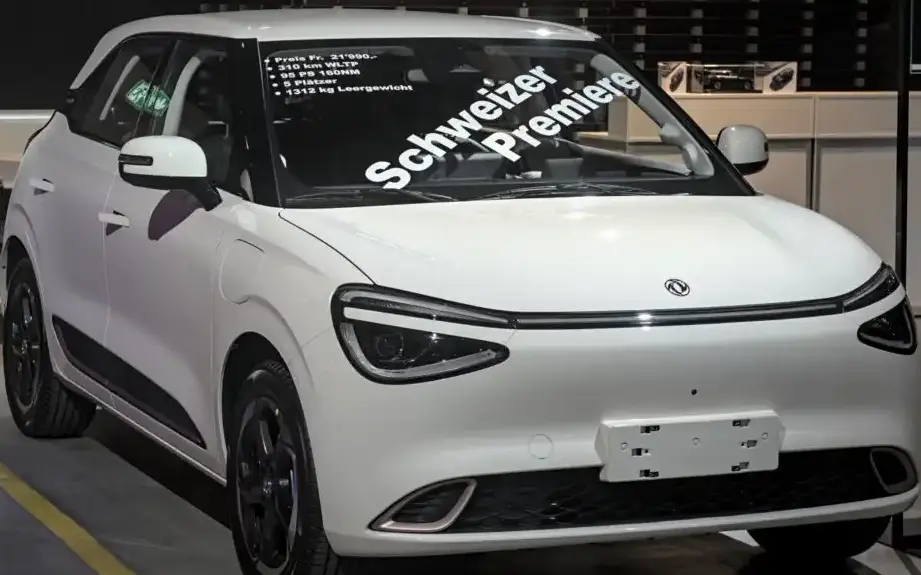
The Dongfeng Box 31.45 kWh (95 hp) Electric is a battery electric vehicle (BEV) hatchback introduced by the Chinese automaker Dongfeng in 2024. Positioned as an entry-level electric vehicle, the Box aims to provide affordable and practical transportation within the rapidly expanding Chinese EV market. It represents Dongfeng’s commitment to electrification and caters to urban commuters seeking a compact and efficient vehicle. The Box is built on a dedicated EV platform, prioritizing interior space and usability within its diminutive footprint.
Technical Specifications
| Brand | DongFeng |
| Model | Box |
| Generation | Box |
| Type (Engine) | 31.45 kWh (95 Hp) Electric |
| Start of production | 2024 |
| Powertrain Architecture | BEV (Electric Vehicle) |
| Body type | Hatchback |
| Seats | 5 |
| Doors | 5 |
| Fuel Type | Electricity |
| Weight-to-power ratio | 13 kg/Hp, 76.9 Hp/tonne |
| Weight-to-torque ratio | 7.7 kg/Nm, 129.6 Nm/tonne |
| Gross battery capacity | 31.45 kWh |
| Battery technology | Lithium iron phosphate (LiFePO4) |
| Battery location | Below the floor |
| All-electric range (CLTC) | 330 km (205.05 mi) |
| Average Energy consumption (CLTC) | 10.6 kWh/100 km (17.06 kWh/100 mi) |
| MPGe | 198 |
| km/kWh | 9.4 |
| mi/kWh | 5.9 |
| Electric motor power | 95 Hp |
| Electric motor Torque | 160 Nm (118.01 lb.-ft.) |
| Electric motor location | Front axle, Transverse |
| Electric motor type | Synchronous |
| System power | 95 Hp |
| System torque | 160 Nm (118.01 lb.-ft.) |
| Kerb Weight | 1235 kg (2722.71 lbs.) |
| Max. weight | 1630 kg (3593.53 lbs.) |
| Max load | 395 kg (870.83 lbs.) |
| Trunk (boot) space – minimum | 326 l (11.51 cu. ft.) |
| Trunk (boot) space – maximum | 1645 l (58.09 cu. ft.) |
| Length | 4030 mm (158.66 in.) |
| Width | 1810 mm (71.26 in.) |
| Height | 1570 mm (61.81 in.) |
| Wheelbase | 2660 mm (104.72 in.) |
| Front track | 1540 mm (60.63 in.) |
| Rear (Back) track | 1540 mm (60.63 in.) |
| Front overhang | 685 mm (26.97 in.) |
| Rear overhang | 685 mm (26.97 in.) |
| Ride height (ground clearance) | 165 mm (6.5 in.) |
| Approach angle | 17° |
| Departure angle | 25° |
| Drivetrain Architecture | One electric motor drives the front wheels. |
| Drive wheel | Front wheel drive |
| Number of gears and type of gearbox | 1 gears, automatic transmission |
| Front suspension | Independent type McPherson |
| Rear suspension | Torsion |
| Front brakes | Disc |
| Rear brakes | Disc |
| Assisting systems | ABS (Anti-lock braking system) |
| Steering type | Steering rack and pinion |
| Power steering | Electric Steering |
| Tires size | 215/55 R17 |
| Wheel rims size | 17 |
Powertrain & Engine Architecture
The Dongfeng Box utilizes a single synchronous electric motor driving the front wheels. This motor produces 95 horsepower and 160 Nm (118 lb-ft) of torque. The powertrain is powered by a 31.45 kWh Lithium Iron Phosphate (LiFePO4) battery pack, positioned under the vehicle floor to optimize space and lower the center of gravity. LiFePO4 chemistry is favored for its improved thermal stability and longer cycle life compared to other lithium-ion battery types, though it typically offers slightly lower energy density. The vehicle employs a single-speed automatic transmission, typical for electric vehicles, providing seamless acceleration. The charging port specifications are not widely publicized, but it is expected to support both AC and DC fast charging standards common in the Chinese market.
Driving Characteristics
With 95 hp, the Dongfeng Box is not designed for rapid acceleration. Performance is geared towards efficient urban driving. The instant torque delivery characteristic of electric motors provides adequate responsiveness for city traffic, and the single-speed transmission ensures smooth power delivery. While official 0-60 mph times are not readily available, the Box prioritizes range and efficiency over outright speed. Compared to potential higher-powered variants of the Box (if offered in the future), this 95 hp version will offer a more economical driving experience, albeit with slower acceleration and potentially limited performance when fully loaded or climbing hills. The single gear ratio is optimized for efficiency and everyday usability.
Equipment & Trim Levels
As an entry-level model, the Dongfeng Box is expected to come standard with essential features such as air conditioning, power windows, and a basic infotainment system. Details regarding specific trim levels and optional extras are currently limited. However, it’s anticipated that higher trims may offer features like a larger touchscreen display, upgraded interior materials, and advanced driver-assistance systems (ADAS) such as automatic emergency braking and lane departure warning. The interior design is likely to be functional and minimalist, focusing on maximizing space within the compact cabin. Standard safety equipment includes ABS (Anti-lock Braking System).
Chassis & Braking
The Dongfeng Box features a McPherson strut independent suspension system at the front and a torsion beam suspension at the rear. This configuration balances cost-effectiveness with acceptable ride quality and handling characteristics. The vehicle is equipped with disc brakes on all four wheels, providing adequate stopping power for its weight class. The electric power steering system offers light and precise steering feel, enhancing maneuverability in urban environments. The relatively low curb weight of 1235 kg (2722.71 lbs) contributes to improved efficiency and handling.
Market Reception & Comparison
The Dongfeng Box enters a highly competitive segment of the Chinese EV market. Its primary competitors include other affordable electric hatchbacks from domestic manufacturers like BYD and Wuling. Initial reviews suggest that the Box offers a compelling value proposition, with a reasonable range, practical interior space, and a competitive price point. Its CLTC range of 330 km (205 miles) is sufficient for many urban commuters, and its energy consumption of 10.6 kWh/100 km (17.06 kWh/100 mi) is relatively efficient. Compared to potential higher-performance variants, the 95 hp version prioritizes affordability and efficiency, making it an attractive option for budget-conscious buyers.
Legacy
As a relatively new model, the long-term reliability of the Dongfeng Box remains to be seen. However, the use of a LiFePO4 battery pack suggests a potentially longer lifespan and improved safety compared to vehicles using other lithium-ion chemistries. The simplicity of the electric powertrain, with fewer moving parts than a traditional internal combustion engine, also contributes to potentially lower maintenance costs. In the used car market, the Box is expected to appeal to buyers seeking an affordable and environmentally friendly transportation option. Its success will depend on Dongfeng’s ability to maintain quality control and provide adequate after-sales service.
