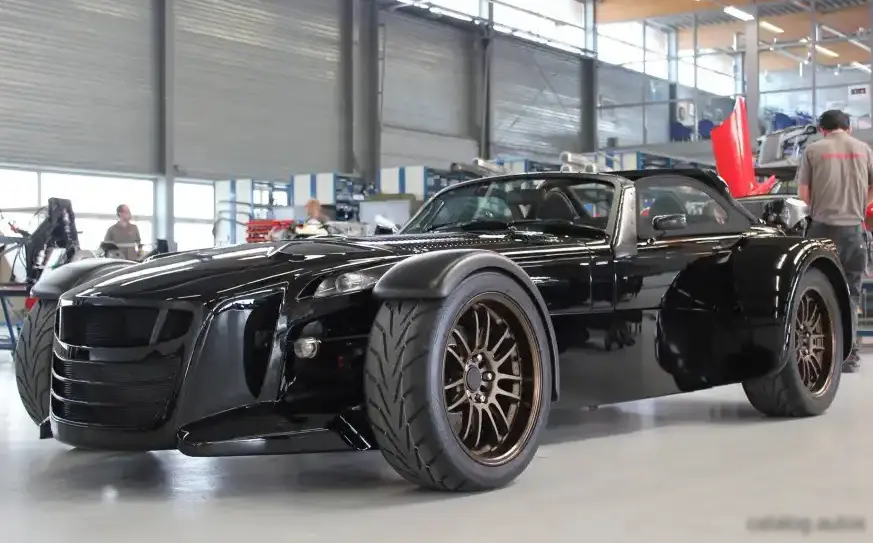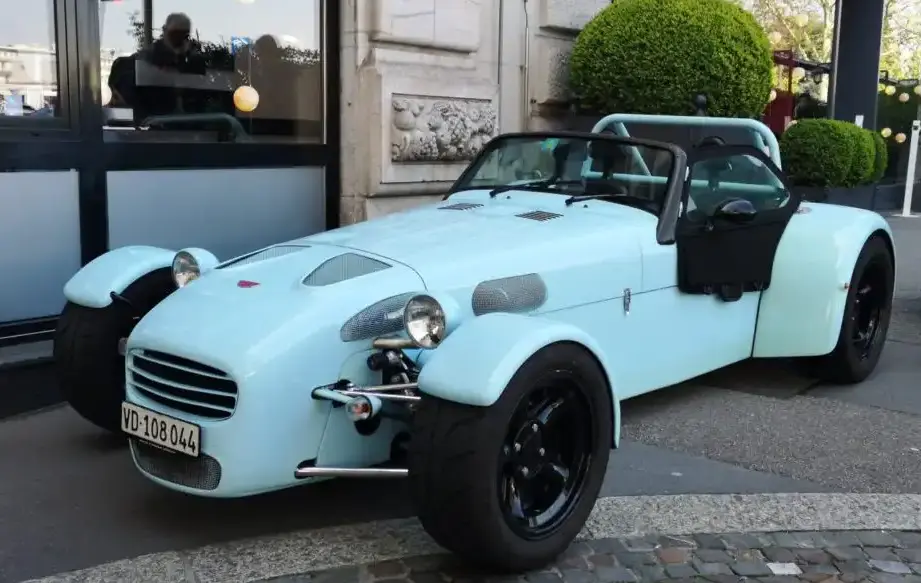
The Donkervoort D8 270 RS, produced between 2007 and 2012, represents a focused and uncompromising approach to lightweight sports car design. Positioned as the performance flagship within the first generation D8 family, the 270 RS aimed to deliver an exceptionally raw and engaging driving experience. It built upon the foundations of the standard D8, but with significant enhancements to the powertrain, chassis, and aerodynamics, resulting in a car that prioritized track capability while remaining street legal. The “RS” designation signified a more hardcore, race-inspired version of the already minimalist D8.
Technical Specifications
| Brand | Donkervoort |
| Model | D8 |
| Generation | D8 270 RS |
| Type (Engine) | RS 1.8 (270 Hp) |
| Start of production | 2007 |
| End of production | 2012 |
| Powertrain Architecture | Internal Combustion engine |
| Body type | Roadster |
| Seats | 2 |
| Doors | 2 |
| Fuel Type | Petrol (Gasoline) |
| Acceleration 0 – 100 km/h | 3.9 sec |
| Acceleration 0 – 62 mph | 3.9 sec |
| Acceleration 0 – 60 mph | 3.7 sec |
| Weight-to-power ratio | 2.3 kg/Hp, 432 Hp/tonne |
| Power | 270 Hp @ 5700 rpm |
| Power per litre | 151.6 Hp/l |
| Engine displacement | 1781 cm3 / 108.68 cu. in. |
| Number of cylinders | 4 |
| Engine configuration | Inline |
| Cylinder Bore | 81 mm / 3.19 in. |
| Piston Stroke | 86.4 mm / 3.4 in. |
| Compression ratio | 9:1 |
| Number of valves per cylinder | 5 |
| Engine aspiration | Naturally aspirated engine |
| Kerb Weight | 625 kg / 1377.89 lbs |
| Drivetrain Architecture | Rear wheel drive |
| Drive wheel | Rear wheel drive |
| Number of gears and type of gearbox | 5 gears, manual transmission |
| Front brakes | Ventilated discs |
| Rear brakes | Ventilated discs |
Powertrain & Engine Architecture
The heart of the D8 270 RS is a 1.8-liter, inline four-cylinder engine, heavily modified from its origins in the Audi/Volkswagen group. While based on the familiar Audi 20V engine block, Donkervoort extensively reworked the internals to increase power output. The engine utilizes a naturally aspirated setup, eschewing turbocharging or supercharging in favor of a more linear power delivery. Key modifications included a high-flow cylinder head, optimized intake and exhaust manifolds, and a performance-tuned engine management system. The engine produces 270 horsepower at 5700 rpm. This power is delivered through a robust five-speed manual transmission, chosen for its direct feel and reliability. The drivetrain is a conventional rear-wheel drive layout, contributing to the car’s balanced handling characteristics.
Driving Characteristics
The D8 270 RS delivers a driving experience that is defined by its incredibly low weight and responsive powertrain. With a kerb weight of just 625 kg (1377.89 lbs), the power-to-weight ratio of 2.3 kg/hp results in exhilarating acceleration. The 0-60 mph sprint is dispatched in approximately 3.7 seconds. The naturally aspirated engine provides a predictable and linear power curve, encouraging the driver to maintain momentum through corners. The five-speed gearbox, while not offering the close ratios of a sequential gearbox, is precise and allows for effective engine braking. The lack of electronic driver aids means that the driver is fully engaged in the process, requiring skill and precision to extract the car’s full potential. Compared to a theoretical D8 with a less powerful engine, the 270 RS offers a significantly more visceral and demanding driving experience. It’s a car that rewards skilled drivers with a level of connection rarely found in modern automobiles.
Equipment & Trim Levels
The Donkervoort D8 270 RS was not about luxury or extensive features. It was a focused performance machine. The interior is spartan, prioritizing functionality and weight reduction. Standard features included lightweight bucket seats, a simple dashboard with essential gauges, and a leather-wrapped steering wheel. Creature comforts were minimal; air conditioning and a stereo were typically optional extras, and their addition would add unwanted weight. The bodywork was primarily constructed from lightweight materials, including carbon fiber and aluminum. Customers could specify a range of exterior colors and finishes, but the emphasis remained on minimizing weight. The interior trim was typically finished in leather or Alcantara, with a focus on durability and grip.
Chassis & Braking
The chassis of the D8 270 RS is a space frame construction, built from high-strength steel tubes. This design provides exceptional rigidity while minimizing weight. The suspension utilizes double wishbones at all four corners, with adjustable dampers and springs. This allows for precise tuning of the suspension to suit different driving conditions and driver preferences. Braking is provided by ventilated discs at all four corners, offering ample stopping power. The braking system is not equipped with ABS, further emphasizing the car’s raw and unfiltered driving experience. The car’s low weight and balanced chassis contribute to exceptional handling and cornering ability.
Market Reception & Comparison
The Donkervoort D8 270 RS received positive reviews from automotive journalists, who praised its exceptional performance, handling, and engaging driving experience. Critics noted the car’s lack of refinement and comfort, but these were seen as acceptable trade-offs for its focused performance. Compared to other sports cars in its price range, the D8 270 RS offered a unique and uncompromising driving experience. It was significantly lighter and more agile than most of its competitors, and its naturally aspirated engine provided a more engaging and rewarding driving experience than many turbocharged alternatives. Fuel economy was not a primary concern for buyers of this vehicle, but the D8 270 RS was reasonably efficient for a high-performance sports car.
Legacy
The Donkervoort D8 270 RS remains a highly sought-after vehicle among enthusiasts. Its limited production numbers and focused performance have made it a collector’s item. The 1.8-liter engine, while not the most powerful available, has proven to be remarkably reliable when properly maintained. The car’s simple construction and readily available parts make it relatively easy to service and repair. In the used car market, the D8 270 RS commands a premium price, reflecting its rarity and desirability. It represents a unique chapter in the history of lightweight sports car design, and its legacy continues to inspire Donkervoort’s current models.