
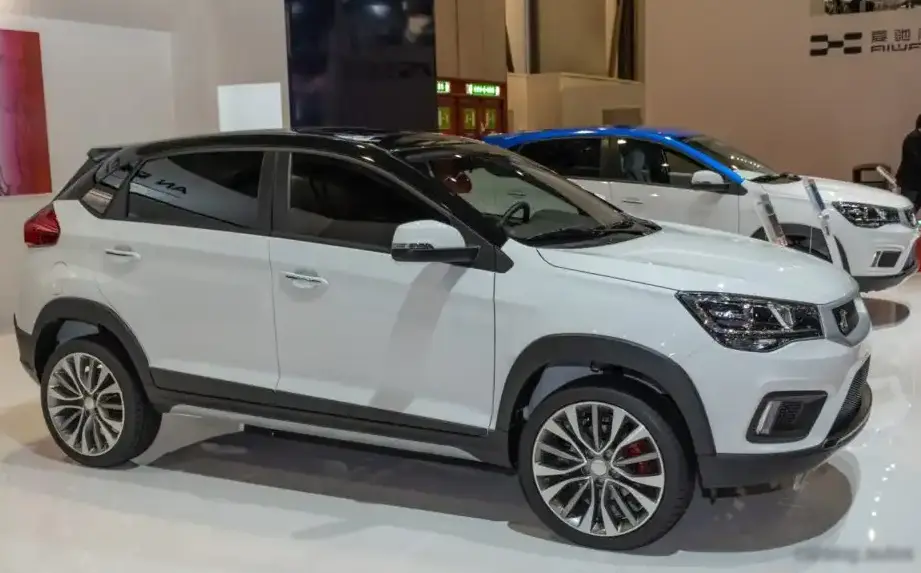
The DR 3 1.5, producing 106 horsepower, was a compact crossover/coupe produced by the Italian manufacturer DR Automobiles between 2017 and 2020. Positioned as an entry-level offering within the DR lineup, it aimed to provide affordable transportation with a blend of practicality and style. The DR 3 was based heavily on the Chery Tiggo 5, a Chinese-market vehicle, reflecting DR’s strategy of rebadging and adapting existing designs for the European market. This particular 1.5-liter variant served as the mainstay of the DR 3 range during its production run, offering a balance between fuel economy and acceptable performance for urban and highway driving.
Technical Specifications
| Brand | DR |
| Model | 3 |
| Generation | 3 |
| Type (Engine) | 1.5 (106 Hp) |
| Start of production | 2017 |
| End of production | 2020 |
| Powertrain Architecture | Internal Combustion engine |
| Body type | Coupe, SUV |
| Seats | 5 |
| Doors | 5 |
| Fuel consumption (economy) – urban | 9.5 l/100 km (24.8 US mpg) |
| Fuel consumption (economy) – extra urban | 6.6 l/100 km (35.6 US mpg) |
| Fuel consumption (economy) – combined | 7.7 l/100 km (30.5 US mpg) |
| CO2 emissions | 180 g/km |
| Fuel Type | Petrol (Gasoline) |
| Acceleration 0 – 100 km/h | 11.5 sec |
| Acceleration 0 – 62 mph | 11.5 sec |
| Acceleration 0 – 60 mph | 10.9 sec |
| Maximum speed | 175 km/h (108.74 mph) |
| Emission standard | Euro 6 |
| Weight-to-power ratio | 11.5 kg/Hp |
| Weight-to-torque ratio | 9 kg/Nm |
| Power | 106 Hp @ 6000 rpm |
| Torque | 135 Nm @ 2750 rpm (99.57 lb.-ft. @ 2750 rpm) |
| Engine layout | Front, Transverse |
| Engine displacement | 1490 cm3 (90.93 cu. in.) |
| Number of cylinders | 4 |
| Engine configuration | Inline |
| Engine aspiration | Naturally aspirated engine |
| Kerb Weight | 1215 kg (2678.62 lbs.) |
| Max. weight | 1620 kg (3571.49 lbs.) |
| Max load | 405 kg (892.87 lbs.) |
| Trunk (boot) space – minimum | 420 l (14.83 cu. ft.) |
| Fuel tank capacity | 50 l (13.21 US gal | 11 UK gal) |
| Length | 4170 mm (164.17 in.) |
| Width | 1760 mm (69.29 in.) |
| Height | 1570 mm (61.81 in.) |
| Wheelbase | 2555 mm (100.59 in.) |
| Front track | 1495 mm (58.86 in.) |
| Rear (Back) track | 1484 mm (58.43 in.) |
| Drivetrain Architecture | The Internal combustion engine (ICE) drives the front wheels of the vehicle. |
| Drive wheel | Front wheel drive |
| Number of gears and type of gearbox | 5 gears, manual transmission |
| Front suspension | Independent, type McPherson with coil spring and anti-roll bar |
| Front brakes | Ventilated discs |
| Rear brakes | Disc |
| Assisting systems | ABS (Anti-lock braking system) |
| Steering type | Steering rack and pinion |
| Power steering | Hydraulic Steering |
| Tires size | 215/60 R17 |
| Wheel rims size | 7J x 17 |
Powertrain & Engine Architecture
The DR 3 1.5 was powered by a 1.5-liter inline-four cylinder gasoline engine. This engine, sourced from Chery, utilized a naturally aspirated configuration, meaning it did not employ turbocharging or supercharging. The engine code is not widely publicized, but it is based on Chery’s established small displacement engine family. Fuel delivery was managed by a multi-point fuel injection system, a common setup for engines of this class. The engine featured a double overhead camshaft (DOHC) valvetrain, contributing to improved breathing and efficiency. The engine was paired with a five-speed manual transmission, sending power to the front wheels. This transmission choice was typical for the segment and aimed to provide a balance between cost-effectiveness and driver engagement.
Driving Characteristics
The 106 horsepower and 135 Nm (99.57 lb-ft) of torque produced by the 1.5-liter engine resulted in modest, but adequate, performance. Acceleration from 0 to 60 mph took approximately 10.9 seconds, and top speed was limited to 175 km/h (108.74 mph). The five-speed manual transmission offered reasonable control, but the engine lacked the low-end grunt of turbocharged alternatives. The gear ratios were tuned for fuel efficiency rather than outright acceleration. Compared to potential higher-output variants (which were not widely available in the DR 3 range), this 1.5L engine provided a more economical and relaxed driving experience, prioritizing fuel consumption over spirited performance. The vehicle felt most comfortable during city driving and on relatively flat highway stretches.
Equipment & Trim Levels
The DR 3 1.5 typically came equipped with a basic level of standard features. These included air conditioning, power windows, central locking, and an audio system with USB connectivity. Safety features such as ABS (Anti-lock Braking System) were standard. Interior upholstery was generally cloth, and the dashboard featured a functional, if somewhat basic, design. Optional extras, depending on the market and availability, could include alloy wheels, a rear parking sensor, and a more advanced audio system. The trim level was generally considered the base trim, focusing on affordability and essential features.
Chassis & Braking
The DR 3 1.5 utilized a front-wheel-drive chassis with an independent McPherson strut suspension setup at the front, providing a reasonable level of ride comfort. The rear suspension employed a torsion beam setup, a cost-effective solution common in this class of vehicle. Braking duties were handled by ventilated discs at the front and solid discs at the rear. The braking system was adequate for everyday driving, but lacked the stopping power of more sophisticated setups. The steering was a hydraulic rack and pinion system, offering a reasonably direct feel.
Market Reception & Comparison
The DR 3 1.5 was generally viewed as a budget-friendly option in the compact crossover/coupe segment. Critics noted its affordability but also pointed out its relatively basic interior and modest performance. Fuel economy was considered acceptable, with combined fuel consumption figures around 7.7 l/100 km (30.5 US mpg). Compared to other vehicles in its class, the DR 3 1.5 offered a competitive price point but lacked the refinement and features of more established brands. Its reliability was largely dependent on the quality control of the underlying Chery platform, and long-term ownership experiences varied.
Legacy
The DR 3 1.5, while not a groundbreaking vehicle, served as an important entry point for DR Automobiles into the European market. Its affordability and practicality appealed to budget-conscious buyers. On the used car market, the DR 3 1.5 remains an inexpensive option, but potential buyers should be aware of the vehicle’s origins and the potential for limited parts availability. The 1.5-liter engine, while not particularly powerful, has proven to be reasonably reliable in other applications, and with proper maintenance, can provide years of service. However, due to the limited production run and DR’s relatively small market presence, finding qualified mechanics and replacement parts can be more challenging compared to more mainstream brands.
