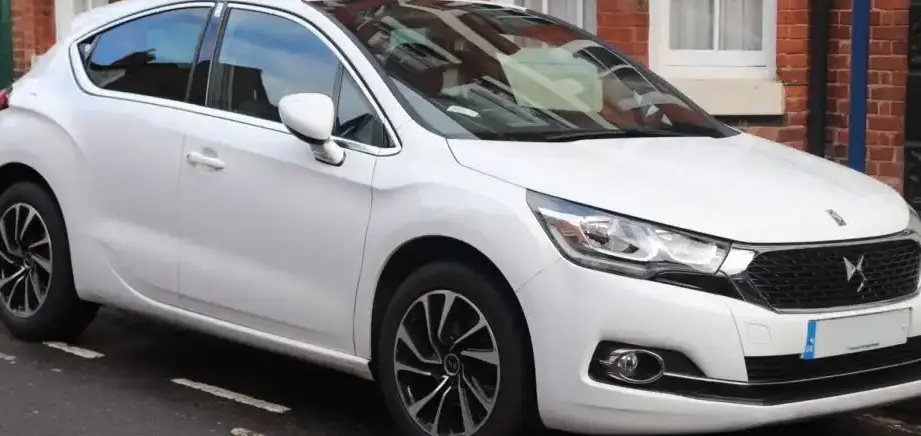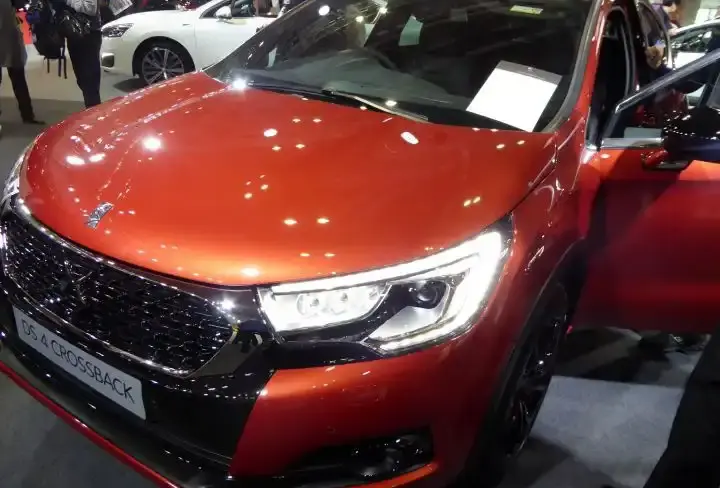
The DS 4 Crossback 1.6 BlueHDi (120 hp) Stop&Start Automatic is a compact crossover vehicle produced by the French manufacturer DS Automobiles between 2015 and 2018. Positioned as a more rugged and adventurous variant of the DS 4 hatchback, the Crossback featured increased ground clearance, distinctive styling cues, and a focus on practicality. This particular engine and transmission combination represented a mid-range offering within the DS 4 Crossback lineup, balancing fuel efficiency with acceptable performance for everyday driving. It was built on the PSA Group’s EMP2 platform, shared with other vehicles like the Peugeot 308 and Citroën C4 Cactus.
Technical Specifications
| Brand | DS |
| Model | 4 |
| Generation | 4 Crossback |
| Type (Engine) | 1.6 BlueHDi (120 Hp) Stop&Start Automatic |
| Start of production | 2015 |
| End of production | 2018 |
| Powertrain Architecture | Internal Combustion engine |
| Body type | Crossover |
| Seats | 5 |
| Doors | 5 |
| Fuel consumption (urban) | 4.4-4.8 l/100 km (53.5 – 49 US mpg, 64.2 – 58.9 UK mpg, 22.7 – 20.8 km/l) |
| Fuel consumption (extra urban) | 3.5-3.8 l/100 km (67.2 – 61.9 US mpg, 80.7 – 74.3 UK mpg, 28.6 – 26.3 km/l) |
| Fuel consumption (combined) | 3.8-4.1 l/100 km (61.9 – 57.4 US mpg, 74.3 – 68.9 UK mpg, 26.3 – 24.4 km/l) |
| CO2 emissions | 99-108 g/km |
| Fuel Type | Diesel |
| Acceleration 0 – 100 km/h | 12.5 sec |
| Acceleration 0 – 62 mph | 12.5 sec |
| Acceleration 0 – 60 mph | 11.9 sec |
| Maximum speed | 189-193 km/h (117.44 – 119.92 mph) |
| Emission standard | Euro 6 |
| Weight-to-power ratio | 10.9 kg/Hp, 91.6 Hp/tonne |
| Weight-to-torque ratio | 4.4 kg/Nm, 229 Nm/tonne |
| Power | 120 Hp @ 3500 rpm |
| Power per litre | 76.9 Hp/l |
| Torque | 300 Nm @ 1750 rpm (221.27 lb.-ft. @ 1750 rpm) |
| Engine layout | Front, Transverse |
| Engine Model/Code | BHZ DV6FC |
| Engine displacement | 1560 cm3 (95.2 cu. in.) |
| Number of cylinders | 4 |
| Engine configuration | Inline |
| Cylinder Bore | 75 mm (2.95 in.) |
| Piston Stroke | 88.3 mm (3.48 in.) |
| Number of valves per cylinder | 2 |
| Fuel injection system | Diesel Commonrail |
| Engine aspiration | Turbocharger, Intercooler |
| Engine oil capacity | 3.75 l (3.96 US qt | 3.3 UK qt) |
| Kerb Weight | 1310-1422 kg (2888.06 – 3134.97 lbs.) |
| Max. weight | 1890 kg (4166.74 lbs.) |
| Max load | 468-580 kg (1031.76 – 1278.68 lbs.) |
| Trunk (boot) space – minimum | 359 l (12.68 cu. ft.) |
| Fuel tank capacity | 60 l (15.85 US gal | 13.2 UK gal) |
| Permitted trailer load with brakes (12%) | 1450 kg (3196.7 lbs.) |
| Permitted trailer load without brakes | 640 kg (1410.96 lbs.) |
| Permitted towbar download | 75 kg (165.35 lbs.) |
| Length | 4284 mm (168.66 in.) |
| Width | 1810 mm (71.26 in.) |
| Width including mirrors | 2052 mm (80.79 in.) |
| Height | 1529-1535 mm (60.2 – 60.43 in.) |
| Wheelbase | 2612 mm (102.83 in.) |
| Front track | 1532 mm (60.31 in.) |
| Rear (Back) track | 1527 mm (60.12 in.) |
| Front overhang | 933 mm (36.73 in.) |
| Rear overhang | 739 mm (29.09 in.) |
| Minimum turning circle | 10.7 m (35.1 ft.) |
| Drivetrain Architecture | Front wheel drive |
| Number of gears and type of gearbox | 6 gears, automatic transmission |
| Front suspension | Independent type McPherson |
| Rear suspension | Semi-independent, coil spring |
| Front brakes | Ventilated discs |
| Rear brakes | Disc |
| Assisting systems | ABS (Anti-lock braking system) |
| Steering type | Steering rack and pinion |
| Power steering | Electric Steering |
| Tires size | 215/60 R16; 215/55 R17; 225/45 R18 |
| Wheel rims size | 16; 17; 18 |
INTRODUCTION
The DS 4 Crossback 1.6 BlueHDi 120 Stop&Start Automatic, launched in 2015, was a key model in DS Automobiles’ initial lineup, representing a move towards establishing a distinct brand identity separate from Citroën. The “Crossback” designation signified a crossover body style, offering a slightly more robust and adventurous aesthetic compared to the standard DS 4 hatchback. This variant aimed to appeal to buyers seeking a stylish, comfortable, and fuel-efficient vehicle with a touch of practicality. It utilized the PSA Group’s EMP2 modular platform, which allowed for a flexible and efficient manufacturing process. Production continued until 2018, with the model eventually being superseded by the second-generation DS 7 Crossback.
Powertrain & Engine Architecture
At the heart of the DS 4 Crossback 1.6 BlueHDi 120 Automatic lies the PSA Group’s DV6FC engine, specifically the BHZ variant. This is a 1.6-liter, four-cylinder diesel engine employing common-rail direct injection and a turbocharger with an intercooler. The engine produces 120 horsepower at 3500 rpm and 300 Nm (221 lb-ft) of torque at 1750 rpm. The engine features a 16-valve configuration (2 valves per cylinder) and a relatively high compression ratio typical of diesel engines. The Stop&Start system automatically shuts off the engine when the vehicle is stationary, improving fuel economy and reducing emissions. Paired with this engine is a six-speed automatic transmission, offering smooth and convenient gear changes. This transmission is a conventional torque-converter automatic, prioritizing comfort over outright performance.
Driving Characteristics
The DS 4 Crossback 1.6 BlueHDi 120 Automatic delivers a comfortable and refined driving experience, prioritizing ease of use over sporty handling. The 120 hp output, while adequate for everyday driving, doesn’t provide particularly brisk acceleration – 0-60 mph takes around 11.9 seconds. The automatic transmission contributes to a relaxed driving style, but can sometimes feel hesitant during quick overtaking maneuvers. The gear ratios are tuned for fuel efficiency, meaning the engine often operates at lower revolutions. Compared to the more powerful DS 4 variants (like those with higher-output diesel engines or the petrol options), this version feels noticeably less responsive. However, the abundance of low-end torque from the diesel engine makes it well-suited for navigating urban environments and cruising on the highway.
Equipment & Trim Levels
The DS 4 Crossback 1.6 BlueHDi 120 Automatic typically came equipped with a reasonable level of standard features. These included air conditioning, a touchscreen infotainment system with Bluetooth connectivity, alloy wheels, and a leather-wrapped steering wheel. Higher trim levels offered additional features such as leather upholstery, a panoramic sunroof, parking sensors, and a more advanced infotainment system with navigation. Interior upholstery was generally cloth on base models, with leather options available on higher trims. The dashboard layout was typically finished with metallic accents, aiming for a premium feel. Optional extras included a premium sound system and various driver-assistance technologies.
Chassis & Braking
The DS 4 Crossback utilizes a McPherson strut front suspension and a semi-independent coil spring rear suspension. This setup provides a good balance between ride comfort and handling. The increased ground clearance of the Crossback compared to the standard DS 4 contributes to a more comfortable ride on uneven surfaces. Braking duties are handled by ventilated discs at the front and solid discs at the rear. Anti-lock Braking System (ABS) is standard, providing enhanced braking performance and stability. The steering is electrically assisted, offering light and precise control. Stabilizer bars are fitted to both the front and rear axles to reduce body roll during cornering.
Market Reception & Comparison
The DS 4 Crossback 1.6 BlueHDi 120 Automatic was generally well-received by critics for its stylish design, comfortable ride, and excellent fuel economy. However, some reviewers noted the engine’s lack of outright power and the sometimes-sluggish response of the automatic transmission. Compared to other trims in the DS 4 Crossback lineup, this variant offered a more affordable entry point, appealing to buyers prioritizing fuel efficiency and practicality over performance. Against competitors like the Audi Q3 and BMW X1, the DS 4 Crossback offered a more distinctive design and a competitive price point, but often lacked the same level of brand prestige and driving dynamics.
Legacy
The DS 4 Crossback 1.6 BlueHDi 120 Automatic has proven to be a relatively reliable vehicle in the used car market. The PSA Group’s diesel engines are generally known for their durability, and the six-speed automatic transmission is also considered robust. However, as with any diesel vehicle, it’s important to ensure regular maintenance, including oil changes and filter replacements. The Stop&Start system can sometimes experience issues with the dual-mass flywheel, so it’s worth checking for any unusual noises or vibrations. Today, these vehicles represent a good value proposition for buyers seeking a stylish and fuel-efficient crossover at an affordable price. The model helped establish DS Automobiles as a distinct brand and paved the way for the more successful DS 7 Crossback.