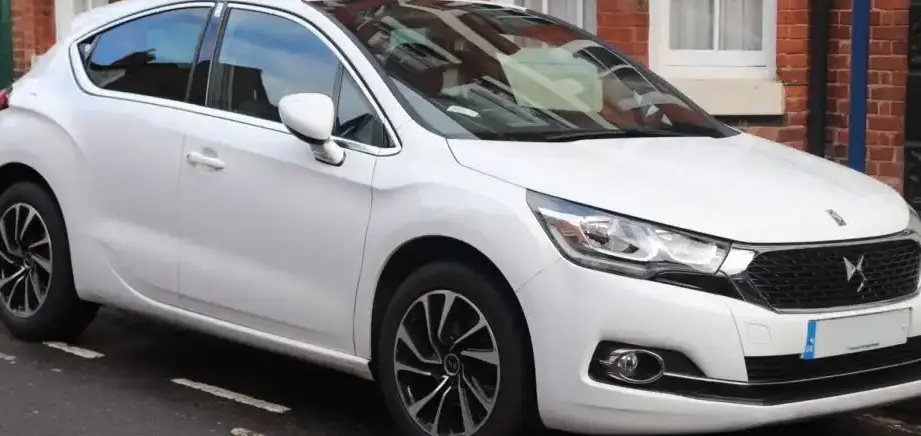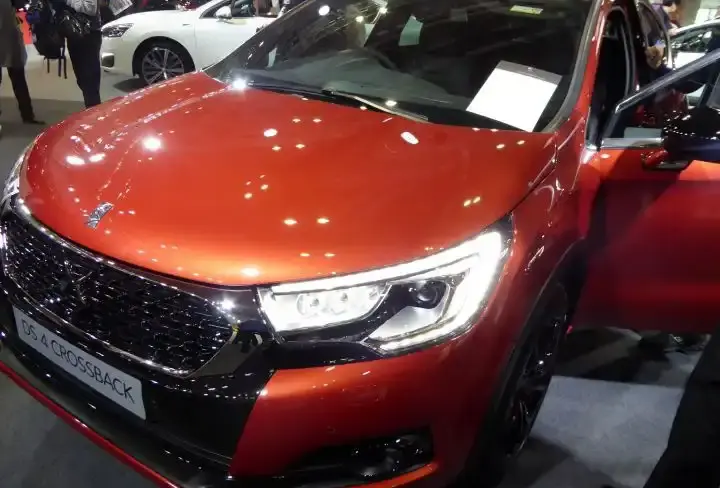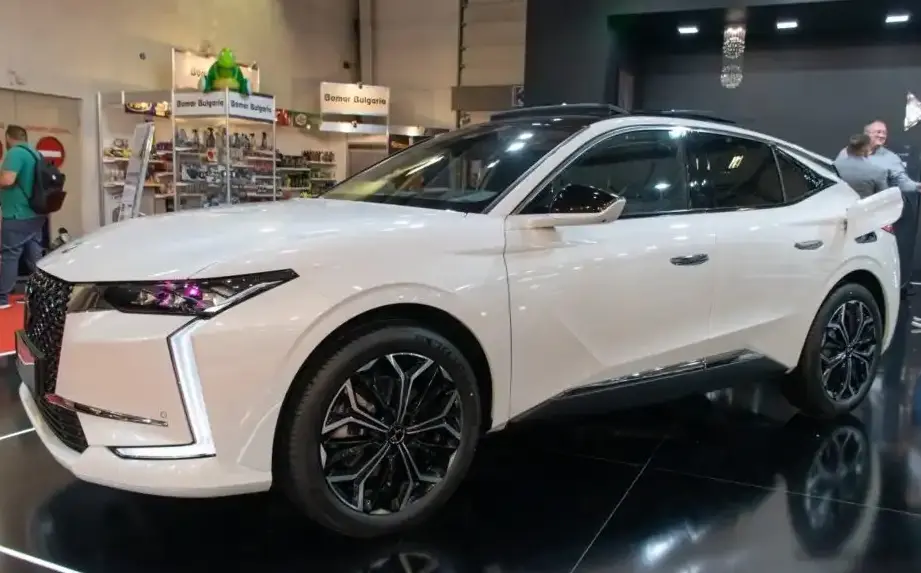
The DS 4 II 1.2 PureTech 130 Automatic is a front-wheel-drive crossover produced by the French manufacturer DS Automobiles between May 2021 and December 2024. Positioned as a mid-range offering within the DS 4 II lineup, it aimed to provide a balance between fuel efficiency, reasonable performance, and comfort. This variant utilizes a turbocharged three-cylinder gasoline engine paired with an eight-speed automatic transmission, targeting buyers seeking a refined and practical compact crossover. It builds upon the PSA EMP2 platform, also known as the 1HX0/A3 platform, shared with other Stellantis vehicles like the Peugeot 308 and Opel Astra.
Technical Specifications
| Brand | DS |
| Model | 4 |
| Generation | 4 II |
| Type (Engine) | 1.2 PureTech (130 Hp) Automatic |
| Start of production | May, 2021 |
| End of production | December, 2024 |
| Powertrain Architecture | Internal Combustion engine |
| Body type | Crossover |
| Seats | 5 |
| Doors | 5 |
| Fuel consumption at Low speed (WLTP) | 7.7-7.8 l/100 km (30.5 – 30.2 US mpg, 36.7 – 36.2 UK mpg, 13 – 12.8 km/l) |
| Fuel consumption at Medium speed (WLTP) | 5.8-6.1 l/100 km (40.6 – 38.6 US mpg, 48.7 – 46.3 UK mpg, 17.2 – 16.4 km/l) |
| Fuel consumption at high speed (WLTP) | 5.1-5.2 l/100 km (46.1 – 45.2 US mpg, 55.4 – 54.3 UK mpg, 19.6 – 19.2 km/l) |
| Fuel consumption at very high speed (WLTP) | 6.1-6.3 l/100 km (38.6 – 37.3 US mpg, 46.3 – 44.8 UK mpg, 16.4 – 15.9 km/l) |
| Combined fuel consumption (WLTP) | 5.9-6.1 l/100 km (39.9 – 38.6 US mpg, 47.9 – 46.3 UK mpg, 16.9 – 16.4 km/l) |
| CO2 emissions (WLTP) | 135-139 g/km |
| Fuel consumption (economy) – urban (NEDC, WLTP equivalent) | 6 l/100 km (39.2 US mpg, 47.1 UK mpg, 16.7 km/l) |
| Fuel consumption (economy) – extra urban (NEDC, WLTP equivalent) | 4.5 l/100 km (52.3 US mpg, 62.8 UK mpg, 22.2 km/l) |
| Fuel consumption (economy) – combined (NEDC, WLTP equivalent) | 5.1 l/100 km (46.1 US mpg, 55.4 UK mpg, 19.6 km/l) |
| CO2 emissions (NEDC, WLTP equivalent) | 116 g/km |
| Fuel Type | Petrol (Gasoline) |
| Maximum speed | 210 km/h (130.49 mph) |
| Emission standard | Euro 6.3 |
| Weight-to-power ratio | 10.4 kg/Hp, 96.2 Hp/tonne |
| Weight-to-torque ratio | 5.9 kg/Nm, 170.1 Nm/tonne |
| Power | 130 Hp @ 5500 rpm |
| Power per litre | 108.4 Hp/l |
| Torque | 230 Nm @ 1750 rpm (169.64 lb.-ft. @ 1750 rpm) |
| Engine layout | Front, Transverse |
| Engine Model/Code | HNS EB2ADTS |
| Engine displacement | 1199 cm3 (73.17 cu. in.) |
| Number of cylinders | 3 |
| Engine configuration | Inline |
| Number of valves per cylinder | 4 |
| Fuel injection system | Multi-port manifold injection |
| Engine aspiration | Turbocharger, Intercooler |
| Engine oil capacity | 3.5 l (3.7 US qt | 3.08 UK qt) |
| Kerb Weight | 1352-1353 kg (2980.65 – 2982.85 lbs.) |
| Max. weight | 1940 kg (4276.97 lbs.) |
| Max load | 587-588 kg (1294.11 – 1296.32 lbs.) |
| Trunk (boot) space – minimum | 430 l (15.19 cu. ft.) |
| Fuel tank capacity | 52 l (13.74 US gal | 11.44 UK gal) |
| Permitted trailer load with brakes (12%) | 1400 kg (3086.47 lbs.) |
| Length | 4400 mm (173.23 in.) |
| Width | 1866 mm (73.46 in.) |
| Width including mirrors | 2061 mm (81.14 in.) |
| Height | 1490 mm (58.66 in.) |
| Wheelbase | 2675 mm (105.31 in.) |
| Front track | 1600 mm (62.99 in.) |
| Rear (Back) track | 1605 mm (63.19 in.) |
| Front overhang | 925 mm (36.42 in.) |
| Rear overhang | 800 mm (31.5 in.) |
| Ride height (ground clearance) | 189 mm (7.44 in.) |
| Minimum turning circle (turning diameter) | 10.82 m (35.5 ft.) |
| Drivetrain Architecture | The Internal combustion engine (ICE) drives the front wheels of the vehicle. |
| Drive wheel | Front wheel drive |
| Number of gears and type of gearbox | 8 gears, automatic transmission |
| Front suspension | Independent, type McPherson with coil spring and anti-roll bar |
| Rear suspension | Semi-independent, coil spring |
| Front brakes | Ventilated discs, 304×28 mm |
| Rear brakes | Disc, 268×12 mm |
| Assisting systems | ABS (Anti-lock braking system) |
| Steering type | Steering rack and pinion |
| Power steering | Electric Steering |
| Tires size | 215/65 R17 99V; 205/55 R19 97V; 245/40 R20 99V |
| Wheel rims size | 17; 19; 20 |
Powertrain & Engine Architecture
The DS 4 II 1.2 PureTech 130 Automatic is powered by the PSA HNS engine, a 1.2-liter turbocharged three-cylinder gasoline engine (code EB2ADTS). This engine is part of the PureTech family, known for its efficiency and responsiveness. It features direct fuel injection, a twin-scroll turbocharger, and variable valve timing on both intake and exhaust sides. The engine produces 130 horsepower at 5500 rpm and 230 Nm (169.64 lb-ft) of torque at 1750 rpm. The engine utilizes a multi-port fuel injection system. The eight-speed automatic transmission, sourced from Aisin, is a conventional torque-converter automatic, chosen for its smoothness and refinement. It features a wide gear ratio spread to optimize both fuel economy and acceleration.
Driving Characteristics
The 1.2 PureTech 130 Automatic offers a comfortable and refined driving experience. While not particularly sporty, the engine provides adequate power for everyday driving situations. Acceleration is linear, with the turbocharger providing a noticeable boost in mid-range torque. The eight-speed automatic transmission shifts smoothly and efficiently, contributing to a relaxed driving experience. Compared to the more powerful engine options in the DS 4 II range, this variant feels less eager to accelerate, especially when fully loaded. The gear ratios are tuned for fuel economy, meaning the engine can sometimes feel strained when climbing hills or overtaking at higher speeds. Manual gear selection is available, but the transmission isn’t particularly responsive to paddle shifts.
Equipment & Trim Levels
The DS 4 II 1.2 PureTech 130 Automatic typically came equipped with a generous level of standard features. These included a touchscreen infotainment system with Apple CarPlay and Android Auto compatibility, automatic climate control, rear parking sensors, and a suite of safety features such as lane departure warning and automatic emergency braking. Higher trim levels added features like leather upholstery, a panoramic sunroof, adaptive cruise control, and a premium sound system. Interior upholstery generally consisted of cloth or a combination of cloth and leatherette, depending on the trim level. The dashboard featured a modern design with a focus on digital displays and premium materials.
Chassis & Braking
The DS 4 II utilizes a McPherson strut front suspension and a semi-independent torsion beam rear suspension. This setup provides a good balance between ride comfort and handling. The front brakes are ventilated discs, while the rear brakes are solid discs. ABS (Anti-lock Braking System) is standard, along with Electronic Stability Control (ESC). The steering is electric power-assisted, providing a light and precise feel. The suspension is tuned for comfort, resulting in a relatively soft ride quality. Stabilizer bars are fitted to both the front and rear axles to reduce body roll during cornering.
Market Reception & Comparison
The DS 4 II 1.2 PureTech 130 Automatic was generally well-received by critics for its comfortable ride, refined interior, and fuel efficiency. However, some reviewers noted that the engine could feel underpowered in certain situations. Compared to the more powerful 1.5 BlueHDi diesel and 1.6 PureTech gasoline variants, this model offered lower running costs but less outright performance. Fuel economy figures were competitive within its class, and the automatic transmission was praised for its smoothness. Reliability reports have been mixed, with some owners reporting issues with the engine’s timing chain and turbocharger.
Legacy
The DS 4 II 1.2 PureTech 130 Automatic represents a significant step forward in terms of refinement and technology for the DS Automobiles brand. While the 1.2 PureTech engine has faced some reliability concerns, it remains a popular choice in the used car market due to its fuel efficiency and affordability. The combination of the turbocharged engine and eight-speed automatic transmission provides a comfortable and practical driving experience, making it a suitable option for buyers seeking a stylish and efficient compact crossover. Its long-term value will depend on how well it has been maintained and whether any potential engine issues have been addressed.