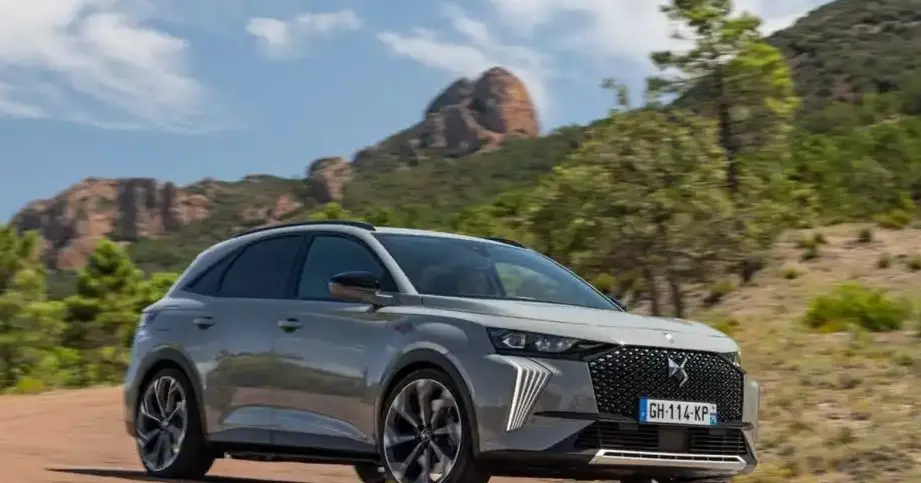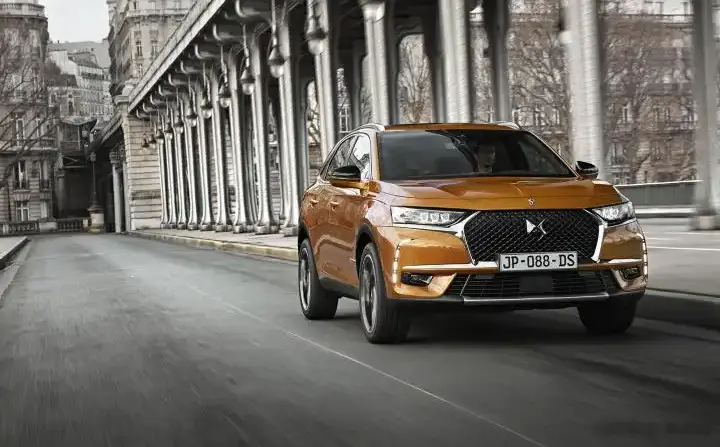
The DS 7 Crossback 1.2 PureTech (130 hp) was a front-wheel-drive compact SUV produced by the French manufacturer DS Automobiles between November 2018 and January 2020. Positioned as an entry-level offering within the DS 7 Crossback range, it aimed to provide a more accessible price point while still delivering the brand’s emphasis on style and comfort. This variant was a key component in establishing the DS 7 Crossback within the competitive European SUV market, offering a balance between fuel efficiency and acceptable performance for everyday driving. It was built on the EMP2 platform, shared with other PSA Group vehicles like the Peugeot 3008 and Opel/Vauxhall Grandland X.
Technical Specifications
| Brand | DS |
| Model | 7 |
| Generation | 7 Crossback |
| Type (Engine) | 1.2 PureTech (130 Hp) |
| Start of production | November, 2018 |
| End of production | January, 2020 |
| Powertrain Architecture | Internal Combustion engine |
| Body type | SUV |
| Seats | 5 |
| Doors | 5 |
| Fuel consumption (economy) – urban | 6.4-6.5 l/100 km (36.8 – 36.2 US mpg, 44.1 – 43.5 UK mpg, 15.6 – 15.4 km/l) |
| Fuel consumption (economy) – extra urban | 4.7-4.8 l/100 km (50 – 49 US mpg, 60.1 – 58.9 UK mpg, 21.3 – 20.8 km/l) |
| Fuel consumption (economy) – combined | 5.3-5.4 l/100 km (44.4 – 43.6 US mpg, 53.3 – 52.3 UK mpg, 18.9 – 18.5 km/l) |
| CO2 emissions | 121-124 g/km |
| Fuel Type | Petrol (Gasoline) |
| Acceleration 0 – 100 km/h | 11.2 sec |
| Acceleration 0 – 62 mph | 11.2 sec |
| Acceleration 0 – 60 mph | 10.6 sec |
| Maximum speed | 195 km/h (121.17 mph) |
| Emission standard | Euro 6d – TEMP |
| Weight-to-power ratio | 10.9 kg/Hp, 91.7 Hp/tonne |
| Weight-to-torque ratio | 6.2 kg/Nm, 162.2 Nm/tonne |
| Power | 130 Hp @ 5500 rpm |
| Power per litre | 108.4 Hp/l |
| Torque | 230 Nm @ 1750 rpm (169.64 lb.-ft. @ 1750 rpm) |
| Engine layout | Front, Transverse |
| Engine Model/Code | HNS EB2ADTS |
| Engine displacement | 1199 cm3 (73.17 cu. in.) |
| Number of cylinders | 3 |
| Engine configuration | Inline |
| Cylinder Bore | 75 mm (2.95 in.) |
| Piston Stroke | 90.5 mm (3.56 in.) |
| Number of valves per cylinder | 4 |
| Fuel injection system | Direct injection |
| Engine aspiration | Turbocharger, Intercooler |
| Engine oil capacity | 3.5 l (3.7 US qt | 3.08 UK qt) |
| Kerb Weight | 1418-1582 kg (3126.15 – 3487.71 lbs.) |
| Max. weight | 1985 kg (4376.18 lbs.) |
| Max load | 403-567 kg (888.46 – 1250.02 lbs.) |
| Trunk (boot) space – minimum | 555 l (19.6 cu. ft.) |
| Fuel tank capacity | 62 l (16.38 US gal | 13.64 UK gal) |
| Max. roof load | 80 kg (176.37 lbs.) |
| Permitted trailer load with brakes (12%) | 1315 kg (2899.08 lbs.) |
| Permitted trailer load without brakes | 695 kg (1532.21 lbs.) |
| Permitted towbar download | 59 kg (130.07 lbs.) |
| Length | 4573 mm (180.04 in.) |
| Width | 1906 mm (75.04 in.) |
| Width including mirrors | 2098 mm (82.6 in.) |
| Height | 1625 mm (63.98 in.) |
| Wheelbase | 2738 mm (107.8 in.) |
| Front track | 1621 mm (63.82 in.) |
| Rear (Back) track | 1598 mm (62.91 in.) |
| Front overhang | 925 mm (36.42 in.) |
| Rear overhang | 910 mm (35.83 in.) |
| Drivetrain Architecture | The Internal combustion engine (ICE) drives the front wheels of the vehicle. |
| Drive wheel | Front wheel drive |
| Number of gears and type of gearbox | 6 gears, manual transmission |
| Front brakes | Ventilated discs |
| Rear brakes | Disc |
| Assisting systems | ABS (Anti-lock braking system) |
| Steering type | Steering rack and pinion |
| Power steering | Electric Steering |
| Tires size | 215/65 R17; 235/55 R18; 235/50 R19 |
| Wheel rims size | 17; 18; 19 |
Powertrain & Engine Architecture
The DS 7 Crossback 1.2 PureTech (130 hp) is powered by the PSA Group’s EB2ADTS engine, a 1.2-liter turbocharged three-cylinder petrol engine. This engine, part of the “PureTech” family, utilizes direct fuel injection and a single-scroll turbocharger with an intercooler to enhance efficiency and power output. The engine code ‘HNS’ specifically denotes this output level. The engine’s aluminum block and cylinder head contribute to weight reduction. The 1.2L engine features a timing chain, intended to reduce maintenance compared to timing belts. The 130 hp version employs a more aggressive engine map and slightly larger turbocharger compared to lower-powered variants. The engine is transversely mounted at the front of the vehicle. The transmission is a six-speed manual gearbox, chosen to maximize fuel economy and provide a more engaging driving experience, although an eight-speed automatic was also available as an option.
Driving Characteristics
The 1.2 PureTech engine, while adequate for daily commuting and general driving, delivers a noticeable difference in performance compared to the more powerful engine options available in the DS 7 Crossback range, such as the 1.6 BlueHDi diesel or the 1.5 BlueHDi. Acceleration from 0-60 mph takes around 10.6 seconds, and the car feels less responsive when overtaking or climbing hills. The six-speed manual transmission is well-matched to the engine’s characteristics, offering a reasonable spread of gear ratios. However, drivers may find themselves frequently shifting gears to maintain momentum, particularly in hilly terrain. The front-wheel-drive configuration provides predictable handling, but lacks the all-weather capability of the optional four-wheel-drive system. The steering is light and precise, making it easy to maneuver in urban environments.
Equipment & Trim Levels
The 1.2 PureTech 130 hp variant typically came equipped with a respectable level of standard equipment. This included features such as air conditioning, a touchscreen infotainment system with Apple CarPlay and Android Auto compatibility, Bluetooth connectivity, cruise control, and a suite of safety features including automatic emergency braking and lane departure warning. Higher trim levels, such as ‘Performance Line’ or ‘Prestige’, added features like leather upholstery, a panoramic sunroof, a premium sound system, and advanced driver-assistance systems like adaptive cruise control and blind-spot monitoring. Interior upholstery was typically cloth on base models, with leather options available on higher trims. Dashboard configuration was consistent across the range, featuring a modern and minimalist design.
Chassis & Braking
The DS 7 Crossback utilizes a MacPherson strut front suspension and a multi-link rear suspension, providing a comfortable and controlled ride. The suspension is tuned to prioritize comfort over outright sportiness. The front brakes are ventilated discs, while the rear brakes are solid discs. ABS (Anti-lock Braking System) is standard, along with Electronic Stability Control (ESC). The 1.2 PureTech models generally featured a smaller stabilizer bar compared to higher-powered variants, reflecting the lower weight and power output. The steering system is an electric power-assisted rack and pinion system, providing light and precise steering feel.
Market Reception & Comparison
The DS 7 Crossback 1.2 PureTech (130 hp) was generally well-received by critics as an affordable entry point into the DS 7 Crossback range. However, the engine was often criticized for feeling underpowered, particularly when fully loaded or driving on challenging terrain. Fuel economy was a strong point, with combined figures averaging around 44-45 mpg. Compared to the diesel variants, the 1.2 PureTech offered lower running costs in terms of fuel, but potentially higher maintenance costs due to the complexity of the turbocharged engine. Against competitors like the Peugeot 3008 and Nissan Qashqai, the DS 7 Crossback 1.2 PureTech offered a more premium interior and distinctive styling, but at a slightly higher price point.
Legacy
The 1.2 PureTech engine has proven to be generally reliable, although some owners have reported issues with the timing chain and turbocharger. Regular maintenance, including oil changes and adherence to the manufacturer’s service schedule, is crucial for ensuring long-term reliability. On the used car market, the DS 7 Crossback 1.2 PureTech (130 hp) represents a relatively affordable option for those seeking a stylish and comfortable SUV. Its lower price point and decent fuel economy make it an attractive choice for budget-conscious buyers, but potential buyers should be aware of the engine’s limitations and potential maintenance issues.