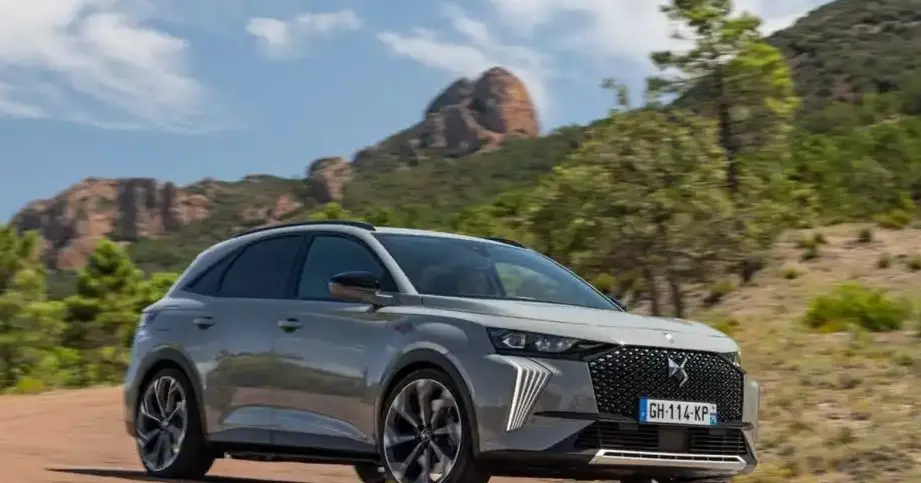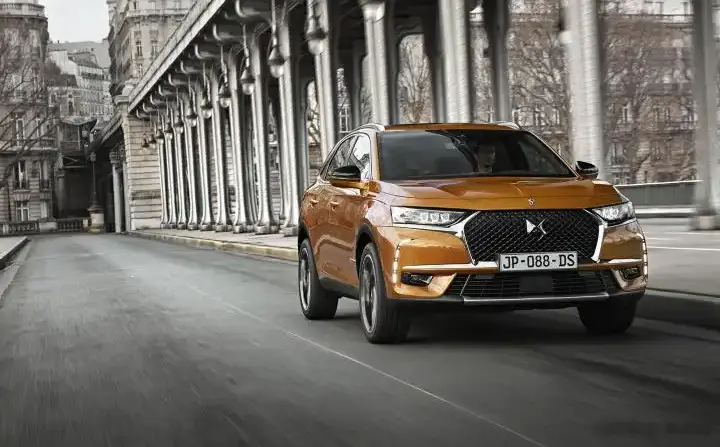
The DS 7 Crossback 1.6 PureTech (300 Hp) Plug-in Hybrid E-TENSE 4WD Automatic represents a significant step in DS Automobiles’ ambition to establish itself as a premium automotive brand. Introduced in October 2018 and produced through March 2019, this variant combined a turbocharged gasoline engine with an electric motor system, offering a blend of performance and efficiency within the compact luxury SUV segment. It was positioned as a high-end offering within the DS 7 Crossback range, showcasing the brand’s technological capabilities and commitment to electrification. The vehicle is built on the EMP2 platform, shared with other PSA Group (now Stellantis) vehicles like the Peugeot 3008 and Opel/Vauxhall Grandland X.
Technical Specifications
| Fuel consumption (combined) | 2.2 l/100 km (106.9 US mpg, 128.4 UK mpg, 45.5 km/l) |
| CO2 emissions | 128 g/km |
| Fuel Type | Petrol / electricity |
| Acceleration 0 – 100 km/h | 6.5 sec |
| Acceleration 0 – 62 mph | 6.5 sec |
| Acceleration 0 – 60 mph | 6.2 sec |
| Maximum speed | 220 km/h (136.7 mph) |
| Emission standard | Euro 6 |
| Weight-to-power ratio | 6.1 kg/Hp, 164.4 Hp/tonne |
| Weight-to-torque ratio | 4.1 kg/Nm, 246.6 Nm/tonne |
| Gross battery capacity | 13.2 kWh |
| All-electric range | 50 km (31.07 mi) |
| Electric motor power | 109 Hp |
| Electric motor Torque | 337 Nm (248.56 lb.-ft.) |
| Electric motor location (1) | Between the combustion engine and the transmission |
| Electric motor power (2) | 109 Hp |
| Electric motor Torque (2) | 166 Nm (122.44 lb.-ft.) |
| Electric motor location (2) | Rear axle, Transverse |
| System power | 300 Hp |
| System torque | 450 Nm (331.9 lb.-ft.) |
| Engine Power | 200 Hp @ 5500 rpm |
| Power per litre | 125.2 Hp/l |
| Engine Torque | 300 Nm @ 3000 rpm (221.27 lb.-ft. @ 3000 rpm) |
| Engine layout | Front, Transverse |
| Engine Model/Code | 5GB EP6FADTXHP |
| Engine displacement | 1598 cm3 (97.52 cu. in.) |
| Number of cylinders | 4 |
| Engine configuration | Inline |
| Fuel injection system | Direct injection |
| Engine aspiration | Turbocharger, Intercooler |
| Engine oil capacity | 4.25 l (4.49 US qt | 3.74 UK qt) |
| Kerb Weight | 1825 kg (4023.44 lbs.) |
| Max. weight | 2400 kg (5291.09 lbs.) |
| Max load | 575 kg (1267.66 lbs.) |
| Trunk (boot) space – minimum | 555 l (19.6 cu. ft.) |
| Trunk (boot) space – maximum | 628 l (22.18 cu. ft.) |
| Max. roof load | 55 kg (121.25 lbs.) |
| Permitted trailer load with brakes (12%) | 1200 kg (2645.55 lbs.) |
| Permitted trailer load without brakes | 750 kg (1653.47 lbs.) |
| Permitted towbar download | 55 kg (121.25 lbs.) |
| Length | 4573 mm (180.04 in.) |
| Width | 1906 mm (75.04 in.) |
| Width including mirrors | 2098 mm (82.6 in.) |
| Height | 1621-1625 mm (63.82 – 63.98 in.) |
| Wheelbase | 2738 mm (107.8 in.) |
| Front overhang | 925 mm (36.42 in.) |
| Rear overhang | 910 mm (35.83 in.) |
| Drivetrain | All wheel drive (4×4). PHEV. ICE drives front, electric motors drive front and rear. |
| Number of gears | 8 |
| Gearbox type | Automatic transmission |
| Front suspension | Independent, McPherson with coil spring and anti-roll bar |
| Rear suspension | Independent multi-link spring suspension with stabilizer |
| Front brakes | Ventilated discs |
| Rear brakes | Disc |
| Tire size | 235/55 R18 |
| Wheel rims size | 18 |
INTRODUCTION
The DS 7 Crossback 1.6 PureTech (300 Hp) Plug-in Hybrid E-TENSE 4WD Automatic was a pivotal model for DS Automobiles, representing the brand’s first foray into plug-in hybrid technology. Launched as part of the first generation of the DS 7 Crossback (introduced in 2018), it aimed to compete with premium European SUVs like the Audi Q5, BMW X3, and Mercedes-Benz GLC. The “E-TENSE” designation signifies DS’s electrified powertrain strategy. This particular variant offered a compelling combination of performance, fuel efficiency, and all-wheel drive capability, targeting buyers seeking a sophisticated and technologically advanced SUV.
Powertrain & Engine Architecture
At the heart of the DS 7 Crossback E-TENSE lies the 5GB EP6FADTXHP 1.6-liter turbocharged four-cylinder gasoline engine. This engine, part of the PureTech family, produces 200 horsepower at 5500 rpm and 300 Nm (221 lb-ft) of torque at 3000 rpm. It features direct fuel injection and an intercooled turbocharger for enhanced efficiency and power delivery. The engine is paired with a 13.2 kWh battery pack and two electric motors. One 109 hp electric motor is integrated between the combustion engine and the 8-speed automatic transmission, driving the front wheels, while a second 109 hp electric motor powers the rear wheels, providing all-wheel drive capability. The combined system output is 300 horsepower and 450 Nm (332 lb-ft) of torque. The automatic transmission is an Aisin-sourced 8-speed unit, chosen for its smooth operation and efficiency. The electric motors utilize a transverse mounting configuration, optimizing space within the vehicle.
Driving Characteristics
The 1.6 PureTech 300 Hp E-TENSE offers a noticeably different driving experience compared to the standard gasoline or diesel-powered DS 7 Crossback models. The instant torque from the electric motors provides brisk acceleration, with a 0-60 mph time of around 6.2 seconds. The all-wheel drive system enhances traction and stability, particularly in adverse weather conditions. In electric mode, the vehicle offers a quiet and refined driving experience, with a range of up to 50 km (31 miles) on a full charge. The transition between electric and gasoline power is generally seamless, although some drivers may notice a slight change in engine note during the switch. The 8-speed automatic transmission provides smooth and responsive gear changes, contributing to a comfortable ride. Compared to the 180 hp diesel variant, the E-TENSE offers significantly more power and acceleration, while the fuel economy is comparable when utilizing both power sources.
Equipment & Trim Levels
The DS 7 Crossback 1.6 PureTech E-TENSE 4WD Automatic was typically offered with a high level of standard equipment, reflecting its premium positioning. Standard features included leather upholstery, a touchscreen infotainment system with Apple CarPlay and Android Auto compatibility, a panoramic sunroof, and a suite of advanced driver-assistance systems (ADAS) such as automatic emergency braking, lane departure warning, and adaptive cruise control. Optional extras included premium audio systems, massaging seats, and a head-up display. Interior trim levels varied, with options for different color schemes and material finishes. The dashboard layout was characterized by a clean and modern design, with a focus on intuitive controls and a high-quality feel.
Chassis & Braking
The DS 7 Crossback E-TENSE utilizes an independent suspension system on both the front and rear axles. The front suspension features a McPherson strut design with a coil spring and anti-roll bar, while the rear suspension employs a multi-link setup with a stabilizer bar. This configuration provides a comfortable ride and good handling characteristics. The vehicle is equipped with ventilated disc brakes on the front wheels and solid disc brakes on the rear wheels. The braking system is assisted by ABS (Anti-lock Braking System) and electronic brake-force distribution (EBD). The added weight of the battery pack and electric motors necessitated a slightly stiffer suspension setup compared to the standard DS 7 Crossback models.
Market Reception & Comparison
The DS 7 Crossback 1.6 PureTech E-TENSE 4WD Automatic was generally well-received by automotive critics. Reviewers praised its performance, fuel efficiency, and luxurious interior. However, some criticisms were directed at the relatively small electric-only range compared to some competitors and the complexity of the plug-in hybrid system. Compared to the 180 hp diesel variant, the E-TENSE offered superior acceleration and a more refined driving experience, but at a higher price point. The E-TENSE also offered a lower CO2 emissions figure, appealing to environmentally conscious buyers. Fuel economy in hybrid mode was competitive with other plug-in hybrid SUVs in its class.
Legacy
The DS 7 Crossback 1.6 PureTech E-TENSE 4WD Automatic laid the groundwork for DS Automobiles’ broader electrification strategy. While production of this specific variant was relatively short-lived, it demonstrated the brand’s commitment to developing innovative and sustainable mobility solutions. On the used car market, these models are sought after for their unique combination of performance, efficiency, and luxury. The powertrain has proven to be generally reliable, although regular maintenance is essential to ensure optimal performance. The battery pack’s longevity is a key consideration for potential buyers, and it’s recommended to have the battery’s health checked before purchasing a used model.