
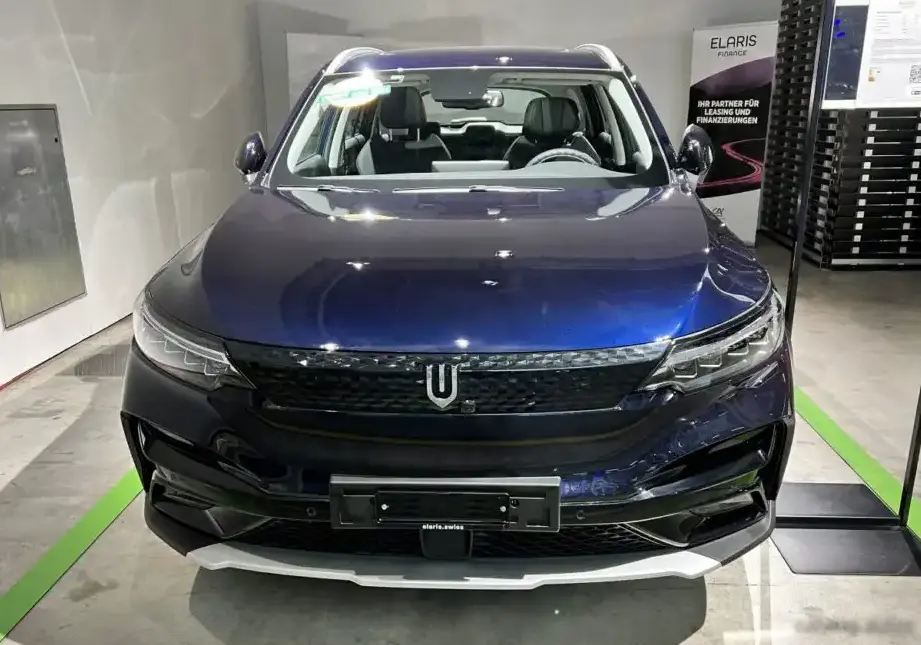
The Elaris Beo 72 kWh, launched in 2021, represents a significant entry into the burgeoning all-electric SUV market. Positioned as a mid-range offering within the initial Elaris lineup, the Beo aimed to provide a balance of range, practicality, and affordability. The vehicle is built upon a dedicated electric vehicle platform, showcasing a commitment to battery-electric technology. It quickly became a notable option for consumers seeking a fully electric crossover with a focus on everyday usability, particularly in European markets where Elaris initially focused its sales efforts. The Beo 72 kWh variant, specifically, offered a compelling combination of battery capacity and motor output, making it a popular choice among early adopters.
Technical Specifications
| Brand | Elaris |
| Model | Beo |
| Generation | Beo |
| Type (Engine) | 72 kWh (204 Hp) |
| Start of production | 2021 |
| Powertrain Architecture | BEV (Electric Vehicle) |
| Body type | SUV |
| Seats | 5 |
| Doors | 5 |
| Fuel Type | Electricity |
| Maximum speed | 150 km/h (93.21 mph) |
| Weight-to-power ratio | 9.6 kg/Hp, 104.3 Hp/tonne |
| Weight-to-torque ratio | 6.1 kg/Nm, 163.7 Nm/tonne |
| Gross battery capacity | 72 kWh |
| Battery technology | Lithium-ion (Li-Ion) |
| All-electric range (WLTP) | 400-456 km (248.55 – 283.35 mi) |
| Average Energy consumption (WLTP) | 19.3 kWh/100 km (31.06 kWh/100 mi, 108 MPGe, 5.2 km/kWh, 3.2 mi/kWh) |
| Electric motor power | 204 Hp |
| Electric motor Torque | 320 Nm (236.02 lb.-ft.) |
| Electric motor location | Front axle, Transverse |
| Electric motor type | Synchronous |
| System power | 204 Hp |
| System torque | 320 Nm (236.02 lb.-ft.) |
| Kerb Weight | 1955 kg (4310.04 lbs.) |
| Trunk (boot) space – minimum | 467 l (16.49 cu. ft.) |
| Trunk (boot) space – maximum | 1141 l (40.29 cu. ft.) |
| Length | 4698 mm (184.96 in.) |
| Width | 1908 mm (75.12 in.) |
| Height | 1696 mm (66.77 in.) |
| Wheelbase | 2800 mm (110.24 in.) |
| Ride height (ground clearance) | 159 mm (6.26 in.) |
| Drivetrain Architecture | One electric motor drives the front wheels. |
| Drive wheel | Front wheel drive |
| Number of gears and type of gearbox | 1 gears, automatic transmission |
| Front brakes | Ventilated discs |
| Rear brakes | Disc |
| Assisting systems | ABS (Anti-lock braking system) |
| Steering type | Steering rack and pinion |
| Power steering | Electric Steering |
| Tires size | 235/50 R19 |
| Wheel rims size | 19 |
Powertrain & Engine Architecture
The Elaris Beo 72 kWh utilizes a front-wheel-drive, all-electric powertrain. At its heart is a 72 kWh lithium-ion battery pack, providing the energy source for the single synchronous electric motor. This motor delivers a peak output of 204 horsepower and 320 Nm (236 lb-ft) of torque. The motor is transversely mounted at the front of the vehicle, driving the front wheels. The single-speed automatic transmission is inherent to electric vehicle design, providing seamless acceleration without the need for traditional gear changes. The battery management system (BMS) plays a crucial role in optimizing battery performance, longevity, and safety, monitoring cell voltages, temperatures, and overall health. Charging is accomplished via a standard CCS connector, allowing for both AC and DC fast charging capabilities.
Driving Characteristics
The Beo 72 kWh offers a smooth and responsive driving experience typical of electric vehicles. The instant torque delivery of the electric motor provides brisk acceleration, particularly in urban environments. While not a performance-oriented SUV, the 204 hp output is sufficient for confident highway merging and overtaking. The single-speed transmission ensures a linear power delivery, without the noticeable shifts of a conventional automatic. The front-wheel-drive configuration provides adequate traction in most conditions, although it may exhibit some torque steer under hard acceleration. The vehicle’s relatively low center of gravity, due to the battery pack being mounted low in the chassis, contributes to stable handling. Compared to potential future higher-performance variants, the 72 kWh model prioritizes efficiency and range over outright speed.
Equipment & Trim Levels
The Elaris Beo 72 kWh came reasonably well-equipped as standard. Interior features typically included cloth upholstery, a touchscreen infotainment system with smartphone integration (Apple CarPlay and Android Auto), and a suite of driver-assistance systems such as ABS, electronic stability control, and lane departure warning. Optional extras could include leather upholstery, a panoramic sunroof, and upgraded audio systems. The dashboard layout is modern and minimalist, emphasizing the vehicle’s high-tech nature. The Beo aimed to provide a comfortable and practical interior, with ample space for passengers and cargo. Trim levels were relatively limited in the initial launch phase, with the focus being on offering a well-rounded package at a competitive price point.
Chassis & Braking
The Elaris Beo utilizes a MacPherson strut suspension setup at the front and a multi-link suspension at the rear, providing a balance of ride comfort and handling. Ventilated disc brakes are fitted to the front wheels, while solid discs are used at the rear. The electric power steering system offers light and precise steering feel. The vehicle’s weight, at approximately 1955 kg (4310 lbs), is relatively high due to the battery pack, but the low center of gravity helps to mitigate the effects of this weight on handling. The standard 19-inch wheels and 235/50 R19 tires provide adequate grip in most conditions.
Market Reception & Comparison
The Elaris Beo 72 kWh received generally positive reviews from automotive critics, who praised its competitive range, comfortable ride, and well-equipped interior. However, some criticisms were leveled at its relatively modest performance and the somewhat basic interior materials. Compared to other electric SUVs in its class, such as the Hyundai Kona Electric or the MG ZS EV, the Beo offered a comparable range and price point. Its fuel economy, expressed as 19.3 kWh/100 km (108 MPGe), was competitive with other EVs of similar size and weight. Reliability data is still emerging, as the Beo is a relatively new model, but early reports suggest that the powertrain is proving to be robust.
Legacy
The Elaris Beo 72 kWh represents an important step in the expansion of the electric vehicle market. While not a groundbreaking vehicle in terms of technology, it offered a practical and affordable entry point for consumers looking to switch to electric mobility. Its long-term reliability remains to be seen, but the robust nature of electric powertrains suggests that it should provide years of trouble-free service. On the used car market, the Beo 72 kWh is likely to hold its value reasonably well, as demand for electric vehicles continues to grow. The Beo helped establish Elaris as a player in the EV space, paving the way for future models and innovations.
