
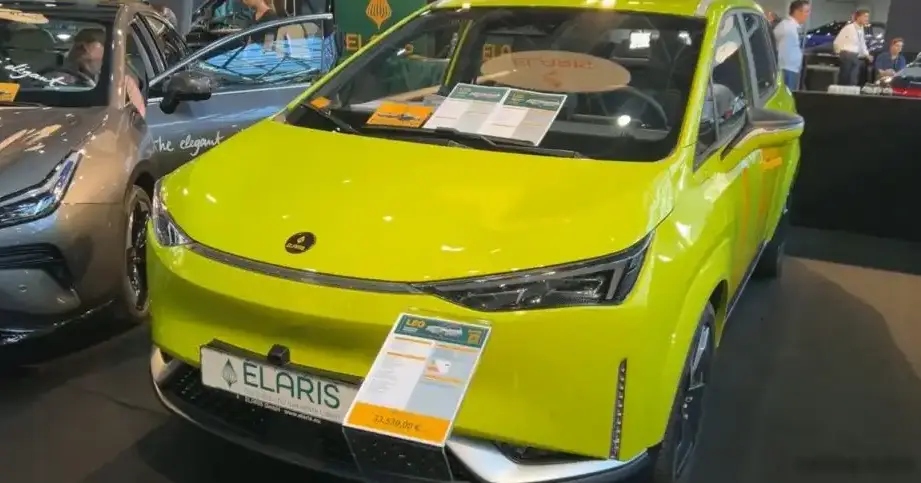
The Elaris Leo II 64.6 kWh (184 hp) is an all-electric compact crossover SUV introduced in 2023 by Elaris, a relatively new automotive manufacturer. Positioned as a mainstream electric vehicle, the Leo II aims to provide affordable electric mobility with a practical range and feature set. It represents Elaris’s initial foray into the rapidly expanding EV market, primarily targeting consumers seeking a cost-effective and environmentally friendly transportation option. The Leo II is built on a dedicated electric vehicle platform, prioritizing battery packaging and efficient energy usage. It’s designed to compete with other entry-level EVs, offering a blend of practicality, technology, and affordability.
Technical Specifications
| Brand | Elaris |
| Model | Leo |
| Generation | Leo II |
| Type (Engine) | 64.6 kWh (184 Hp) |
| Start of production | 2023 |
| Powertrain Architecture | BEV (Electric Vehicle) |
| Body type | SUV, Crossover |
| Seats | 5 |
| Doors | 5 |
| Fuel Type | Electricity |
| Maximum speed | 160 km/h (99.42 mph) |
| Weight-to-power ratio | 9.1 kg/Hp, 109.9 Hp/tonne |
| Weight-to-torque ratio | 7.4 kg/Nm, 134.3 Nm/tonne |
| Gross battery capacity | 64.6 kWh |
| Battery technology | Lithium iron phosphate (LiFePO4) |
| Battery location | Below the floor |
| All-electric range (NEDC) | 510 km (316.9 mi) |
| Average Energy consumption (NEDC) | 13.5 kWh/100 km (21.73 kWh/100 mi) |
| Average Energy consumption (MPGe) | 155 MPGe |
| Average Energy consumption (km/kWh) | 7.4 km/kWh |
| Average Energy consumption (mi/kWh) | 4.6 mi/kWh |
| Electric motor power | 184 Hp |
| Electric motor Torque | 225 Nm (165.95 lb.-ft.) |
| Electric motor location | Front axle, Transverse |
| Electric motor type | Synchronous |
| System power | 184 Hp |
| System torque | 225 Nm (165.95 lb.-ft.) |
| Kerb Weight | 1675 kg (3692.74 lbs.) |
| Max. weight | 2160 kg (4761.98 lbs.) |
| Max load | 485 kg (1069.24 lbs.) |
| Trunk (boot) space – minimum | 370 l (13.07 cu. ft.) |
| Length | 4602 mm (181.18 in.) |
| Width | 1900 mm (74.8 in.) |
| Height | 1645 mm (64.76 in.) |
| Wheelbase | 2750 mm (108.27 in.) |
| Front track | 1610 mm (63.39 in.) |
| Rear (Back) track | 1610 mm (63.39 in.) |
| Drivetrain Architecture | One electric motor drives the front wheels. |
| Drive wheel | Front wheel drive |
| Number of gears and type of gearbox | 1 gears, automatic transmission |
| Front suspension | Independent type McPherson |
| Rear suspension | Torsion |
| Front brakes | Ventilated discs |
| Rear brakes | Disc |
| Assisting systems | ABS (Anti-lock braking system) |
| Steering type | Steering rack and pinion |
| Power steering | Electric Steering |
| Tires size | 215/50 R18 |
| Wheel rims size | 18 |
Powertrain & Engine Architecture
The Elaris Leo II utilizes a single synchronous electric motor driving the front wheels. The motor produces 184 horsepower and 225 Nm (165.95 lb.-ft.) of torque. The powertrain is centered around a 64.6 kWh Lithium Iron Phosphate (LiFePO4) battery pack, positioned under the vehicle floor to optimize weight distribution and passenger space. LiFePO4 chemistry is chosen for its inherent safety, longer cycle life, and reduced reliance on conflict minerals compared to Nickel Manganese Cobalt (NMC) batteries. The single-speed automatic transmission is a direct-drive system, typical of most battery electric vehicles, providing seamless acceleration. The vehicle incorporates a standard onboard charger for AC charging, and is also compatible with DC fast charging for quicker replenishment of the battery.
Driving Characteristics
The Leo II offers brisk acceleration for its class, with the instant torque delivery characteristic of electric motors. While not a performance-oriented EV, it provides adequate power for everyday driving and highway merging. The single-speed transmission simplifies the driving experience, eliminating gear changes. The front-wheel-drive configuration provides predictable handling, although it may exhibit some torque steer under hard acceleration. The relatively low center of gravity, thanks to the underfloor battery pack, contributes to stable cornering. Regenerative braking is included, allowing drivers to recapture energy during deceleration and extend the vehicle’s range. The regenerative braking system offers multiple levels of intensity, adjustable by the driver.
Equipment & Trim Levels
The Elaris Leo II is generally offered with a fairly standard equipment level, focusing on essential features. Standard amenities typically include air conditioning, a touchscreen infotainment system with Bluetooth connectivity, power windows and locks, and basic safety features like ABS and airbags. Interior upholstery is typically cloth, with options for upgraded materials available. Higher trim levels may add features such as a larger touchscreen, a rearview camera, parking sensors, and advanced driver-assistance systems (ADAS) like lane departure warning and automatic emergency braking. Exterior options may include alloy wheels and different paint colors.
Chassis & Braking
The Leo II utilizes a McPherson strut independent suspension at the front and a torsion beam suspension at the rear. This configuration represents a common balance between cost-effectiveness and ride comfort in the compact crossover segment. The front brakes are ventilated discs, providing good stopping power, while the rear brakes are solid discs. The electric power steering system offers light and precise steering feel. The vehicle’s relatively low weight, due to the efficient battery pack and lightweight construction, contributes to its agility and braking performance.
Market Reception & Comparison
The Elaris Leo II has been generally well-received as an affordable entry point into the electric vehicle market. Critics have praised its competitive pricing, practical range, and comfortable ride. However, some reviews have noted the relatively basic interior and limited availability of advanced features compared to some competitors. Compared to other EVs in its price range, the Leo II offers a competitive range and charging time. Its LiFePO4 battery chemistry is seen as a positive attribute for longevity and safety. Compared to gasoline-powered crossovers, the Leo II offers significantly lower running costs due to the lower price of electricity versus gasoline and reduced maintenance requirements.
Legacy
As a relatively new model, the long-term reliability of the Elaris Leo II remains to be fully established. However, the use of LiFePO4 battery technology suggests a potentially long lifespan and good durability. The vehicle’s simple electric powertrain, with fewer moving parts than a traditional internal combustion engine, should contribute to lower maintenance costs. In the used car market, the Leo II is expected to hold its value reasonably well, particularly as demand for electric vehicles continues to grow. Its affordability and practicality should make it an attractive option for budget-conscious buyers seeking a reliable and environmentally friendly vehicle.
