
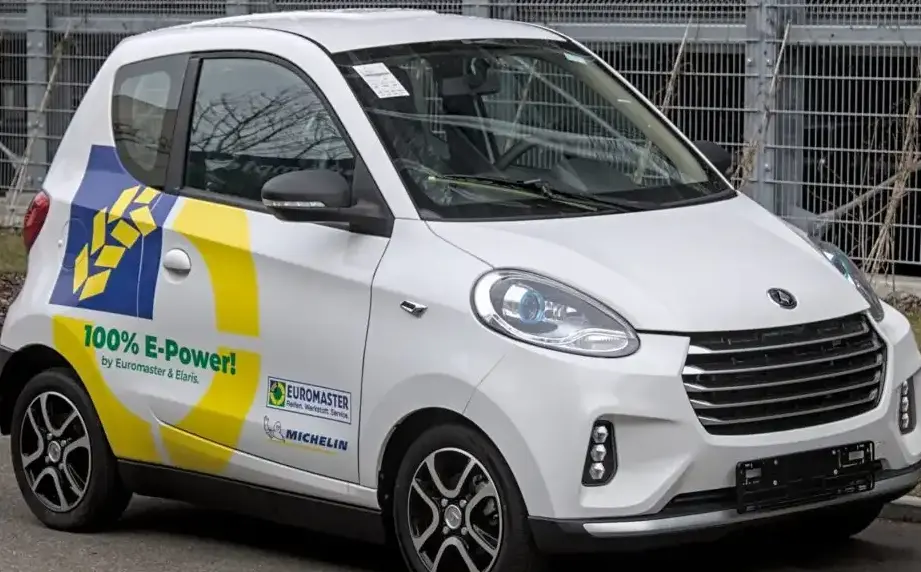
The Elaris Pio 27 kWh (49 hp) is a small, urban-focused electric vehicle produced between 2021 and 2023. Positioned as an entry-level offering within the Elaris lineup, the Pio aimed to provide affordable electric transportation, particularly in European markets. It’s a three-door hatchback designed for city commuting and short trips, prioritizing efficiency and ease of parking over outright performance. The Pio represented Elaris’s initial foray into the burgeoning micro-EV segment, offering a relatively low-cost alternative to larger, more expensive electric cars. It utilized a simple, no-frills approach to electric vehicle design, focusing on essential functionality.
Technical Specifications
| Brand | Elaris |
| Model | Pio |
| Generation | Pio |
| Type (Engine) | 27 kWh (49 Hp) |
| Start of production | 2021 |
| End of production | 2023 |
| Powertrain Architecture | BEV (Electric Vehicle) |
| Body type | Hatchback |
| Seats | 2 |
| Doors | 3 |
| Fuel Type | Electricity |
| Maximum speed | 102 km/h (63.38 mph) |
| Weight-to-power ratio | 17.7 kg/Hp, 56.6 Hp/tonne |
| Weight-to-torque ratio | 7.9 kg/Nm, 127.2 Nm/tonne |
| Gross battery capacity | 27 kWh |
| Battery technology | Lithium-ion (Li-Ion) |
| Battery location | Below the floor |
| All-electric range (WLTP) | 212-225 km (131.73 – 139.81 mi) |
| Average Energy consumption (WLTP) | 9.7-14.8 kWh/100 km (15.61 – 23.82 kWh/100 mi) |
| Average Energy consumption (MPGe) | 216 – 141 |
| Energy consumption (km/kWh) | 10.3 – 6.8 |
| Energy consumption (mi/kWh) | 6.4 – 4.2 |
| Electric motor power | 49 Hp |
| Electric motor Torque | 110 Nm (81.13 lb.-ft.) |
| Electric motor model/code | TZ175X15DYA |
| Electric motor location | Front axle, Transverse |
| Electric motor type | Synchronous |
| System power | 49 Hp |
| System torque | 110 Nm (81.13 lb.-ft.) |
| Kerb Weight | 865 kg (1907 lbs.) |
| Length | 2811 mm (110.67 in.) |
| Width | 1540 mm (60.63 in.) |
| Height | 1555 mm (61.22 in.) |
| Wheelbase | 1765 mm (69.49 in.) |
| Front track | 1325 mm (52.17 in.) |
| Rear track | 1301 mm (51.22 in.) |
| Drivetrain Architecture | One electric motor drives the front wheels. |
| Drive wheel | Front wheel drive |
| Number of gears | 1 |
| Gearbox type | Automatic transmission |
| Front suspension | Independent type McPherson |
| Rear suspension | Torsion |
| Front brakes | Disc |
| Rear brakes | Disc |
| Assisting systems | ABS (Anti-lock braking system) |
| Steering type | Steering rack and pinion |
| Power steering | Electric Steering |
| Front tires | 145/60 R13 |
| Rear tires | 165/55 R13 |
| Wheel rims size | 13 |
Powertrain & Engine Architecture
The Elaris Pio is powered by a single electric motor, designated TZ175X15DYA, producing 49 horsepower and 110 Nm (81.13 lb.-ft.) of torque. This synchronous motor is mounted transversely at the front axle, driving the front wheels. The vehicle utilizes a 27 kWh lithium-ion battery pack located under the floor, providing a WLTP-rated range of 212-225 kilometers (131.73 – 139.81 miles). The powertrain is characterized by its simplicity, lacking the complexity of multi-motor setups found in more expensive EVs. The single-speed automatic transmission is a direct-drive system, common in electric vehicles, providing seamless acceleration. The battery management system (BMS) is a crucial component, responsible for monitoring and controlling the battery’s charging and discharging processes to ensure longevity and safety.
Driving Characteristics
The 49 hp output and single-speed automatic transmission result in modest, but adequate, performance for urban driving. Acceleration is linear, but not particularly brisk. The Pio is geared towards efficiency rather than speed, with a focus on maximizing range in city conditions. The single gear ratio provides instant torque, making it easy to navigate stop-and-go traffic. Compared to potential higher-powered variants (had Elaris offered them), the 27 kWh version prioritizes affordability and lower running costs over dynamic driving experience. The relatively lightweight construction (865 kg / 1907 lbs) helps to mitigate the limited power output, providing a reasonably responsive feel at lower speeds.
Equipment & Trim Levels
The Elaris Pio 27 kWh was offered with a fairly basic level of standard equipment, reflecting its position as an entry-level EV. Interior features typically included manually adjustable seats, a basic instrument cluster, and a small infotainment system with Bluetooth connectivity. Air conditioning was often included as standard, but other features like power windows and a more advanced infotainment system were typically optional extras. The interior materials were functional and durable, prioritizing practicality over luxury. Exterior features included steel wheels with hubcaps, and basic lighting. Trim levels were limited, with most customization options revolving around color choices and the addition of optional equipment packages.
Chassis & Braking
The Pio utilizes a McPherson strut independent suspension at the front and a torsion beam suspension at the rear. This setup provides a comfortable ride quality, suitable for navigating urban roads. The braking system consists of disc brakes on all four wheels, equipped with an Anti-lock Braking System (ABS) for enhanced safety. The steering is rack and pinion with electric power assistance, providing light and precise steering feel. The tires are sized 145/60 R13 at the front and 165/55 R13 at the rear, chosen for their balance of rolling resistance and grip. The relatively narrow tires contribute to improved efficiency.
Market Reception & Comparison
The Elaris Pio received mixed reviews. Critics generally praised its affordability and efficiency, but noted its limited range and basic features. Compared to other EVs in its price range, the Pio offered a competitive range and a relatively simple, reliable powertrain. However, it lacked the refinement and features of more established electric vehicles. Fuel economy, expressed as energy consumption, ranged from 9.7-14.8 kWh/100 km, translating to approximately 216-141 MPGe. Its primary competitors included other micro-EVs and low-cost gasoline-powered city cars.
Legacy
The Elaris Pio, while short-lived in production, played a role in expanding access to electric vehicles. Its affordability made it an attractive option for budget-conscious buyers looking to transition to electric mobility. The powertrain, while not groundbreaking, proved to be relatively reliable in early reports. On the used car market, the Pio represents a very affordable entry point into EV ownership, but potential buyers should be aware of the limited range and basic features. The vehicle’s simplicity may also translate to lower maintenance costs compared to more complex electric vehicles. The Pio served as a stepping stone for Elaris, paving the way for future EV models.
