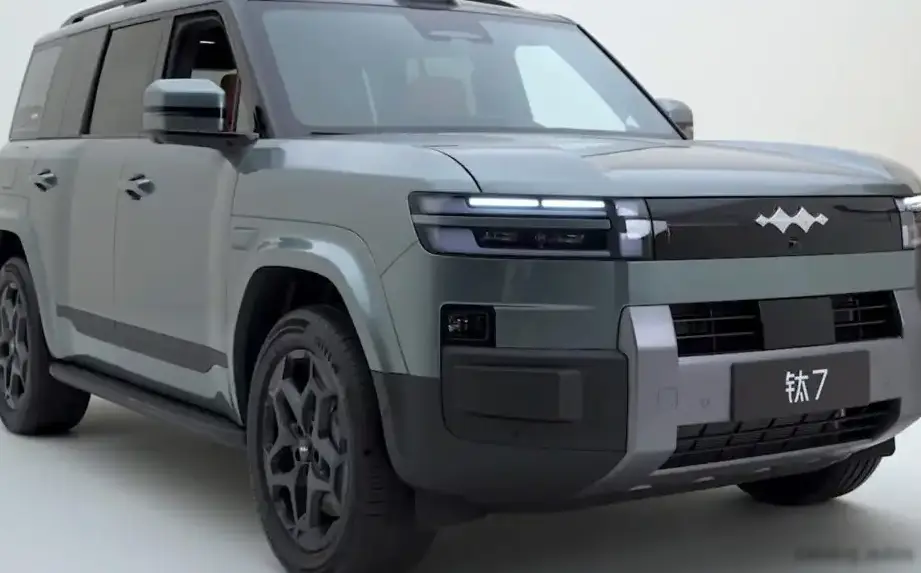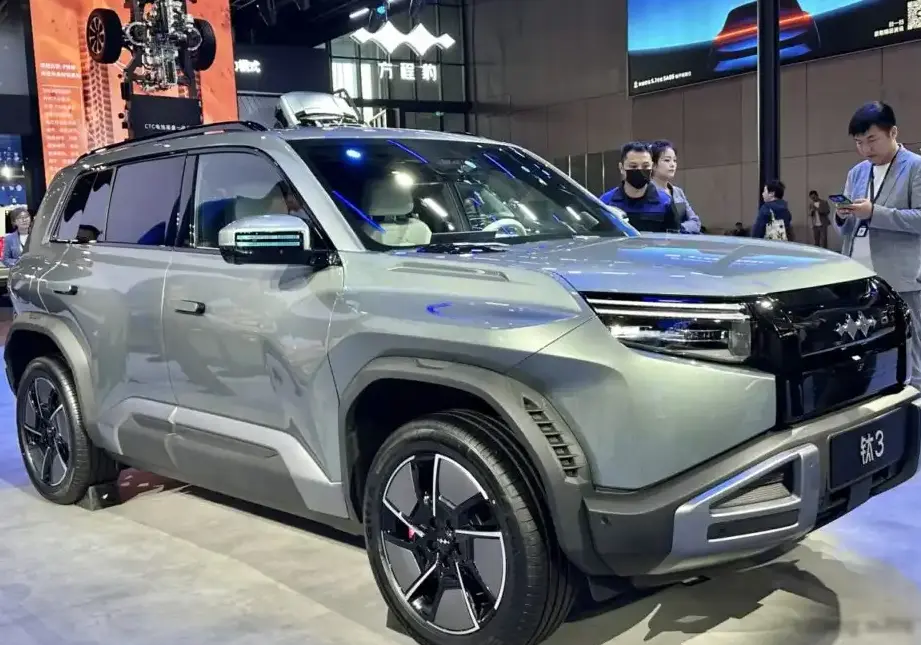
The Fangchengbao Titanium 3, specifically the 72.96 kWh (422 Hp) 4WD variant, represents a significant entry into the burgeoning electric SUV market. Introduced in April 2025, this model is positioned as a mid-to-high range offering within the Fangchengbao lineup, targeting consumers seeking a blend of performance, range, and modern technology. It’s built on a dedicated electric vehicle platform, showcasing Fangchengbao’s commitment to electrification. The Titanium 3 aims to compete with established players in the electric crossover segment, offering a compelling alternative with its dual-motor all-wheel-drive system and substantial battery capacity.
Technical Specifications
| Brand | Fangchengbao |
| Model | Titanium 3 |
| Generation | Titanium 3 |
| Type (Engine) | 72.96 kWh (422 Hp) 4WD |
| Start of production | April, 2025 |
| Powertrain Architecture | BEV (Electric Vehicle) |
| Body type | SUV, Crossover |
| Seats | 5 |
| Doors | 5 |
| Fuel Type | Electricity |
| Acceleration 0 – 100 km/h | 4.9 sec |
| Acceleration 0 – 62 mph | 4.9 sec |
| Acceleration 0 – 60 mph | 4.7 sec |
| Maximum speed | 201 km/h (124.9 mph) |
| Weight-to-power ratio | 5.1 kg/Hp, 194.5 Hp/tonne |
| Weight-to-torque ratio | 4.3 kg/Nm, 235 Nm/tonne |
| Gross battery capacity | 72.96 kWh |
| Battery voltage | 800 V |
| Battery technology | Lithium iron phosphate (LiFePO4) |
| Battery location | Below the floor |
| All-electric range (CLTC) | 501 km (311.31 mi) |
| Average Energy consumption (CLTC) | 16.5 kWh/100 km (26.55 kWh/100 mi) |
| Average Energy consumption (MPGe) | 127 MPGe |
| Average Energy consumption (km/kWh) | 6.1 km/kWh |
| Average Energy consumption (mi/kWh) | 3.8 mi/kWh |
| Electric motor 1 power | 272 Hp |
| Electric motor 1 Torque | 310 Nm (228.64 lb.-ft.) |
| Electric motor 1 model/code | TZ200XYZ |
| Electric motor 1 revolutions | 20000 rpm |
| Electric motor 1 location | Rear axle, Transverse |
| Electric motor 1 type | Synchronous |
| Electric motor 2 power | 150 Hp |
| Electric motor 2 Torque | 200 Nm (147.51 lb.-ft.) |
| Electric motor 2 model/code | YS230XYC |
| Electric motor 2 location | Front axle, Transverse |
| Electric motor 2 type | Asynchronous |
| System power | 422 Hp |
| System torque | 510 Nm (376.16 lb.-ft.) |
| Kerb Weight | 2170 kg (4784.03 lbs.) |
| Max. weight | 2545 kg (5610.76 lbs.) |
| Max load | 375 kg (826.73 lbs.) |
| Length | 4605 mm (181.3 in.) |
| Width | 1900 mm (74.8 in.) |
| Height | 1720 mm (67.72 in.) |
| Wheelbase | 2745 mm (108.07 in.) |
| Front track | 1634 mm (64.33 in.) |
| Rear (Back) track | 1650 mm (64.96 in.) |
| Approach angle | 25° |
| Departure angle | 28° |
| Drivetrain Architecture | One electric motor drives the front wheels, one electric motor drives the rear wheels. |
| Drive wheel | All wheel drive (4×4) |
| Number of gears | 1 |
| Gearbox type | automatic transmission |
| Front suspension | Independent, type McPherson with coil spring and anti-roll bar |
| Rear suspension | Independent multi-link spring suspension with stabilizer |
| Front brakes | Ventilated discs |
| Rear brakes | Ventilated discs |
| Assisting systems | ABS (Anti-lock braking system) |
| Steering type | Steering rack and pinion |
| Power steering | Electric Steering |
| Tires size | 245/50 R19 |
| Wheel rims size | 19 |
Powertrain & Engine Architecture
The Fangchengbao Titanium 3 utilizes a dual-motor, all-wheel-drive (AWD) powertrain. The front axle is driven by an asynchronous electric motor producing 150 Hp and 200 Nm (147.51 lb.-ft.) of torque, identified by the code YS230XYC. The rear axle features a more powerful synchronous motor, designated TZ200XYZ, delivering 272 Hp and 310 Nm (228.64 lb.-ft.) of torque. Combined, the system generates a total output of 422 Hp and 510 Nm (376.16 lb.-ft.). The 800V architecture allows for faster charging times compared to 400V systems. The 72.96 kWh Lithium Iron Phosphate (LiFePO4) battery pack is positioned under the floor, contributing to a lower center of gravity and improved handling. The single-speed automatic transmission is inherent to electric vehicle drivetrains, providing seamless acceleration.
Driving Characteristics
The dual-motor AWD system provides the Titanium 3 with impressive acceleration, achieving 0-60 mph in approximately 4.7 seconds. The instant torque delivery characteristic of electric motors results in brisk off-the-line performance. The combination of a synchronous motor at the rear and an asynchronous motor at the front allows for sophisticated torque vectoring, enhancing stability and cornering ability. While the single-speed transmission simplifies the driving experience, it lacks the gear ratios found in traditional internal combustion engine vehicles. This can result in a slightly less engaging driving experience for enthusiasts accustomed to shifting gears. The relatively low-mounted battery pack contributes to a stable and planted feel on the road.
Equipment & Trim Levels
Specific trim level details for the Titanium 3 are still emerging, but it is expected to come standard with a comprehensive suite of technology features. These likely include a large touchscreen infotainment system, digital instrument cluster, advanced driver-assistance systems (ADAS) such as adaptive cruise control and lane-keeping assist, and a premium sound system. Interior upholstery is anticipated to be a combination of synthetic leather and high-quality plastics. Optional extras may include a panoramic sunroof, ventilated front seats, and a more advanced ADAS package. The Titanium 3 aims to provide a comfortable and well-equipped cabin, appealing to a broad range of buyers.
Chassis & Braking
The Titanium 3 features an independent suspension system at all four corners. The front utilizes a McPherson strut setup with coil springs and an anti-roll bar, while the rear employs a multi-link suspension with a stabilizer bar. This configuration is designed to provide a balance between ride comfort and handling precision. Ventilated disc brakes are used on all four wheels, providing ample stopping power. The inclusion of ABS (Anti-lock Braking System) further enhances safety. The vehicle’s relatively high curb weight of 2170 kg (4784.03 lbs) is partially offset by the low center of gravity afforded by the underfloor battery pack.
Market Reception & Comparison
As a newly launched model, comprehensive market reception data for the Titanium 3 is still developing. However, initial impressions suggest that its combination of performance, range, and technology is well-received. Compared to other electric SUVs in its class, the Titanium 3 offers a competitive range of 501 km (311.31 mi) on the CLTC cycle. Its energy consumption of 16.5 kWh/100 km (26.55 kWh/100 mi) is also within the expected range for vehicles of this size and performance. The LiFePO4 battery technology is known for its stability and longevity, potentially offering a longer lifespan compared to other battery chemistries.
Legacy
The long-term reliability of the Titanium 3’s powertrain remains to be seen, as it is a relatively new design. However, the use of proven electric motor technologies and a robust battery management system suggests a high level of durability. The 800V architecture and LiFePO4 battery pack are expected to contribute to a longer service life and reduced degradation over time. As the electric vehicle market matures, the Titanium 3 has the potential to become a significant player, offering a compelling combination of performance, efficiency, and value. Its success will depend on Fangchengbao’s ability to maintain quality control and provide excellent customer support.