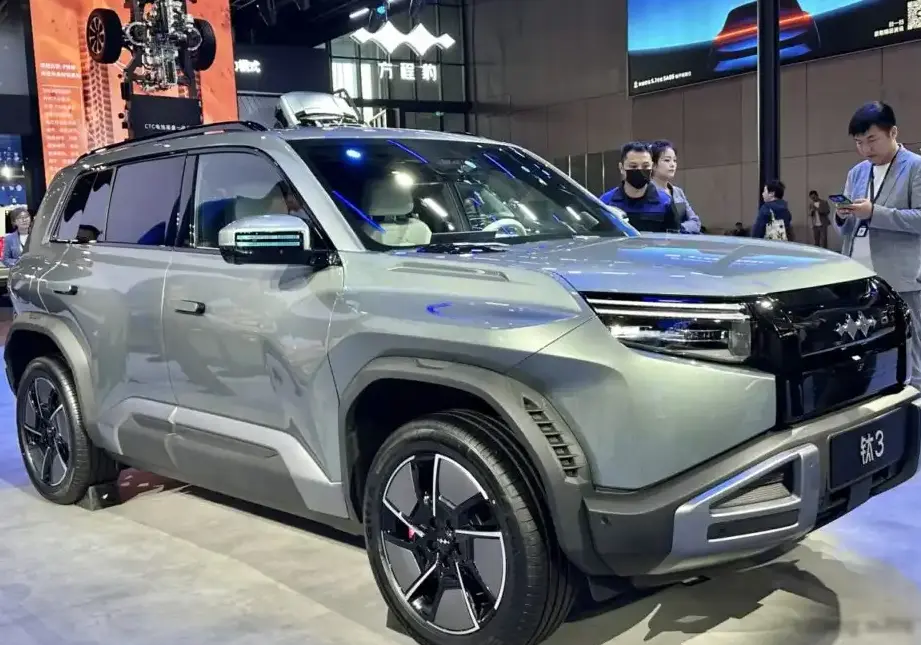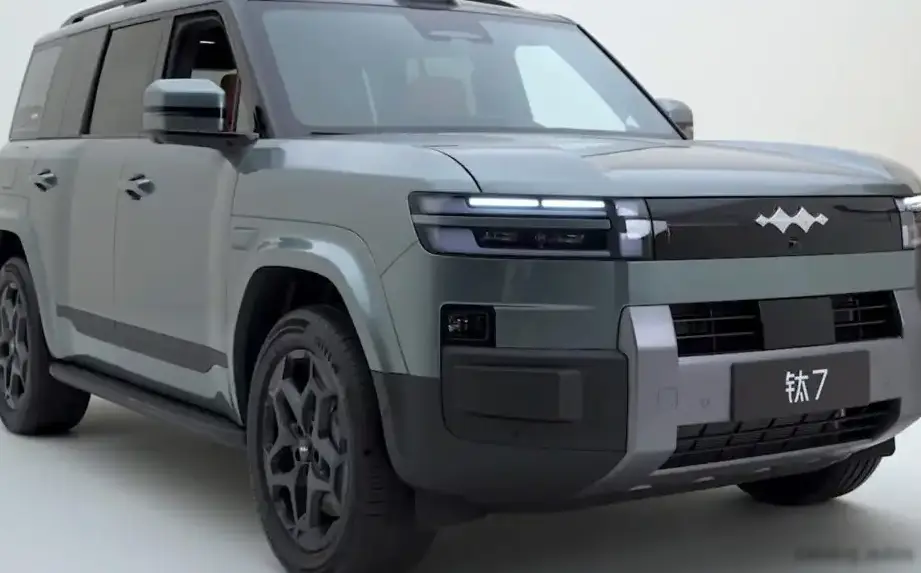
The Fangchengbao Titanium 7 1.5T 35.6 kWh (428 Hp) Plug-in Hybrid E-CVT is a five-seater, five-door SUV introduced in September 2025 by the Chinese automaker Fangchengbao. Positioned as a technologically advanced offering within the brand’s lineup, the Titanium 7 represents a foray into the competitive plug-in hybrid SUV market. It’s built on a dedicated platform designed to accommodate both internal combustion and electric powertrains, aiming to balance performance with fuel efficiency and reduced emissions. This variant, with its substantial combined horsepower, is intended to appeal to buyers seeking a premium SUV experience with the benefits of electric driving.
Technical Specifications
| Brand | Fangchengbao |
| Model | Titanium 7 |
| Generation | Titanium 7 |
| Type (Engine) | 1.5T 35.6 kWh (428 Hp) Plug-in Hybrid E-CVT |
| Start of production | September, 2025 |
| Powertrain Architecture | PHEV (Plug-in Hybrid Electric Vehicle) |
| Body type | SUV |
| Seats | 5 |
| Doors | 5 |
| Fuel consumption (economy) – combined (WLTC) | 5.95 l/100 km (39.5 US mpg, 47.5 UK mpg, 16.8 km/l) |
| Fuel Type | Petrol / electricity |
| Acceleration 0 – 100 km/h | 7.5 sec |
| Acceleration 0 – 62 mph | 7.5 sec |
| Acceleration 0 – 60 mph | 7.1 sec |
| Maximum speed | 190 km/h (118.06 mph) |
| Gross battery capacity | 35.6 kWh |
| Battery technology | Lithium iron phosphate (LiFePO4) |
| Battery location | Below the floor |
| All-electric range (CLTC) | 200 km (124.27 mi) |
| Electric motor power | 272 Hp |
| Electric motor Torque | 315 Nm (232.33 lb.-ft.) |
| Electric motor model/code | TZ210XYD |
| Electric motor location | Integrated into the transmission |
| Electric motor type | Synchronous |
| System power | 428 Hp |
| Power | 156 Hp |
| Power per litre | 104.1 Hp/l |
| Torque | 225 Nm (165.95 lb.-ft.) |
| Engine layout | Front, Transverse |
| Engine Model/Code | BYD472ZQB |
| Engine displacement | 1498 cm3 (91.41 cu. in.) |
| Number of cylinders | 4 |
| Engine configuration | Inline |
| Number of valves per cylinder | 4 |
| Fuel injection system | Direct injection |
| Engine aspiration | Turbocharger, Intercooler |
| Valvetrain | DOHC |
| Trunk (boot) space – minimum | 1000 l (35.31 cu. ft.) |
| Trunk (boot) space – maximum | 1880 l (66.39 cu. ft.) |
| Fuel tank capacity | 60 l (15.85 US gal | 13.2 UK gal) |
| Length | 4999 mm (196.81 in.) |
| Width | 1995 mm (78.54 in.) |
| Height | 1865 mm (73.43 in.) |
| Wheelbase | 2920 mm (114.96 in.) |
| Front track | 1708 mm (67.24 in.) |
| Rear (Back) track | 1713 mm (67.44 in.) |
| Minimum turning circle | 11.34 m (37.2 ft.) |
| Approach angle | 24° |
| Departure angle | 25° |
| Drivetrain Architecture | Front wheel drive. PHEV. ICE and electric motor drive the front wheels. |
| Number of gears and type of gearbox | automatic transmission E-CVT |
| Front suspension | Double wishbone |
| Rear suspension | Independent multi-link suspension |
| Front brakes | Ventilated discs |
| Rear brakes | Disc |
| Assisting systems | ABS (Anti-lock braking system) |
| Steering type | Steering rack and pinion |
| Power steering | Electric Steering |
| Tires size | 255/60 R19 |
| Wheel rims size | 19 |
Powertrain & Engine Architecture
The Fangchengbao Titanium 7 utilizes a plug-in hybrid (PHEV) powertrain, combining a 1.5-liter turbocharged four-cylinder gasoline engine (BYD472ZQB) with a 35.6 kWh lithium iron phosphate (LiFePO4) battery pack and a 272 horsepower electric motor (TZ210XYD). The gasoline engine produces 156 horsepower and 225 Nm (165.95 lb.-ft.) of torque. Direct fuel injection and a turbocharger with intercooler enhance efficiency and power output. The electric motor is integrated with the E-CVT transmission, providing seamless transitions between electric and gasoline power. The total system output is a substantial 428 horsepower. The battery pack is positioned under the floor, contributing to a lower center of gravity and maximizing interior space. The E-CVT (Electronically controlled Continuously Variable Transmission) is designed for smooth acceleration and optimal fuel efficiency, adapting gear ratios continuously to match driving conditions.
Driving Characteristics
The Titanium 7’s driving experience is heavily influenced by its PHEV configuration. In electric-only mode, the vehicle offers quiet and emissions-free operation with a CLTC-rated range of 200 km (124.27 miles). Switching to hybrid mode, or when the battery is depleted, the 1.5-liter turbo engine seamlessly engages. The combined output of 428 horsepower delivers brisk acceleration, with a 0-60 mph time of approximately 7.1 seconds. The E-CVT transmission contributes to smooth, linear acceleration, although it may lack the direct feel of a traditional automatic. Compared to potential lower-powered versions of the Titanium 7, this variant offers significantly enhanced performance. The front-wheel-drive configuration provides adequate traction for most driving conditions, but may not offer the same level of stability as an all-wheel-drive system.
Equipment & Trim Levels
Specific trim levels and standard equipment for the Titanium 7 1.5T 35.6 kWh variant are expected to be comprehensive, reflecting its positioning as a premium offering. Standard features likely include a large touchscreen infotainment system, a digital instrument cluster, leather upholstery, automatic climate control, and a suite of advanced driver-assistance systems (ADAS) such as adaptive cruise control, lane-keeping assist, and automatic emergency braking. Optional extras may include a panoramic sunroof, premium audio system, and ventilated front seats. The interior design emphasizes modern aesthetics and high-quality materials.
Chassis & Braking
The Titanium 7 features a double wishbone front suspension and an independent multi-link rear suspension, designed to provide a comfortable ride and responsive handling. Ventilated disc brakes are used on the front wheels, while solid discs are employed at the rear. The electric power steering system offers precise and effortless steering control. ABS (Anti-lock Braking System) is standard, enhancing braking performance and stability. The vehicle’s relatively long wheelbase (2920 mm / 114.96 in.) contributes to ride comfort and stability.
Market Reception & Comparison
As a newly introduced model in September 2025, comprehensive market reception data for the Titanium 7 1.5T 35.6 kWh is still emerging. However, its combination of performance, electric range, and advanced technology positions it competitively within the growing plug-in hybrid SUV segment. Compared to other PHEV SUVs, the Titanium 7 aims to offer a compelling balance of power and efficiency. Fuel economy is rated at 5.95 l/100 km (39.5 US mpg), which is competitive for its class. Long-term reliability remains to be seen, but Fangchengbao’s partnership with BYD for powertrain components suggests a focus on durability and quality.
Legacy
The long-term legacy of the Fangchengbao Titanium 7 1.5T 35.6 kWh will depend on its reliability, owner satisfaction, and its impact on the broader adoption of plug-in hybrid technology. The use of LiFePO4 battery technology is a positive sign, as these batteries are known for their safety and longevity. As the used car market matures, this variant is likely to be sought after by buyers looking for a well-equipped, efficient, and powerful SUV with the benefits of electric driving. Its success will also contribute to Fangchengbao’s brand image and its position in the competitive automotive landscape.