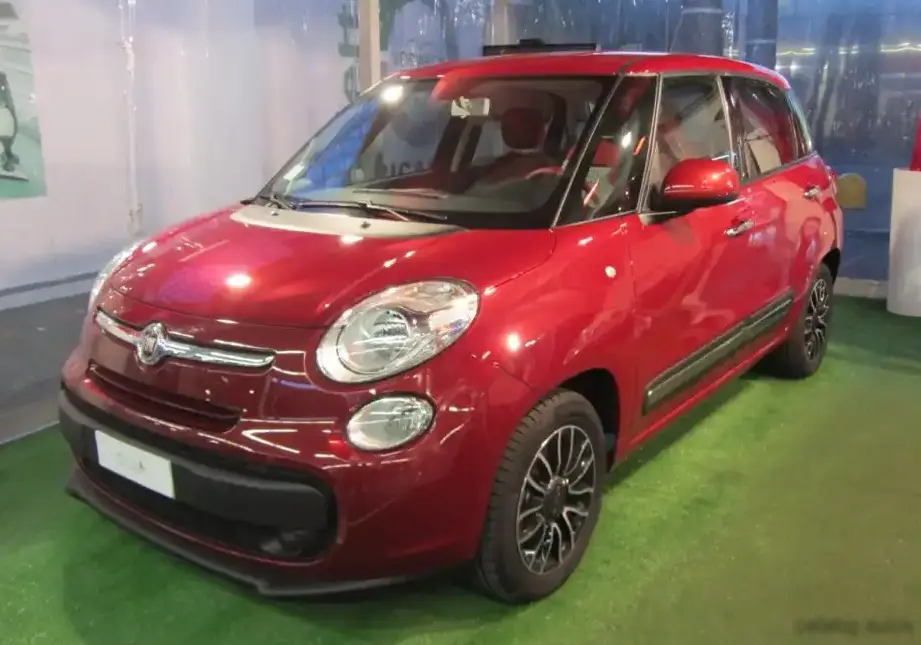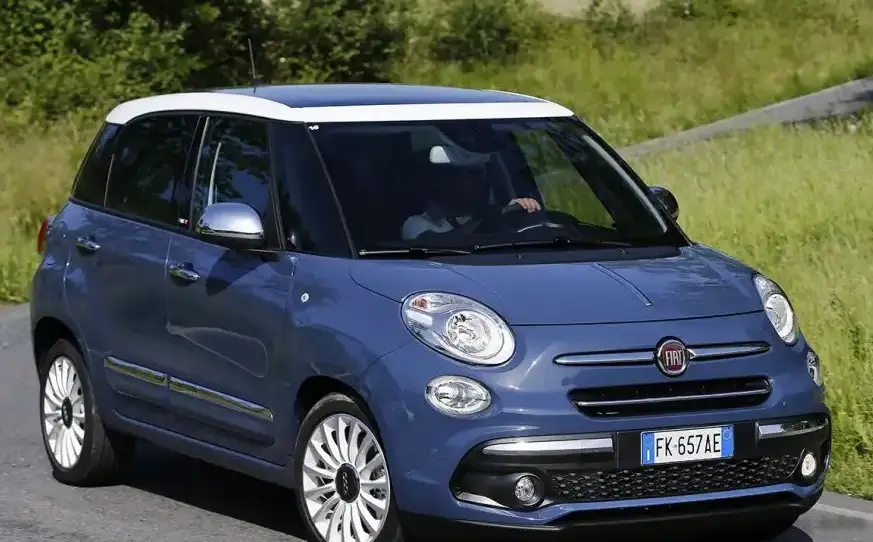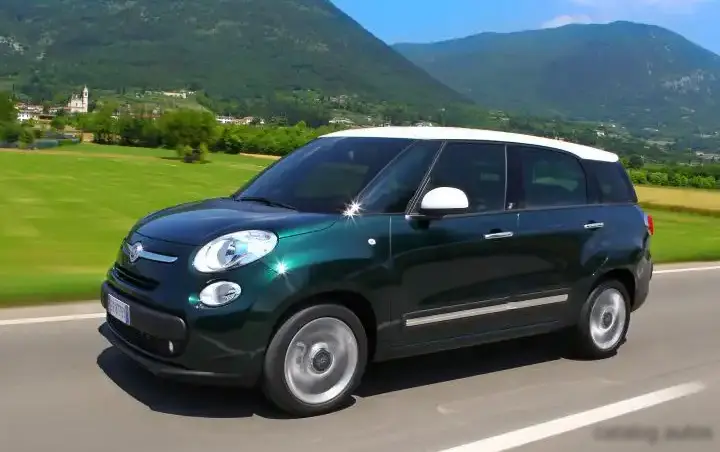
The Fiat 500L Living/Wagon 1.3 MultiJetII (85 hp) 7-seat variant was a practical and fuel-efficient offering within the broader 500L range, produced primarily for the European market between 2013 and 2014. Positioned as a family-oriented vehicle, it aimed to capitalize on the popularity of the 500 brand while providing increased space and versatility. This particular version, equipped with the 1.3-liter diesel engine and a manual transmission, represented an entry-level option for buyers seeking a compact multi-purpose vehicle (MPV). It was built on the Fiat Small Wide platform, shared with other models like the Fiat Punto and the Alfa Romeo MiTo.
Technical Specifications
| Brand | Fiat |
| Model | 500L |
| Generation | 500L Living/Wagon |
| Type (Engine) | 1.3 MultiJetII (85 Hp) 7 Seat |
| Start of production | 2013 |
| End of production | 2014 |
| Powertrain Architecture | Internal Combustion engine |
| Body type | Hatchback |
| Seats | 7 |
| Doors | 5 |
| Fuel consumption (urban) | 5 l/100 km (47 US mpg, 56.5 UK mpg, 20 km/l) |
| Fuel consumption (extra urban) | 3.7 l/100 km (63.6 US mpg, 76.3 UK mpg, 27 km/l) |
| Fuel consumption (combined) | 4.2 l/100 km (56 US mpg, 67.3 UK mpg, 23.8 km/l) |
| CO2 emissions | 110 g/km |
| Fuel Type | Diesel |
| Acceleration 0 – 100 km/h | 15.4 sec |
| Acceleration 0 – 62 mph | 15.4 sec |
| Acceleration 0 – 60 mph | 14.6 sec |
| Maximum speed | 165 km/h (102.53 mph) |
| Emission standard | Euro 5 |
| Weight-to-power ratio | 15.4 kg/Hp, 65.1 Hp/tonne |
| Weight-to-torque ratio | 6.5 kg/Nm, 153.3 Nm/tonne |
| Power | 85 Hp @ 3500 rpm |
| Power per litre | 68.1 Hp/l |
| Torque | 200 Nm @ 1500 rpm (147.51 lb.-ft. @ 1500 rpm) |
| Engine layout | Front, Transverse |
| Engine Model/Code | 199B4000 |
| Engine displacement | 1248 cm3 (76.16 cu. in.) |
| Number of cylinders | 4 |
| Engine configuration | Inline |
| Cylinder Bore | 69.6 mm (2.74 in.) |
| Piston Stroke | 82 mm (3.23 in.) |
| Compression ratio | 16.8:1 |
| Number of valves per cylinder | 4 |
| Fuel injection system | Diesel Commonrail |
| Engine aspiration | Turbocharger, Intercooler |
| Engine oil capacity | 3.2 l (3.38 US qt | 2.82 UK qt) |
| Coolant | 5.9 l (6.23 US qt | 5.19 UK qt) |
| Kerb Weight | 1305 kg (2877.03 lbs.) |
| Trunk (boot) space – minimum | 560 l (19.78 cu. ft.) |
| Trunk (boot) space – maximum | 1584 l (55.94 cu. ft.) |
| Fuel tank capacity | 50 l (13.21 US gal | 11 UK gal) |
| Permitted trailer load with brakes (12%) | 1000 kg (2204.62 lbs.) |
| Permitted trailer load without brakes | 400 kg (881.85 lbs.) |
| Length | 4352 mm (171.34 in.) |
| Width | 1784 mm (70.24 in.) |
| Height | 1667 mm (65.63 in.) |
| Wheelbase | 2612 mm (102.83 in.) |
| Front track | 1522 mm (59.92 in.) |
| Rear (Back) track | 1519 mm (59.8 in.) |
| Minimum turning circle | 10.7 m (35.1 ft.) |
| Drivetrain Architecture | Front wheel drive |
| Number of gears and type of gearbox | 5 gears, manual transmission |
| Front suspension | Independent type McPherson |
| Rear suspension | Semi-independent, coil spring |
| Front brakes | Ventilated discs |
| Rear brakes | Disc |
| Assisting systems | ABS (Anti-lock braking system) |
| Steering type | Steering rack and pinion |
| Tires size | 205/55 R16; 225/45 R17 |
| Wheel rims size | 6.5J x 16; 7J x 17 |
Powertrain & Engine Architecture
The heart of this 500L variant is the 1.3-liter MultiJet II diesel engine, bearing the code 199B4000. This engine is a four-cylinder, inline configuration, utilizing a turbocharger with an intercooler to boost power and efficiency. The MultiJet II technology represents a second-generation common rail direct injection system, allowing for multiple fuel injections per combustion cycle. This results in finer fuel atomization, reduced noise, and improved emissions. The engine boasts a relatively high compression ratio of 16.8:1, typical for diesel engines, and features four valves per cylinder. The 85 horsepower output is achieved at 3500 rpm, while the peak torque of 200 Nm (147.51 lb-ft) is available from just 1500 rpm, providing good low-end grunt. The engine is transversely mounted in the front of the vehicle. The transmission is a five-speed manual gearbox, chosen for its simplicity and fuel efficiency.
Driving Characteristics
The 1.3 MultiJet II engine, paired with the five-speed manual transmission, delivers a driving experience focused on economy rather than outright performance. Acceleration from 0 to 100 km/h (0-62 mph) takes around 15.4 seconds, and top speed is limited to 165 km/h (102.53 mph). The engine’s torque characteristics make it reasonably responsive in everyday driving situations, particularly for overtaking at lower speeds. However, it can feel strained when fully loaded or climbing steep hills. The gear ratios are geared towards maximizing fuel efficiency, meaning the engine operates at relatively low revolutions per minute during cruising. Compared to higher-output versions of the 500L, such as those with the 1.4 T-Jet petrol engine, this variant offers significantly less power but superior fuel economy. The manual transmission provides a more engaging driving experience than the Dualogic automated manual transmission offered on some trims.
Equipment & Trim Levels
The 7-seat configuration was a key selling point of the 500L Living/Wagon. Standard equipment on the 1.3 MultiJet II 85 hp variant typically included air conditioning, electric front windows, a radio with USB connectivity, and ABS brakes. Safety features such as driver and passenger airbags were also standard. Interior upholstery was generally cloth, with a functional and durable design. Optional extras included alloy wheels, rear parking sensors, a touchscreen infotainment system, and cruise control. Trim levels varied slightly depending on the market, but generally, this engine/transmission combination represented a mid-range offering, providing a good balance of features and affordability.
Chassis & Braking
The 500L Living/Wagon utilizes a McPherson strut independent suspension at the front and a semi-independent coil spring suspension at the rear. This setup provides a comfortable ride quality, although it’s not particularly sporty. The front brakes are ventilated discs, offering good stopping power, while the rear brakes are solid discs. ABS (Anti-lock Braking System) is standard, enhancing safety during emergency braking. The vehicle’s weight of 1305 kg (2877.03 lbs) is relatively light for a seven-seater, contributing to its fuel efficiency. Stabilizer bars are fitted to both the front and rear axles to reduce body roll during cornering.
Market Reception & Comparison
The Fiat 500L Living/Wagon 1.3 MultiJet II 85 hp was generally well-received by critics for its practicality, fuel efficiency, and spacious interior. However, some reviewers noted its lack of outright performance and the somewhat basic interior trim. Compared to other MPVs in its class, such as the Renault Scenic or Citroën C4 Picasso, the 500L offered a more stylish and compact alternative. Its fuel economy of 4.2 l/100 km (56 US mpg) was a significant advantage, making it an attractive option for budget-conscious buyers. Reliability reports suggest that the 1.3 MultiJet II engine is generally robust, but regular maintenance is crucial to prevent issues with the diesel particulate filter (DPF).
Legacy
The Fiat 500L Living/Wagon 1.3 MultiJet II 85 hp remains a relatively common sight on European roads today. The 1.3 MultiJet engine has proven to be a durable and reliable unit when properly maintained. On the used car market, these models are typically affordable and represent a good value for money, particularly for families seeking a practical and economical vehicle. However, potential buyers should be aware of the potential for DPF issues and ensure that the vehicle has a full service history. The 500L, in its various forms, helped Fiat expand its presence in the MPV segment and offered a unique blend of style and practicality.