
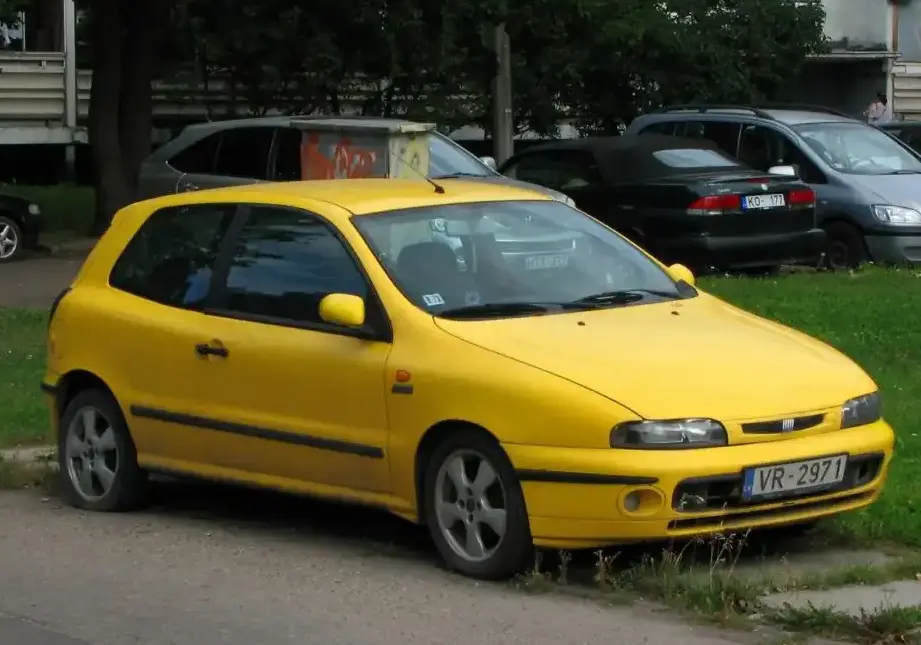
The Fiat Bravo (182) 1.9 TD 100 S was a popular hatchback produced between 1996 and 2000, representing a key variant within the second generation Bravo lineup. Positioned as a fuel-efficient and practical option, it catered to buyers seeking a balance between performance and economy. This model was primarily sold within the European market, where compact hatchbacks were – and continue to be – a dominant segment. The 182 series Bravo, launched in 1996, was a significant update over the original Bravo, offering improved styling, safety features, and engine options. The 1.9 TD 100 S occupied a middle ground in the range, offering more power than the base models but remaining more affordable than the higher-performance petrol variants.
Technical Specifications
| Brand | Fiat |
| Model | Bravo |
| Generation | Bravo (182) |
| Type (Engine) | 1.9 TD 100 S (100 Hp) |
| Start of production | 1996 |
| End of production | 2000 |
| Powertrain Architecture | Internal Combustion engine |
| Body type | Hatchback |
| Seats | 5 |
| Doors | 3 |
| Fuel consumption (urban) | 8.5 l/100 km (27.7 US mpg, 33.2 UK mpg, 11.8 km/l) |
| Fuel consumption (extra urban) | 5.2 l/100 km (45.2 US mpg, 54.3 UK mpg, 19.2 km/l) |
| Fuel consumption (combined) | 6.4 l/100 km (36.8 US mpg, 44.1 UK mpg, 15.6 km/l) |
| Fuel Type | Diesel |
| Acceleration 0 – 100 km/h | 10.8 sec |
| Acceleration 0 – 62 mph | 10.8 sec |
| Acceleration 0 – 60 mph | 10.3 sec |
| Maximum speed | 182 km/h (113.09 mph) |
| Emission standard | Euro 3 |
| Weight-to-power ratio | 11.6 kg/Hp, 86.6 Hp/tonne |
| Weight-to-torque ratio | 5.8 kg/Nm, 173.2 Nm/tonne |
| Power | 100 Hp @ 4200 rpm |
| Power per litre | 52.4 Hp/l |
| Torque | 200 Nm @ 2250 rpm (147.51 lb.-ft. @ 2250 rpm) |
| Engine layout | Front, Transverse |
| Engine Model/Code | 182A7000 |
| Engine displacement | 1910 cm3 (116.56 cu. in.) |
| Number of cylinders | 4 |
| Engine configuration | Inline |
| Cylinder Bore | 82 mm (3.23 in.) |
| Piston Stroke | 90.4 mm (3.56 in.) |
| Compression ratio | 20.7:1 |
| Number of valves per cylinder | 2 |
| Fuel injection system | Precombustion chamber injection |
| Engine aspiration | Turbocharger |
| Valvetrain | OHC |
| Engine oil capacity | 4.5 l (4.76 US qt | 3.96 UK qt) |
| Coolant | 6.3 l (6.66 US qt | 5.54 UK qt) |
| Kerb Weight | 1155 kg (2546.34 lbs.) |
| Max. weight | 1680 kg (3703.77 lbs.) |
| Max load | 525 kg (1157.43 lbs.) |
| Trunk (boot) space – minimum | 280 l (9.89 cu. ft.) |
| Trunk (boot) space – maximum | 1030 l (36.37 cu. ft.) |
| Fuel tank capacity | 60 l (15.85 US gal | 13.2 UK gal) |
| Length | 4025 mm (158.46 in.) |
| Width | 1755 mm (69.09 in.) |
| Height | 1420 mm (55.91 in.) |
| Wheelbase | 2540 mm (100 in.) |
| Front track | 1461 mm (57.52 in.) |
| Rear (Back) track | 1463 mm (57.6 in.) |
| Drivetrain Architecture | The Internal combustion engine (ICE) drives the front wheels of the vehicle. |
| Drive wheel | Front wheel drive |
| Number of gears and type of gearbox | 5 gears, manual transmission |
| Front suspension | Wishbone |
| Rear suspension | Coil spring |
| Front brakes | Disc |
| Rear brakes | Drum |
| Assisting systems | ABS (Anti-lock braking system) |
| Steering type | Steering rack and pinion |
| Power steering | Hydraulic Steering |
| Tires size | 185/60R14 |
| Wheel rims size | 14 |
Powertrain & Engine Architecture
The heart of the Bravo 1.9 TD 100 S is the 182A7000 engine, a 1.9-liter inline-four cylinder diesel. This engine utilized a precombustion chamber injection system, a common technology for diesel engines of the era. This system involved injecting fuel into a precombustion chamber, where it partially ignited before entering the main combustion chamber, promoting more complete combustion and reducing noise. The engine was turbocharged, boosting power output to 100 horsepower at 4200 rpm and 200 Nm (147.51 lb-ft) of torque at 2250 rpm. The high compression ratio of 20.7:1 was typical for indirect injection diesel engines. The engine featured an overhead camshaft (OHC) valvetrain with two valves per cylinder. The 1.9 TD engine was known for its durability and relatively simple mechanical design. The transmission was a standard five-speed manual gearbox, chosen for its efficiency and cost-effectiveness.
Driving Characteristics
The 1.9 TD 100 S offered a practical and economical driving experience. While not a performance-oriented model, the turbocharger provided a noticeable boost in power, allowing for reasonably quick acceleration – 0-60 mph in around 10.3 seconds. The engine’s torque peak at 2250 rpm meant that it felt responsive in everyday driving situations, providing ample power for overtaking and climbing hills. The five-speed manual transmission was well-matched to the engine’s characteristics, offering a good balance between fuel economy and performance. Compared to the lower-powered naturally aspirated diesel versions, the 1.9 TD 100 S felt significantly more capable. However, it lacked the outright performance of the petrol-powered Bravo variants, such as the 1.6 or 2.0-liter models.
Equipment & Trim Levels
The 1.9 TD 100 S trim level typically included features such as power steering, central locking, and an anti-lock braking system (ABS). Interior appointments were functional and durable, with cloth upholstery and a straightforward dashboard layout. Optional extras could include air conditioning, electric windows, and a radio/cassette player. The Bravo 182 offered a relatively spacious interior for its class, with comfortable seating for five adults. The three-door body style prioritized practicality and a sporty appearance over ease of access to the rear seats.
Chassis & Braking
The Bravo 1.9 TD 100 S featured a front-wheel-drive layout with a wishbone front suspension and a coil spring rear suspension. This setup provided a comfortable ride and predictable handling. The front brakes were discs, while the rear brakes were drums – a common configuration for vehicles in this price range at the time. The hydraulic power steering provided light and responsive steering feel. The car’s relatively modest weight of 1155 kg (2546.34 lbs) contributed to its decent handling characteristics.
Market Reception & Comparison
The Fiat Bravo 1.9 TD 100 S was well-received in the European market as a practical and economical hatchback. Critics praised its fuel efficiency, comfortable ride, and durable engine. Compared to other diesel-powered hatchbacks of the era, such as the Volkswagen Golf TDI, the Bravo offered a competitive price point and a comparable level of performance. However, some reviewers noted that the interior quality was not as refined as some of its rivals. The 1.9 TD engine was generally considered reliable, although regular maintenance was essential to ensure long-term durability.
Legacy
The Fiat Bravo 1.9 TD 100 S remains a relatively common sight on European roads today, testament to its durability and practicality. The 182A7000 engine, while not known for being particularly high-tech, is generally considered reliable if properly maintained. Used examples are often affordable, making them a popular choice for budget-conscious buyers. The Bravo 182, and specifically the 1.9 TD variant, represents a significant chapter in Fiat’s history, showcasing the company’s commitment to producing practical and affordable vehicles for the mass market. Parts availability is generally good, although some trim-specific components may be more difficult to source.
