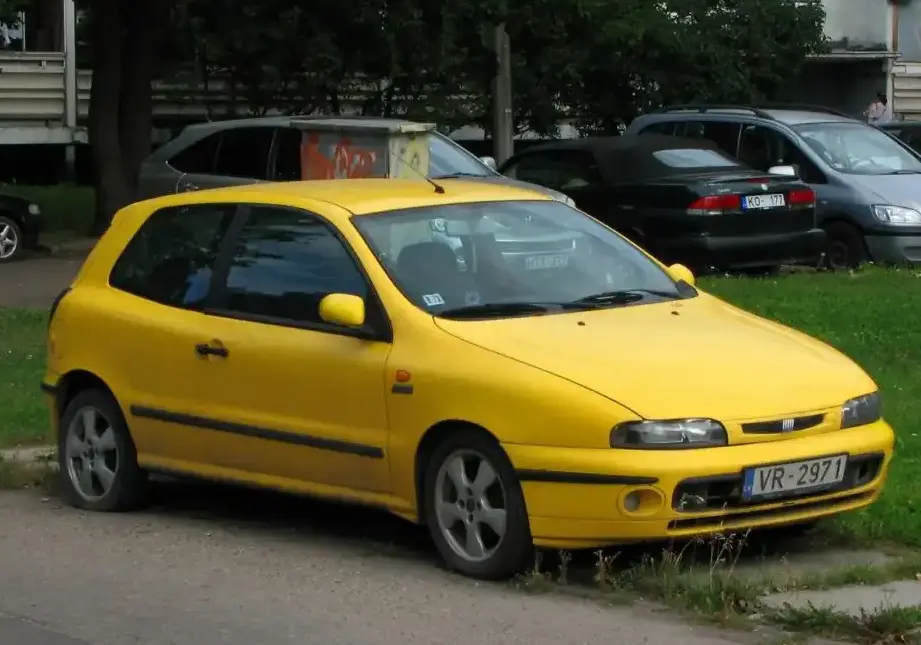
The Fiat Bravo II 1.4 MultiAir Turbo, produced from 2010 to 2014, represented a significant step forward for the Bravo model line. Falling within the 198 project code, this variant occupied a mid-range position in the Bravo II lineup, offering a balance between performance, fuel efficiency, and equipment. It was primarily marketed in Europe as a stylish and practical hatchback aimed at young professionals and families. The 1.4 MultiAir engine was a key component of Fiat’s efforts to improve fuel economy and reduce emissions while still delivering a respectable level of performance. This version of the Bravo aimed to bridge the gap between the base 1.4-liter naturally aspirated engine and the more powerful 1.9-liter diesel options.
Technical Specifications
| Brand | Fiat |
| Model | Bravo |
| Generation | Bravo II (198) |
| Type (Engine) | 1.4 MultiAir (140 Hp) Turbo |
| Start of production | 2010 |
| End of production | 2014 |
| Powertrain Architecture | Internal Combustion engine |
| Body type | Hatchback |
| Seats | 5 |
| Doors | 5 |
| Fuel consumption (urban) | 7.3 l/100 km (32.2 US mpg, 38.7 UK mpg, 13.7 km/l) |
| Fuel consumption (extra urban) | 4.8 l/100 km (49 US mpg, 58.9 UK mpg, 20.8 km/l) |
| Fuel consumption (combined) | 5.7 l/100 km (41.3 US mpg, 49.6 UK mpg, 17.5 km/l) |
| CO2 emissions | 132 g/km |
| Fuel Type | Petrol (Gasoline) |
| Acceleration 0 – 100 km/h | 8.9 sec |
| Acceleration 0 – 62 mph | 8.9 sec |
| Acceleration 0 – 60 mph | 8.5 sec |
| Maximum speed | 204 km/h (126.76 mph) |
| Emission standard | Euro 5 |
| Weight-to-power ratio | 9.1 kg/Hp, 109.8 Hp/tonne |
| Weight-to-torque ratio | 5.5 kg/Nm, 180.4 Nm/tonne |
| Power | 140 Hp @ 5000 rpm |
| Power per litre | 102.3 Hp/l |
| Torque | 230 Nm @ 1750 rpm (169.64 lb.-ft. @ 1750 rpm) |
| Engine layout | Front, Transverse |
| Engine Model/Code | 198A7000 |
| Engine displacement | 1368 cm3 (83.48 cu. in.) |
| Number of cylinders | 4 |
| Engine configuration | Inline |
| Cylinder Bore | 72 mm (2.83 in.) |
| Piston Stroke | 84 mm (3.31 in.) |
| Compression ratio | 9.8:1 |
| Number of valves per cylinder | 4 |
| Fuel injection system | Multi-port manifold injection |
| Engine aspiration | Turbocharger, Intercooler |
| Valvetrain | SOHC |
| Engine oil capacity | 3.5 l (3.7 US qt | 3.08 UK qt) |
| Coolant | 6 l (6.34 US qt | 5.28 UK qt) |
| Kerb Weight | 1275 kg (2810.89 lbs.) |
| Max. weight | 1785 kg (3935.25 lbs.) |
| Max load | 510 kg (1124.36 lbs.) |
| Trunk (boot) space – minimum | 400 l (14.13 cu. ft.) |
| Trunk (boot) space – maximum | 1175 l (41.49 cu. ft.) |
| Fuel tank capacity | 57 l (15.06 US gal | 12.54 UK gal) |
| Permitted trailer load with brakes (12%) | 1300 kg (2866.01 lbs.) |
| Permitted trailer load without brakes | 500 kg (1102.31 lbs.) |
| Length | 4336 mm (170.71 in.) |
| Width | 1792 mm (70.55 in.) |
| Height | 1498 mm (58.98 in.) |
| Wheelbase | 2600 mm (102.36 in.) |
| Front track | 1538 mm (60.55 in.) |
| Rear (Back) track | 1532 mm (60.31 in.) |
| Minimum turning circle | 10.4 m (34.12 ft.) |
| Drivetrain Architecture | Front wheel drive |
| Number of gears and type of gearbox | 6 gears, manual transmission |
| Front suspension | Spring Strut |
| Rear suspension | Torsion |
| Front brakes | Ventilated discs |
| Rear brakes | Disc |
| Assisting systems | ABS (Anti-lock braking system) |
| Steering type | Steering rack and pinion |
| Power steering | Electric Steering |
| Tires size | 205/55 R16 |
| Wheel rims size | 16 |
Powertrain & Engine Architecture
The heart of this Bravo variant is the 1.4-liter (1368 cc) inline-four cylinder engine, designated as the 198A7000. This engine is notable for its MultiAir technology, a direct injection system developed by Fiat. MultiAir eliminates the traditional throttle body and instead controls the intake air directly via electro-hydraulic valve actuation. This allows for independent control of intake valve timing and lift, optimizing combustion efficiency and reducing pumping losses. The engine features a single overhead camshaft (SOHC) and is turbocharged with an intercooler to boost power output. The turbocharger provides 230 Nm (169.64 lb-ft) of torque at a relatively low 1750 rpm, contributing to good low-end responsiveness. The engine is paired with a six-speed manual transmission, delivering power to the front wheels. The 6-speed manual was the most common transmission option for this engine, although a Dualogic automated manual transmission was also available, albeit less popular due to its sometimes jerky shifts.
Driving Characteristics
The 1.4 MultiAir Turbo offered a noticeable step up in performance compared to the base 1.4-liter Bravo. Acceleration from 0 to 100 km/h (0-62 mph) took approximately 8.9 seconds, and top speed was rated at 204 km/h (126.76 mph). The turbocharger provides a good surge of power in the mid-range, making overtaking maneuvers relatively easy. However, the engine doesn’t offer the same level of outright grunt as larger displacement engines or diesel alternatives. The six-speed manual transmission is well-matched to the engine’s characteristics, providing precise shifts and allowing the driver to keep the engine in its optimal power band. Compared to the 1.9 JTD diesel, the 1.4 MultiAir felt less refined and had a more noticeable turbo lag, but it offered a more engaging driving experience for those who preferred a gasoline engine.
Equipment & Trim Levels
The 1.4 MultiAir Turbo typically came equipped with a reasonable level of standard features. These included air conditioning, power windows, central locking, a CD/MP3 stereo system, and alloy wheels. Higher trim levels, such as the ‘Emotion’ and ‘Sport’ variants, added features like climate control, a touchscreen infotainment system, rear parking sensors, and sport seats. Interior upholstery was typically cloth, with leather options available as an extra cost. The dashboard design was modern for its time, with a focus on ergonomics and ease of use. Optional extras included a panoramic sunroof, navigation system, and upgraded audio systems.
Chassis & Braking
The Bravo II utilized a front-wheel-drive platform with a MacPherson strut suspension at the front and a torsion beam suspension at the rear. This setup provided a good balance between ride comfort and handling. The steering was electrically assisted, offering light and precise control. Braking duties were handled by ventilated discs at the front and solid discs at the rear, equipped with ABS (Anti-lock Braking System). The suspension was tuned to provide a comfortable ride for everyday driving, but it could feel a little soft during more spirited cornering. The weight distribution was reasonably well-balanced, contributing to predictable handling characteristics.
Market Reception & Comparison
The Fiat Bravo II 1.4 MultiAir Turbo was generally well-received by automotive critics. It was praised for its fuel efficiency, stylish design, and engaging driving experience. However, some reviewers noted that the engine could feel a little strained at higher speeds and that the interior quality wasn’t quite up to par with some of its competitors. Compared to the 1.9 JTD diesel, the 1.4 MultiAir offered lower running costs in terms of fuel, but the diesel provided superior fuel economy and torque. The 1.4 MultiAir also offered a more refined driving experience than the base 1.4-liter naturally aspirated engine.
Legacy
The 1.4 MultiAir engine, while innovative, proved to be somewhat prone to issues in the long term. Common problems included oil leaks, timing chain wear, and issues with the MultiAir actuators. As a result, finding a well-maintained example of the Bravo II 1.4 MultiAir Turbo can be challenging in the used car market. However, when properly maintained, these cars can offer a reliable and enjoyable driving experience. The MultiAir technology itself paved the way for further advancements in engine efficiency and control, and its influence can be seen in later Fiat and Alfa Romeo models. Today, the Bravo II 1.4 MultiAir Turbo is considered a stylish and affordable hatchback, appealing to those seeking a practical and relatively efficient vehicle.