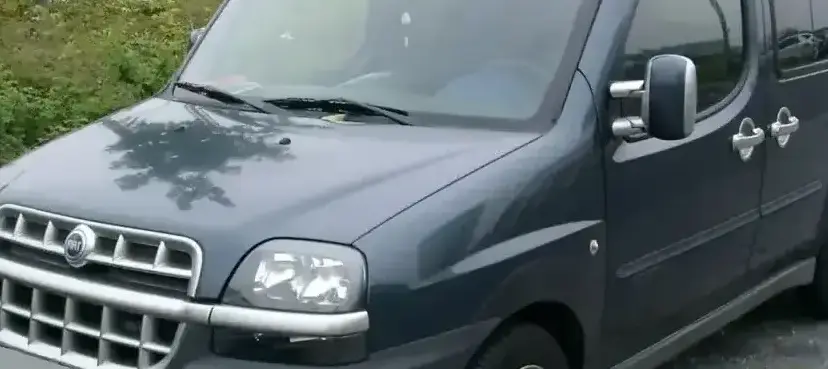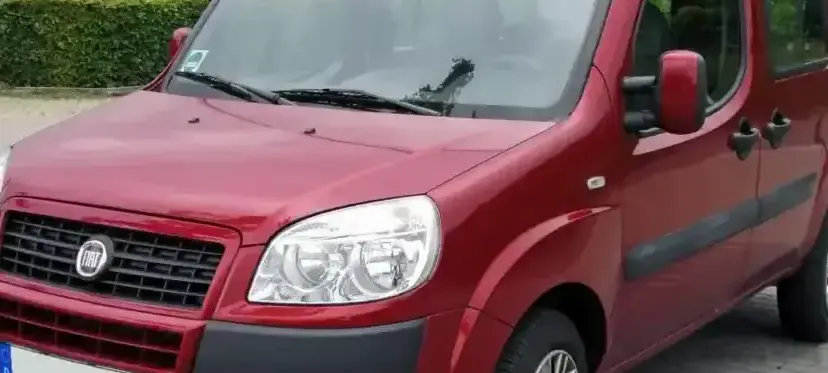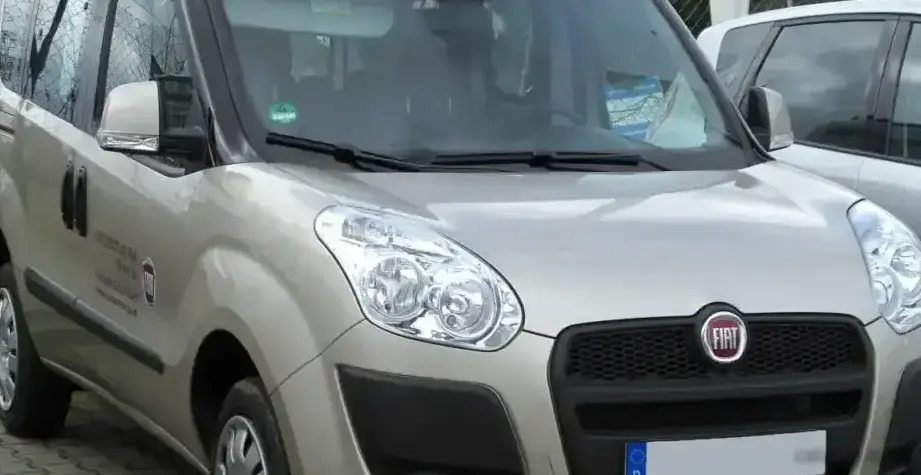
The Fiat Doblo II, specifically the 1.6 Multijet 90 HP Start & Stop 7-seat variant, was a popular choice in the European market from 2010 to 2015. Positioned as an entry-level to mid-range offering within the Doblo II (263) generation, this model catered to families and commercial users seeking a practical and fuel-efficient vehicle. It represented a key component of Fiat’s strategy to provide versatile, affordable transportation in a segment dominated by similar multi-purpose vehicles. The Doblo II itself was based on the Fiat-PSA shared platform, also known as the 1HX0/A3 platform, which underpinned several vehicles including the Citroën Berlingo and Peugeot Partner.
Technical Specifications
| Brand | Fiat |
| Model | Doblo |
| Generation | Doblo II (263) |
| Type (Engine) | 1.6 Multijet (90 Hp) Start & Stop 7 Seat |
| Start of production | 2010 |
| End of production | 2015 |
| Powertrain Architecture | Internal Combustion engine |
| Body type | Minivan |
| Seats | 7 |
| Doors | 5 |
| Fuel consumption (urban) | 6.8 l/100 km (34.6 US mpg, 41.5 UK mpg, 14.7 km/l) |
| Fuel consumption (extra urban) | 4.7 l/100 km (50 US mpg, 60.1 UK mpg, 21.3 km/l) |
| Fuel consumption (combined) | 5.5 l/100 km (42.8 US mpg, 51.4 UK mpg, 18.2 km/l) |
| CO2 emissions | 145 g/km |
| Fuel Type | Diesel |
| Acceleration 0 – 100 km/h | 14.9 sec |
| Acceleration 0 – 62 mph | 14.9 sec |
| Acceleration 0 – 60 mph | 14.2 sec |
| Maximum speed | 158 km/h (98.18 mph) |
| Emission standard | Euro 5 |
| Weight-to-power ratio | 15.9 kg/Hp, 62.9 Hp/tonne |
| Weight-to-torque ratio | 4.9 kg/Nm, 202.8 Nm/tonne |
| Power | 90 Hp @ 4000 rpm |
| Power per litre | 56.3 Hp/l |
| Torque | 290 Nm @ 1500 rpm (213.89 lb.-ft. @ 1500 rpm) |
| Engine layout | Front, Transverse |
| Engine Model/Code | 263A4000 |
| Engine displacement | 1598 cm3 (97.52 cu. in.) |
| Number of cylinders | 4 |
| Engine configuration | Inline |
| Cylinder Bore | 79.5 mm (3.13 in.) |
| Piston Stroke | 80.5 mm (3.17 in.) |
| Compression ratio | 16.5:1 |
| Number of valves per cylinder | 4 |
| Fuel injection system | Diesel Commonrail |
| Engine aspiration | Turbocharger, Intercooler |
| Valvetrain | DOHC |
| Engine oil capacity | 4.9 l (5.18 US qt | 4.31 UK qt) |
| Coolant capacity | 6.7 l (7.08 US qt | 5.9 UK qt) |
| Kerb Weight | 1430 kg (3152.61 lbs.) |
| Max. weight | 2115-2180 kg (4662.78 – 4806.08 lbs.) |
| Max load | 685-750 kg (1510.17 – 1653.47 lbs.) |
| Trunk (boot) space – minimum | 133 l (4.7 cu. ft.) |
| Trunk (boot) space – maximum | 3200 l (113.01 cu. ft.) |
| Fuel tank capacity | 60 l (15.85 US gal | 13.2 UK gal) |
| Max. roof load | 75 kg (165.35 lbs.) |
| Permitted trailer load (braked) | 1000 kg (2204.62 lbs.) |
| Permitted trailer load (unbraked) | 500 kg (1102.31 lbs.) |
| Permitted towbar download | 60 kg (132.28 lbs.) |
| Length | 4390 mm (172.83 in.) |
| Width | 1832 mm (72.13 in.) |
| Height | 1845 mm (72.64 in.) |
| Wheelbase | 2755 mm (108.46 in.) |
| Front track | 1510 mm (59.45 in.) |
| Rear track | 1530 mm (60.24 in.) |
| Front overhang | 895 mm (35.24 in.) |
| Rear overhang | 740 mm (29.13 in.) |
| Turning circle | 11.2 m (36.75 ft.) |
| Drivetrain | Front wheel drive |
| Number of gears | 6 |
| Gearbox type | Manual transmission |
| Front suspension | Independent, McPherson with coil spring and anti-roll bar |
| Rear suspension | Independent multi-link with stabilizer |
| Front brakes | Ventilated discs, 305 mm |
| Rear brakes | Drum, 254 mm |
| Assisting systems | ABS |
| Steering type | Steering rack and pinion |
| Power steering | Hydraulic |
| Tires size | 195/60 R16 |
| Wheel rims size | 6J x 15 |
Powertrain & Engine Architecture
The heart of this Doblo variant is the 1.6 Multijet diesel engine, specifically the 263A4000 code. This engine is a four-cylinder, inline configuration, utilizing a turbocharger with an intercooler to boost power and efficiency. The engine employs a common rail direct injection system, delivering fuel at extremely high pressure for optimized combustion. The DOHC (Double Overhead Camshaft) valvetrain, with four valves per cylinder, further enhances breathing and performance. A key feature of this engine is the Start & Stop system, which automatically shuts off the engine when the vehicle is stationary (e.g., at traffic lights) to reduce fuel consumption and emissions. The engine produces 90 horsepower at 4000 rpm and 290 Nm (213.89 lb-ft) of torque at 1500 rpm. The engine is transversely mounted, driving the front wheels through a six-speed manual transmission. This transmission was chosen for its balance of fuel efficiency and usability, although an automated manual transmission (Dualogic) was also available as an option.
Driving Characteristics
The 1.6 Multijet 90 HP variant of the Doblo II offers a practical, if not particularly sporty, driving experience. Acceleration is modest, taking approximately 14.9 seconds to reach 62 mph (100 km/h). The focus is on fuel economy and low-end torque, making it well-suited for urban driving and carrying loads. The six-speed manual transmission helps to keep the engine in its optimal power band, and the relatively long gearing contributes to fuel efficiency. Compared to higher-output versions of the Doblo II, such as those with the 1.6 Multijet 105 HP or the 2.0 Multijet engines, this variant feels noticeably slower, especially when fully loaded. However, the lower power output also translates to lower running costs and potentially reduced maintenance needs.
Equipment & Trim Levels
The 90 HP Start & Stop 7-seat Doblo II typically came equipped with a reasonable level of standard features. These included air conditioning, power steering, electric front windows, a radio with CD player, and ABS brakes. The 7-seat configuration offered versatility for families, with the rear seats capable of being folded or removed to create a larger cargo area. Optional extras included alloy wheels, rear parking sensors, a trip computer, and upgraded audio systems. Interior upholstery was typically cloth, with a functional and durable design. Dashboard materials were generally hard-wearing plastics, reflecting the vehicle’s utilitarian nature.
Chassis & Braking
The Doblo II utilizes an independent suspension setup, with a McPherson strut arrangement at the front and a multi-link system at the rear. This provides a reasonable level of ride comfort, although it is tuned more for practicality than outright handling. The front brakes are ventilated discs, providing adequate stopping power, while the rear brakes are drums. A stabilizer bar is fitted to both the front and rear axles to reduce body roll. The suspension was tuned to handle the varying load weights expected of a multi-purpose vehicle.
Market Reception & Comparison
The Fiat Doblo II 1.6 Multijet 90 HP Start & Stop was generally well-received by critics as a practical and affordable family vehicle. Its fuel economy was a major selling point, and the Start & Stop system further enhanced its efficiency. Compared to other trims in the Doblo II lineup, this variant offered a more accessible price point, making it attractive to budget-conscious buyers. However, some reviewers noted its lack of outright performance and relatively basic interior. Compared to competitors like the Citroën Berlingo and Peugeot Partner, the Doblo II offered a similar level of practicality and fuel efficiency, with the choice often coming down to brand preference.
Legacy
The 1.6 Multijet engine, in its various iterations, has proven to be a relatively reliable powertrain. The Doblo II, and this specific variant, has maintained a reasonable reputation for durability, although regular maintenance is crucial. In the used car market, these models represent a good value proposition for buyers seeking a spacious and economical vehicle. Common issues reported include wear and tear on suspension components and potential problems with the diesel particulate filter (DPF), particularly on vehicles that have primarily been used for short journeys. Overall, the Fiat Doblo II 1.6 Multijet 90 HP Start & Stop 7-seat remains a popular choice for those needing a versatile and affordable vehicle.